Shows
STIFTOPHON – Der Podcast des Magazins DIE STIFTUNGSTIFTOPHON #20 – zugehört: Die Arbeit der Max-Planck-FörderstiftungDie Max-Planck-Gesellschaft ist eine der großen Forschungseinrichtungen in der westlichen Hemisphäre. Sie wird vorrangig durch öffentliche Gelder finanziert. Doch überall dort, wo Mittel fehlen, springt die Max-Planck-Förderstiftung ein. Ihr Anteil am Budget ist gering. In der Praxis macht ihre Hilfe dennoch einen großen Unterschied. Wieso, erklären Simone Schwanitz, Generalsekretärin der Max-Planck-Gesellschaft und Vorständin der Förderstiftung, sowie Professor Reinhard Pöllath, Stifter und Unternehmer.
2026-03-2431 min.jpg)
Common ConcernsMoral ImmunityIn this episode, Xiang Biao, co-director of the Max Planck Institute for Social Anthropology, speaks with Ferda Nur Demirci about her research on the indebtedness of miners in Soma, Turkey. Her findings reveal something that may seem contradictory to some: in a world of exploitation, debt is not merely a burden; rather, it can become a moral shield.
Ferda's research doesn't just tell a story about poverty or financial hardship. It explores how people, in the face of systemic precariousness, transform debt into self-discipline, solidarity, and even dignity.
2026-03-1945 min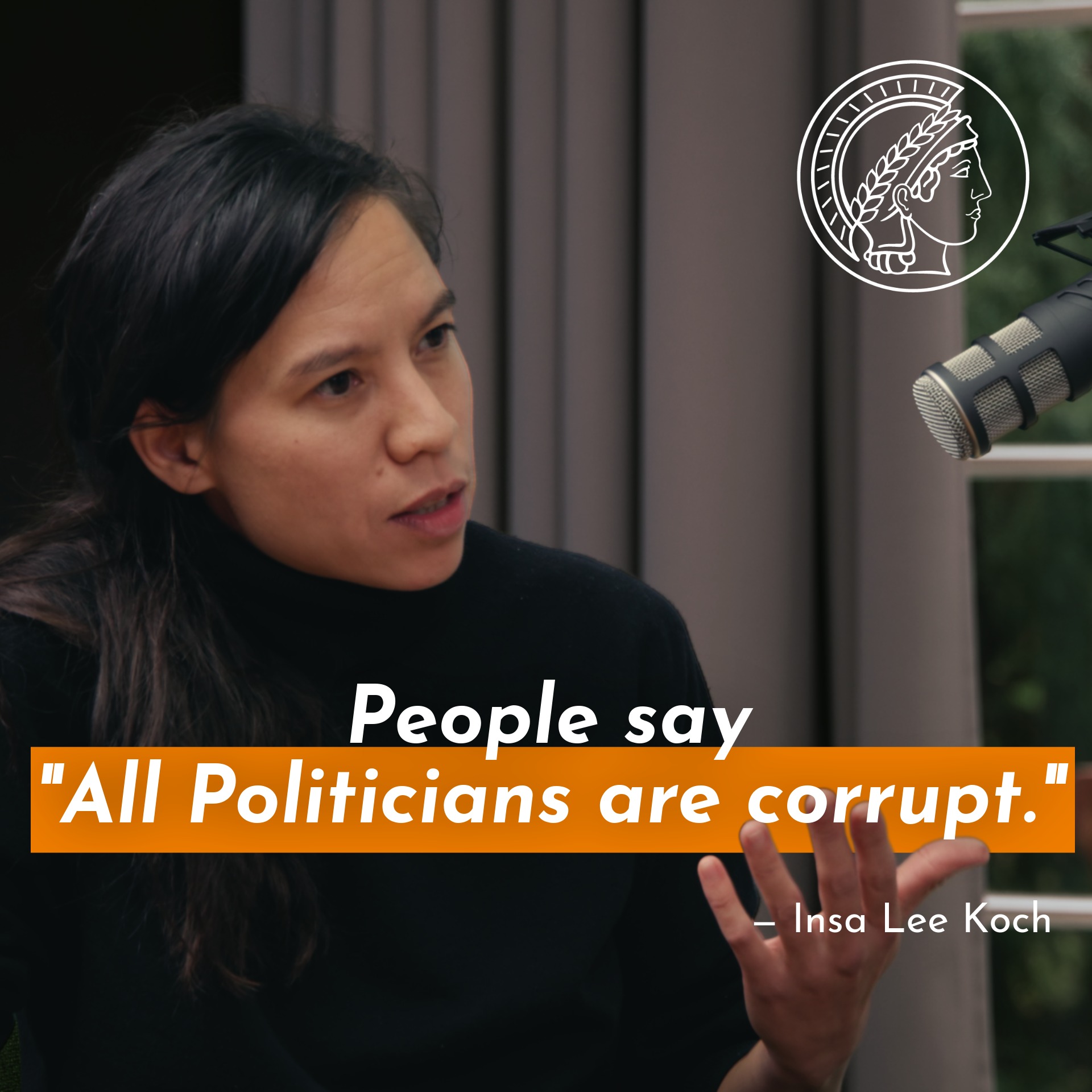
Common ConcernsCorruption TalkIn this episode, Xiang Biao, co-director of the Max Planck Institute for Social Anthropology, interviews Insa Koch, Professor of British Culture at the University of St. Gallen, Switzerland. Her work focuses on corruption, power, and political ontology, which challenge the very foundations of the Common Concerns approach. This is a critical conversation. Can we truly speak to people with these new concepts, or are we merely reinforcing the very systems we claim to criticize?
2026-03-1959 min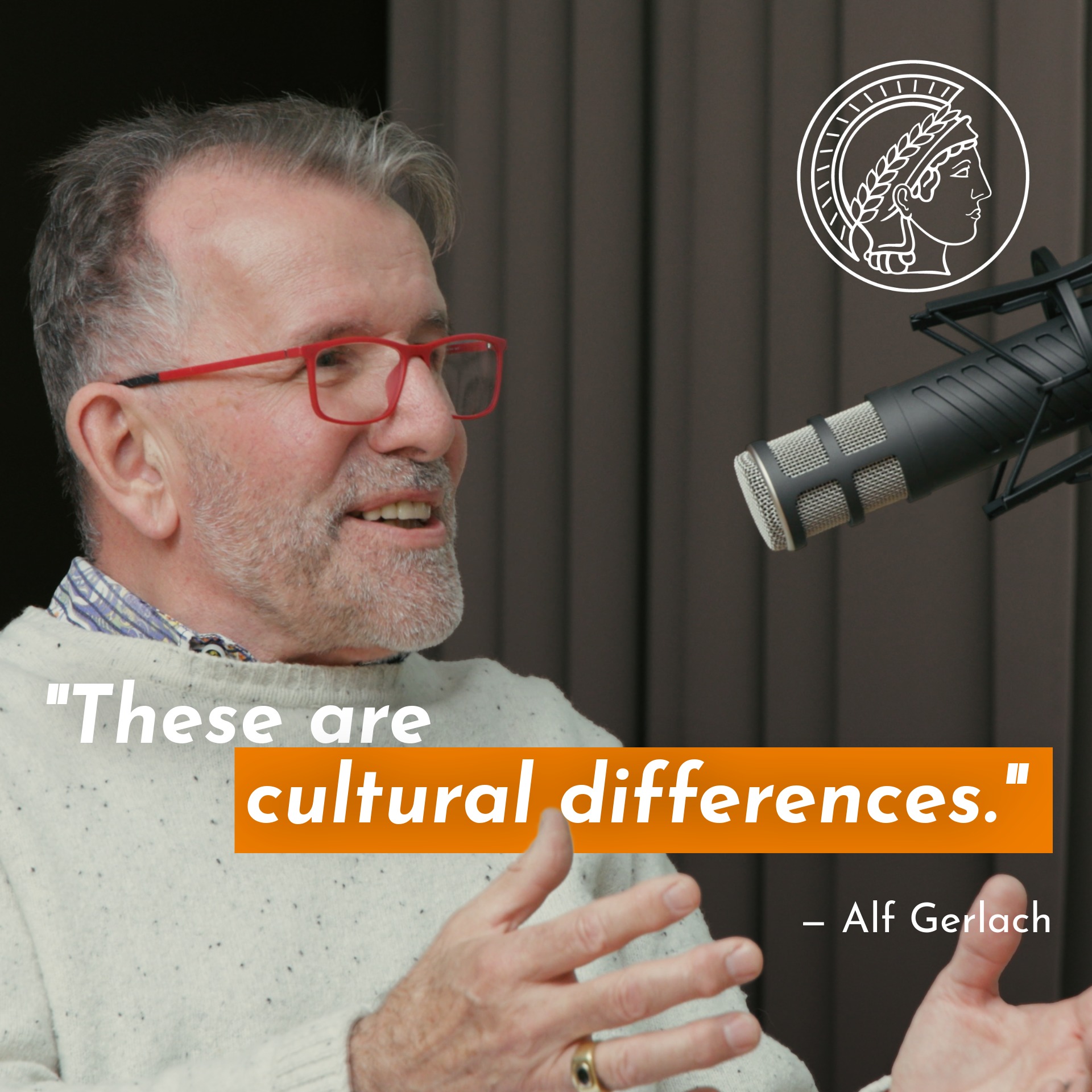
Common ConcernsThe Social UnconsciousIn this episode, Xiang Biao (Director, Max Planck Institute for Social Anthropology) interviews Dr. Alf Gerlach, a senior psychoanalyst whose decades-long work bridges German psychoanalysis, Chinese social practice, and the Frankfurt School’s radical fusion of Freud and Marx. Together, they dissect a concept that reshapes how we see all social research: the social unconscious.
This episode dismantles the myth that "social science is neutral." It raises the question of the extent to which ignoring the social unconscious makes us complicit in the very problems we study.
2026-03-1941 min.jpg)
Common ConcernsThe Common Concerns Approach: Birth of an IdeaIn the first episode of the “Common Concern” podcast, Siqi Tu and Sohail Jagat speak with Xiang Biao, co-director of the Max Planck Institute for Social Anthropology. Looking back on his experiences and academic career in China and the United Kingdom, he traces the origins of his “Common Concern” approach.
The “Common Concerns” approach is an exercise in which researchers reflect together with their interlocutors. It is therefore not merely a research task carried out one-sidedly by the researchers. It is an analytical strategy designed to facilitate a type of research in which researchers can ultimately return to their con...
2026-03-1958 min
Nachttanz mit Kory(S1 E12) Bewusstsein ist fundamental? – Nachttanz Kapitel 6 im Spiegel von Max PlanckDiese Episode ist ein Atemholen zwischen den Wellen. Kapitel 6 von "Nachttanz: Schattenwelten" wurde bereits in der vorherigen Folge gelesen. Jetzt geht es um die Resonanz danach. Um das, was unter der Oberfläche geschieht.Was zunächst wie ein ruhiges Kammerspiel am Strand von Brighton wirkt, zeigt sich in der Kommentierung als Verdichtung vieler Linien: Zaylas körperliche Erdung, die Begegnung mit Travis, die Frage nach Sichtbarkeit und Integrität, und das Spannungsfeld zwischen persönlicher Erfahrung und wissenschaftlicher Einordnung.Im Gespräch tauchen Themen auf, die leicht missverstanden werden könnten: Bewusstsein, Regression, spirituelle Wahrnehmung. Doch die Kom...
2026-02-2448 min
Let's Rewind! - Heroes Who Changed Everything - Little Thinkers!Max Planck and QuantaStep into a warm, thrilling journey through the life of Max Planck — the quiet scientist who opened a brand new door in physics!
This episode tells the true story of how a troubled puzzle about glowing ovens led to a tiny idea with huge power: energy in little packets. Told gently and with wonder, it blends music, late-night labs, careful chalk lines, and real human moments like loss, kindness, and bravery. Perfect for curious minds who love science stories full of heart.
Historical Fun Fact: Planck introduced a tiny constant (now called Planck's constant) as a bold, desperate step to ma...
2026-02-0220 min
Wem gehört Deutschland? Der heimaten Podcast aus dem Haus der Kulturen der WeltEpisode 8: Wem gehört Deutschland also wirklich?, mit Max Czollek und Linus Westheuser
In der achten und letzten Episode des Podcasts Wem gehört Deutschland? spricht Max Czollek mit Linus Westheuser über Eigentumsverhältnisse. Westheuser ist promovierter Soziologe, trockener Lyriker und ab 1. Januar Senior Researcher am Max Planck Institut für Sozialwissenschaft in Göttingen. Wie hängt eine zunehmend elitenorientierte Politik mit der Migrantisierung politischer Debatten zusammen? Was hat ein steigendes Gefühl der Unsicherheit und Dysfunktionalität staatlicher Institutionen mit dem Rückbau von „Sozialeigentum“ (Robert Castel) zu tun? Auf welche Weise verbindet sich diese Perspektive mit Fragen der Antidiskriminierung, die zuvor im Podcast verhandelt wurden? Und wie müsste eine progressive Po...
2025-12-1936 min
Komm ins BeetDer Weihnachtskaktus - Exot aus BrasilienEin exotischer Überlebenskünstler zwischen Tropenwald, Wohnzimmer und Wissenschaft. Entdecke das Geheimnis seiner festlichen Blüte.
In dieser Episode nehme ich euch mit auf eine spannende Reise in die Welt des Weihnachtskaktus. Ihr erfahrt, warum diese exotische Pflanze aus Brasilien nicht nur zur Weihnachtszeit unsere Fensterbänke schmückt, sondern auch ein echtes botanisches Wunderwerk ist. Ich erzähle, wie der Weihnachtskaktus als Epiphyt auf Bäumen lebt, wie er Wasser speichert und warum seine Blütenpracht so besonders ist. Außerdem teile ich praktische Tipps zur Pflege und erkläre, wie seine ungewöhnliche Fotosynthese ihn zum Überlebenskünstler macht...
2025-12-0718 min
Brilliant Scholars And Their ContributioMax Planck – Founder of Quantum TheoryThis episode explores the life and legacy of Max Planck, the German physicist whose discovery of quantum theory transformed science forever. Born in 1858, Planck initially believed that physics had nearly reached completion, but his work on blackbody radiation revealed a paradox that classical physics couldn't explain. In 1900, he proposed that energy is emitted in tiny, discrete packets—later called quanta—each proportional to its frequency, introducing Planck's constant. This revolutionary idea resolved the "ultraviolet catastrophe" and laid the foundation for quantum mechanics, influencing future giants like Einstein, Bohr, and Heisenberg. Planck's insight revealed that the microscopic world obey...
2025-10-2404 min
Komm ins BeetWoher kommen eigentlich die Kinder?Eine faszinierende Zeitreise durch antike Irrtümer und bahnbrechende Entdeckungen. Wie entstand unser Wissen über die Entstehung des Lebens?
In dieser Episode nehme ich euch mit auf eine spannende Reise durch die Geschichte der Vererbungsforschung. Wir blicken zurück auf die Theorien der Antike, streifen skurrile Vorstellungen von Samen und Homunculi und erleben, wie technologische Fortschritte unser Verständnis der Fortpflanzung revolutionierten. Ich erzähle, warum es über zweitausend Jahre dauerte, bis wir wirklich verstanden, wie Kinder entstehen – und warum manche Irrtümer erstaunlich lange überlebten. Mit einem Augenzwinkern beleuchte ich, wie sich das Rollenverständnis von Mann und Frau in der...
2025-09-2919 min
Hörsaal - Deutschlandfunk NovaMax Planck - Der lange Weg zur QuantenphysikEin Vortrag des Wissenschaftshistorikers Arne Schirrmacher
Moderation: Sibylle Salewski
**********
Vor 125 Jahren hat der Physiker Max Planck die Grundlage für die Quantenphysik gelegt. Weil er einsah, dass er unrecht hatte. Ein Vortrag des Wissenschaftshistorikers Arne Schirrmacher zum Internationalen Jahr der Quantenwissenschaften 2025.
Arne Schirrmacher ist Wissenschaftshistoriker an der Humboldt-Universität zu Berlin. Sein Vortrag hat den Titel "Max Planck und die Quantentheorie". Er hat ihn am 23. April 2025 in Kiel gehalten im Rahmen der Festveranstaltung zum Internationalen Quantenjahr "...Die Schätze, die Plancks Genie zu Tage gefördert hat..." Organisiert hat die Veranstaltung das...
2025-07-2434 min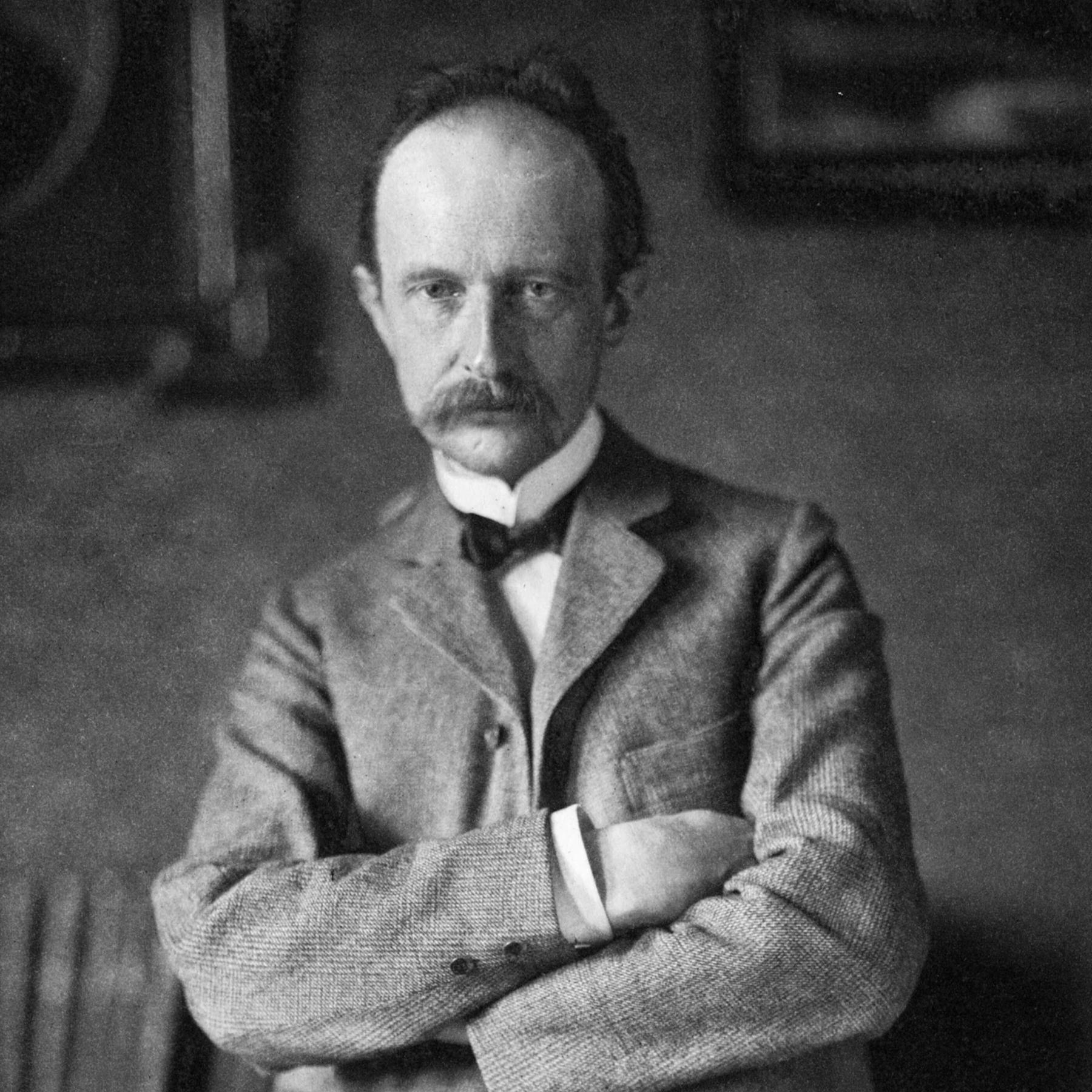
IQ - Wissenschaft und ForschungDie Max-Planck-Gesellschaft - Forschen zwischen Erfolg und ÜberlastungIdeale Arbeitsbedingungen, maximale Freiheit: damit kann die Max-Planck-Gesellschaft herausragende Köpfe an ihre Institute holen. Die stehen weltweit für Spitzenforschung und werden oft mit Nobelpreisen bedacht - gibt trotzdem Reformbedarf? Ein Podcast von Renate Ell (2023).
Zum Weiterlesen:
Hier findet Ihr alles zum Forschungsprogramm "Geschichte der Max-Planck-Gesellschaft":
https://gmpg.mpiwg-berlin.mpg.de/de/
Habt ihr Feedback? Anregungen? Schreibt uns: WhatsApp oder iq@br.de.
CreditsAutorin: Renate EllSprecher: Rahel Comtesse, Andreas Neumann, Benedikt SchregleRegie: Sabine KienhöferTechnik: Michael KrogmannRedaktion: Thomas Morawetz
Unsere GesprächspartnerInnen: Dr. Jarom...
2025-03-2021 min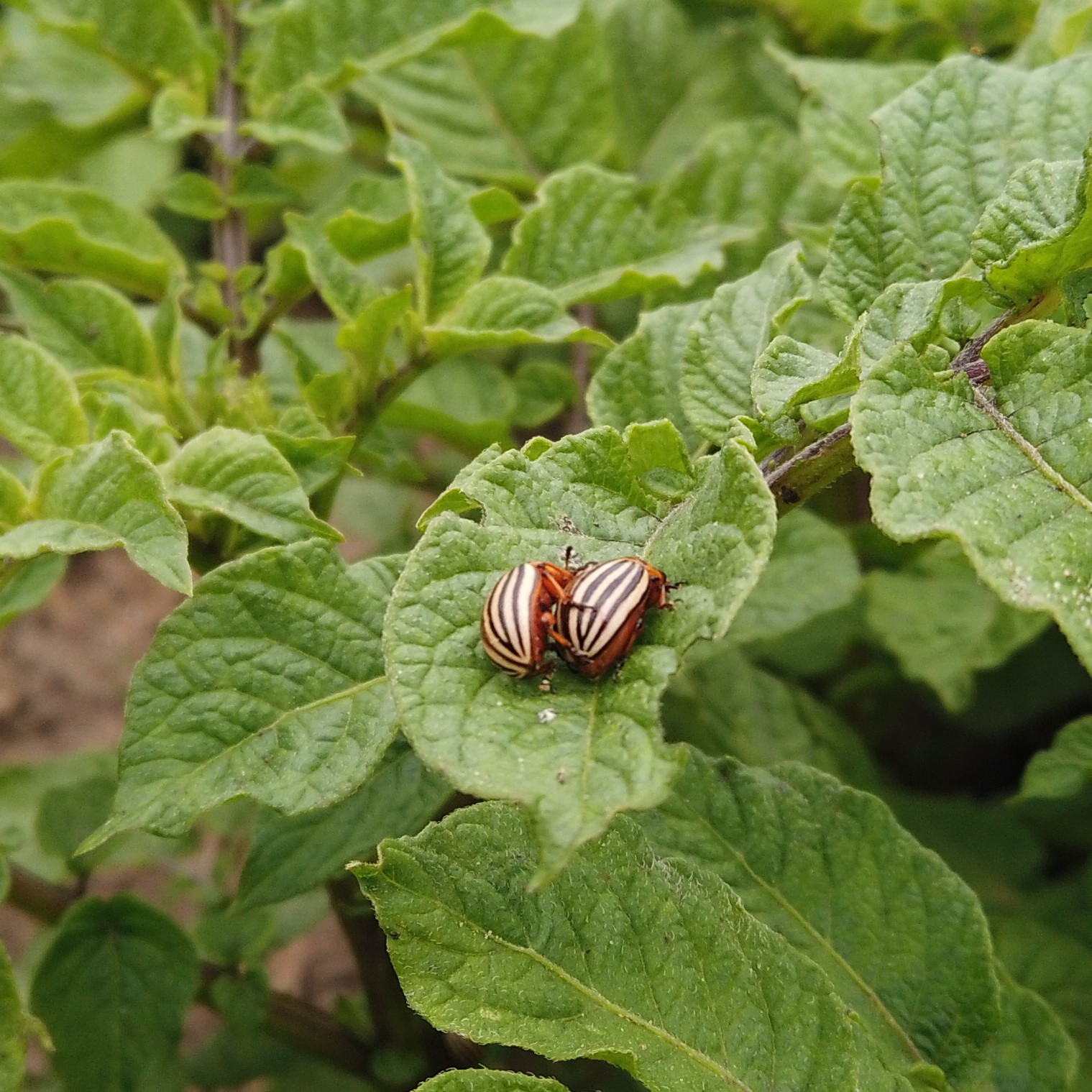
Komm ins BeetDer KartoffelkäferEin Kartoffelschädling mit vielen Namen: Colorado Beetle - Franzosenkäfer - Amikäfer
Mit Phythophthora infestans hatte ich Euch in den Episoden 3 und 5 einen Pilz vorgestellt, der bis zum heutigen Tag große Schäden im Kartoffelanbau verursacht.
Während Phytophthora infestans, also der Erreger der Kraut- und Knollenfäule, bereits Mitte des 19. Jahrhunderts nach Europa kam und aufgrund verheerender Ernteausfälle für Hungersnöte, Tod und eine riesige Auswanderungswelle gesorgt hat, erreichte Ende des 19. Jahrhunderts ein weiterer Kartoffelschädling Europa: der Kartoffelkäfer. Bis er in Europa ankam, hatte er schon eine interessante und weite Reise hinter sich...
2025-02-0728 min
Komm ins BeetDer WeihnachtsbaumWeinachtspodcast Teil 3
In Deutschland feiern Christen am 24. Dezember den Heilgen Abend. Traditionell stellen viele Menschen für Weihnachten einen Weihnachtsbaum auf. Auch in Kirchen und auf öffentlichen Plätzen stehen zur Weihnachtszeit Christbäume. In der Episode zum Weihnachtsbaum geht es u.a. um die Herkunft der Tradition aber auch darum, was Adam und Eva mit dem Weihnachtsbaum zu tun haben, seid wann die Bäume geschmückt werden und auch, was das Besondere an Nadelbäumen ist.
Mit diesem weihnachtlichen Podcast verabschiedet sich das Max-Planck-Institut für Molekulare Pflanzenphysiologie für dieses Jahr von seinen Zuhörerinnen und Zuhörern u...
2024-12-2424 min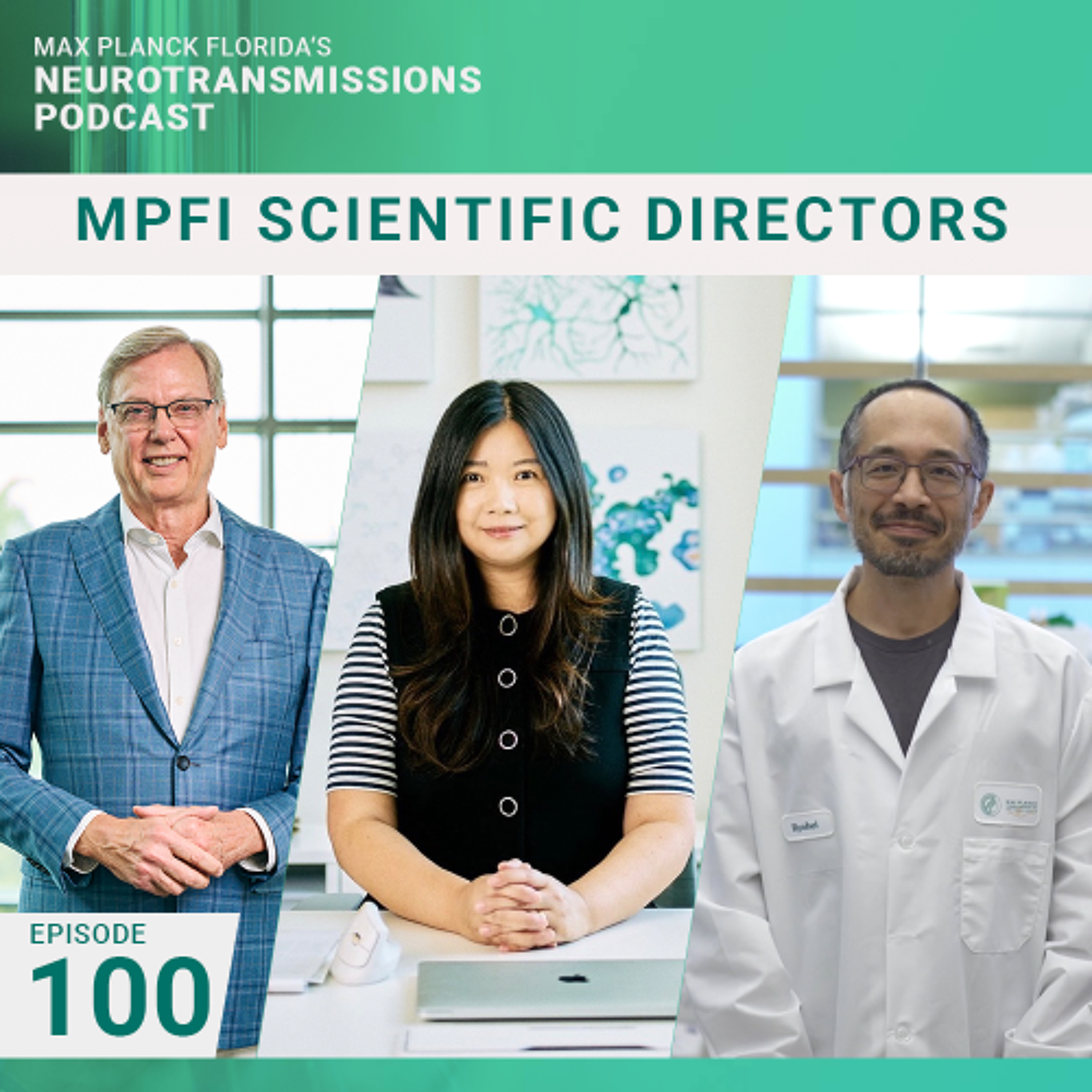
Max Planck Florida’s Neurotransmissions Podcast100. The State of Neuroscience Research with MPFI's Scientific DirectorsIn this 100th and final episode of the MPFI Neurotransmissions Podcast, hosts Joe Schumacher, Lesley Colgan, Jeremy Cheng, and Akash Pal sit down to reminisce on the journey of the podcast with podcast producer Kevin Albertini. To mark this incredible milestone, the podcast returns full circle and welcomes back our guest from our very first episode, CEO and Scientific Director David Fitzpatrick joined by the other two scientific directors of MPFI, Ryohei Yasuda and Lin Tian. The directors look back at the exciting changes that have happened both at MPFI and in the neuroscience field since the podcast started in 2016...
2024-12-1954 min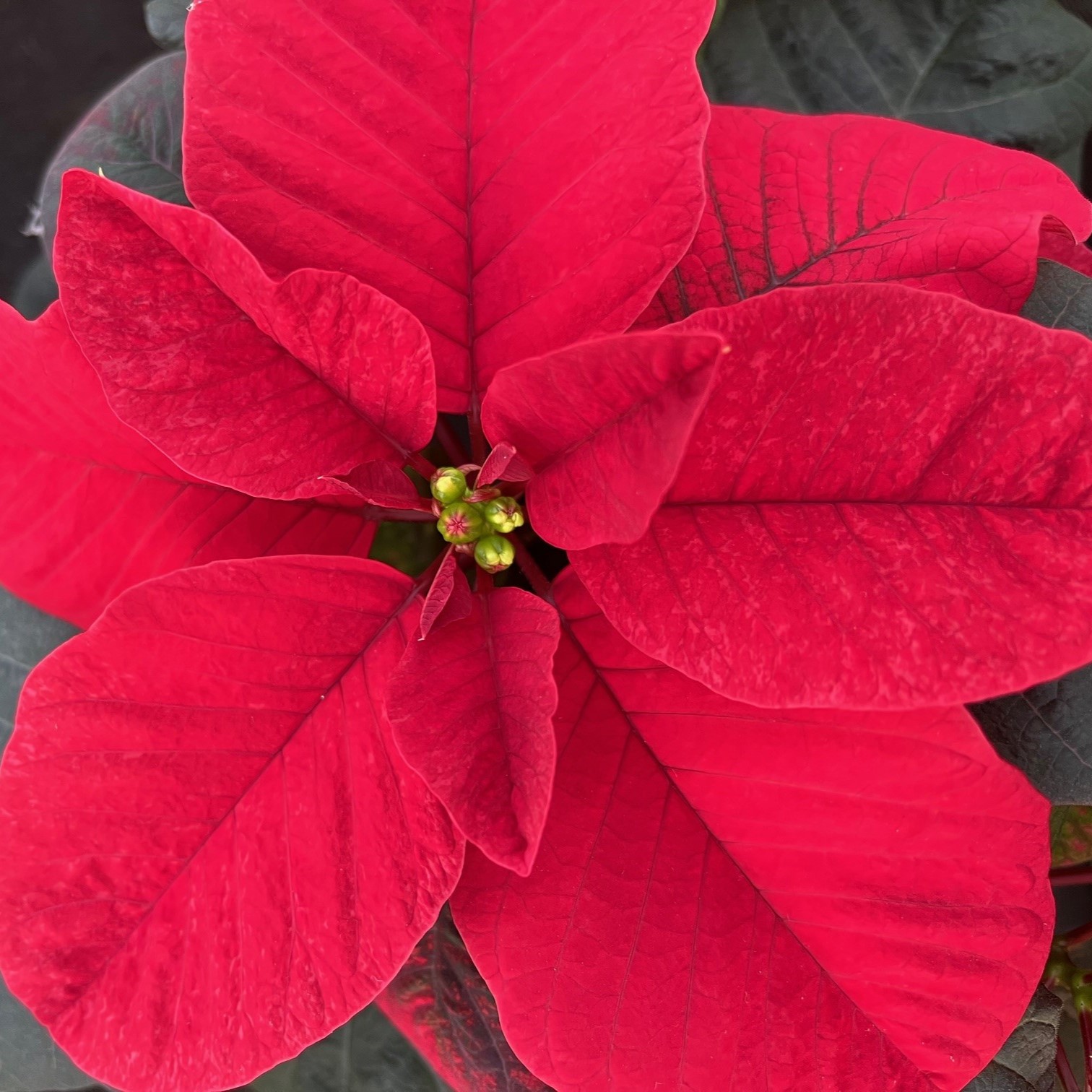
Komm ins BeetPoinsettia TagWeihnachtspodcast Teil 2
In dieser Episode zum Poensettia Tag geht es um eine Pflanze, die hier bei uns in Deutschland unter einem anderen Namen sehr bekannt ist. Sie ist eine der beliebtesten blühenden Zimmerpflanzen. Im Jahr 2021 gehörte sie mit 20,4 Millionen Exemplaren zu den meist produzierten Pflanzen in Deutschland und das, obwohl sie bei uns eigentlich nur zur Weihnachtszeit vertrieben wird. Ursprünglich stammt die Pflanze aus Mexiko, wo sie bereits bei den Azteken in Gärten angebaut wurde. Sie nutzten die Pflanze um ihre Tempelanlagen mit ihr zu schmücken. Sie glaubten, dass die Blume ein Symbol für Rein...
2024-12-1226 min
Komm ins BeetDie StechpalmeWeihnachtspodcast Teil 1
Am 1. Dezember beginnt in diesem Jahr für die Christen die Adventszeit. Passend zur Jahreszeit wird es in dieser und den nächsten Episoden einerseits um die Adventszeit und ihre Traditionen gehen, andererseits aber vor allem um die Pflanzen, mit denen wir unsere Räumlichkeiten in der Vorweihnachtszeit und Weihnachtszeit dekorieren. Über alle diese "Weihnachtsgewächse" gibt es Wissenswertes und Interessantes zu erzählen und um manche ranken sich kurzweilige oder bemerkenswerte Geschichten und Legenden.
In der heutigen Episode geht es um die Stechpalme, bei der es sich um eine der ungewöhnlichsten Laubbaumarten handelt mit lan...
2024-12-0127 min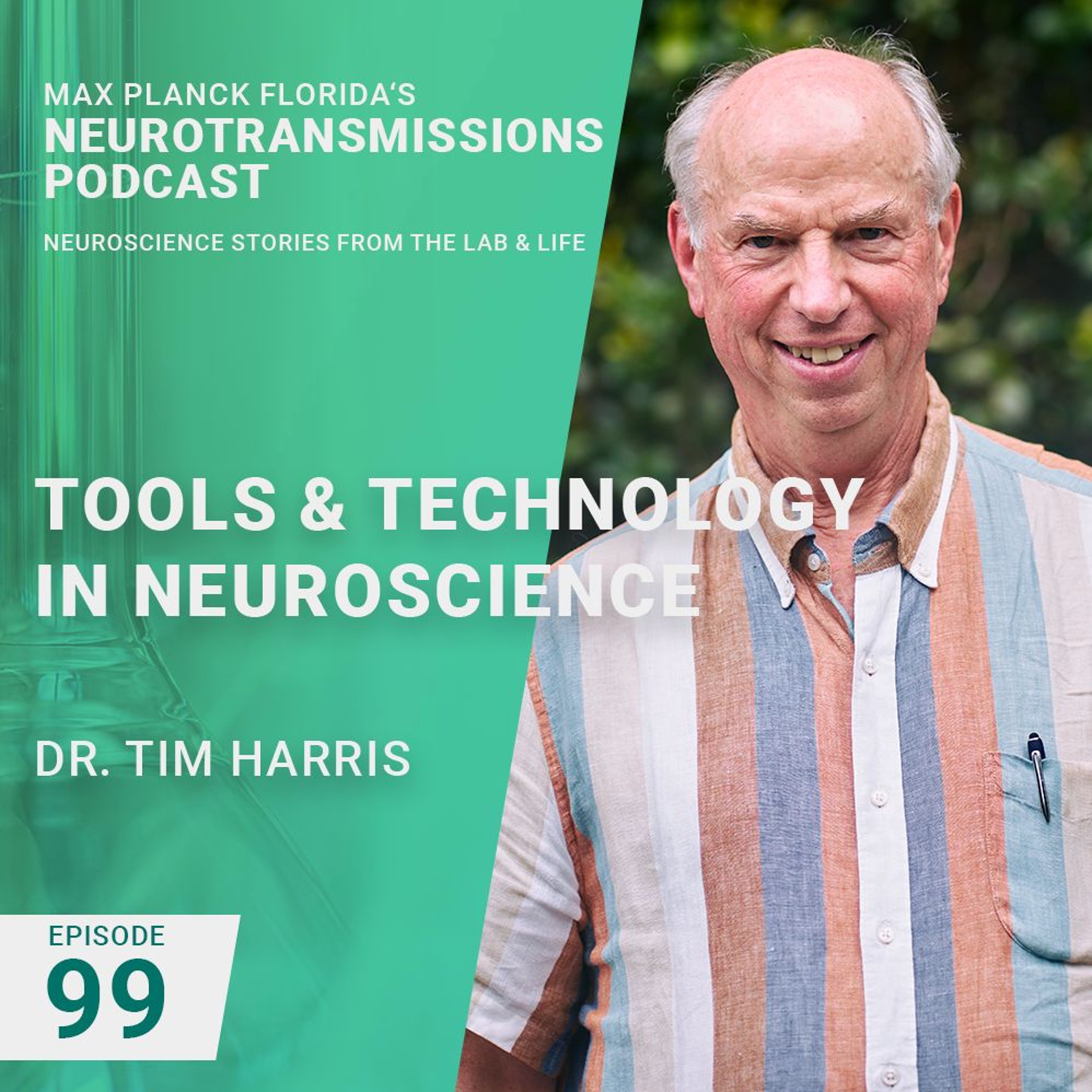
Max Planck Florida’s Neurotransmissions Podcast99. Tools & Technology in Neuroscience with Dr. Tim HarrisIn this episode of the MPFI Neurotransmissions Podcast, we sit down with the lead engineer behind the widely used Neuropixels Probe, Dr. Tim Harris from Janelia Research Campus. We also talk shop about Dr. Harris' 18 years working for Bell Labs.
Don't miss a special announcement from Joe at the end of the episode (46:34).
Episode Guest:
Tim Harris
Senior fellow at HHMI Janerlia Research Campus
Research Professor of biomedical engineering at Johns Hopkins University
Harris Lab: https://www.janelia.org/lab/harris-lab
Neuropixels- https://www.neuropixels.org/about
Episode Hosts:
Joe Schumacher - @JWScience
Jeremy Chang - @jtchang
Podcast episode produced...
2024-11-1348 min
Komm ins BeetRote Blätter fallenTeil 8: Bunt sind schon die Wälder, Teil II
Ob in Europa oder in Nordamerika, die Bäume bieten uns im Herbst ein imposantes Farbspektakel. Wie neuere Forschungen zeigen, unterscheidet sich die Herbstfärbung der Blätter allerdings, je nach geographischer Lage der Wälder. Während die Wälder in Nordamerika oder auch in Ostasien vor allem mit Rottönen aufwarten, ist unser goldener Herbst, wie der Name schon sagt, vor allem von Gelbtönen geprägt.
Was es damit auf sich hat und warum es laut neuerer Forschungen zu den Unterschieden bei der Farbe des Herbstlaubs kommt, darum geht...
2024-11-0621 min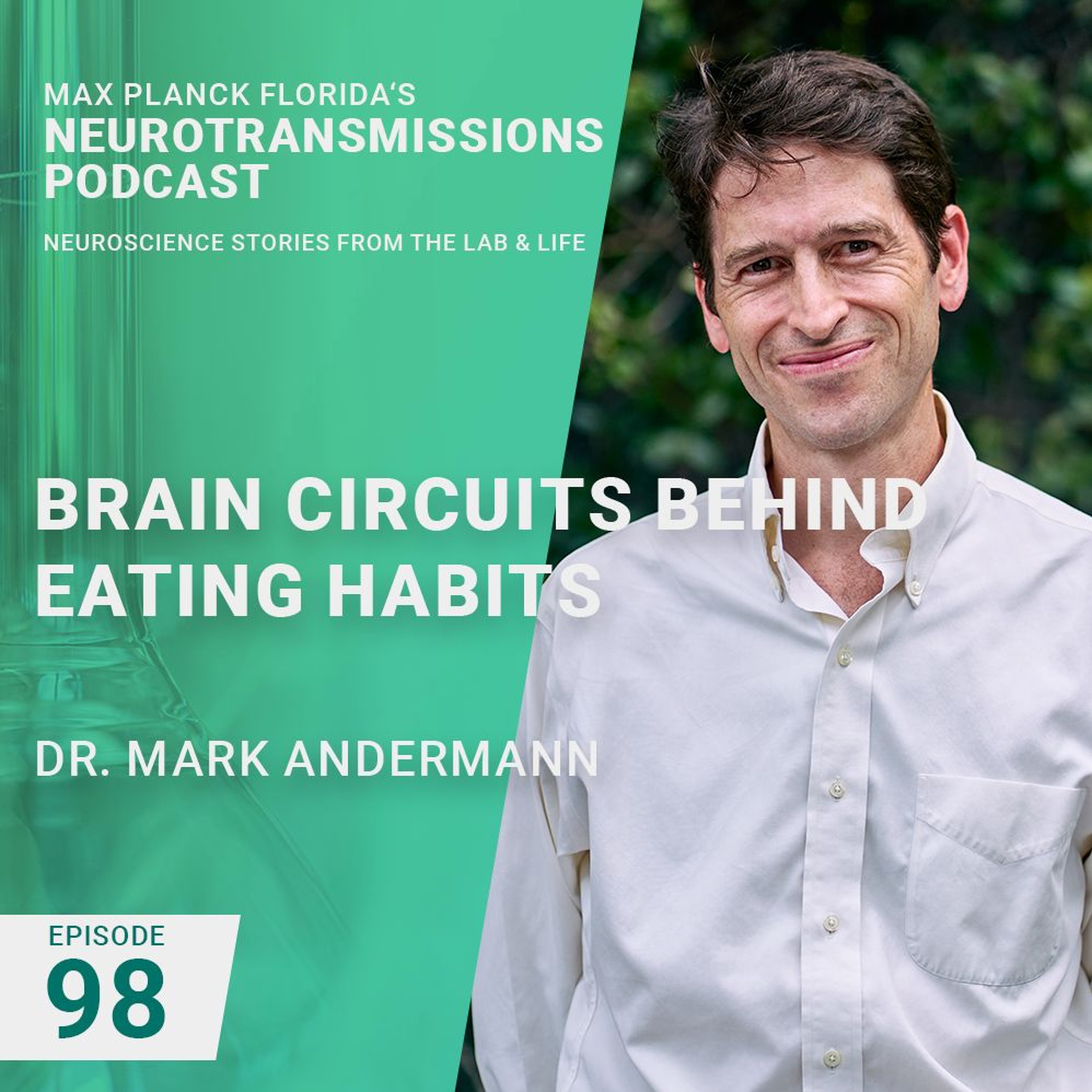
Max Planck Florida’s Neurotransmissions Podcast98. Brain Circuits Behind Eating Habits With Dr. Mark AndermannIn this episode of the MPFI Neurotransmissions Podcast, we sit down with Dr. Mark Andermann (@AndermannLab), a renowned neuroscientist at Beth Israel Deaconess Medical Center & Harvard University, to explore the intricate neural circuits that regulate feeding behavior. Dr. Andermann shares his groundbreaking research on how the brain processes hunger and satiety signals, and what happens when these systems go awry in cases of dysfunctional eating.
Episode Guest:
Mark Andermann - @AndermannLab
Andermann Lab: https://www.andermannlab.com/
Episode Hosts:
Akash Pal- @pal116a
Lesley Colgan - @Colgan_Lesley
Podcast episode produced and edited by Kevin Guy Albertini - @KGAlbertini
Do...
2024-10-1633 min
Max Planck Florida’s Neurotransmissions Podcast97. Locusts, Cannibalism And Smell with Dr. Bill HanssonIn this episode, Prof. Dr. Bill Hansson joins hosts Lesley and Joe to discuss his leadership as former Vice President of the Max Planck Society, his work on locust olfaction, and his recent identification of an odorant that can protect swarming locusts from cannibalism.
Interested in learning more about how the sense of smell is critical for behavior? Read Dr. Hannson's book full of stories of the amazing world of smell. Smelling to Survive: https://www.amazon.com/Smelling-Survive-Amazing-World-Sense-ebook/dp/B09Q8B7V4G
Episode Guest:
Bill Hannson @billhansson
Department of Evolutionary Neuroethology: https://www.ice.mpg.de/94928/evolutionary-neuroethology
...
2024-09-1141 min
Max Planck Florida’s Neurotransmissions Podcast96. Brain Power: Understanding the Brain's Energy Supply and Use with Dr. Tim RyanIn this episode, Dr. Tim Ryan joins hosts Lesley and Joe to discuss how neurons rely on a constant source of energy to function. They discuss how the brain's energy supply is maintained and regulated and what happens when this energy supply is disrupted.
Episode Guest:
Timothy Ryan
Ryan Lab: https://biochem.weill.cornell.edu/directory/primary-faculty/timothy-ryan-phd
Episode Hosts:
Lesley Colgan - @Lesley Colgan
Joe Schumacher - @JWScience
Podcast episode produced and edited by Kevin Guy Albertini - @KGAlbertini
Do you enjoy the podcast? Feel free to like this episode and follow us to hear more episodes!
Max Planck...
2024-08-1432 min
Max Planck Florida’s Neurotransmissions Podcast95 Visual Neuroscience Objects & Scenes With Tony MovshonIn this episode, Dr. Tony Movshon returns to the podcast to chat with hosts Jeremy and Akash about his work in understanding visual pathways and the differences between 'constructionist' and 'reductionist' approaches in neuroscience.
Dr. Movshon is a university professor researching vision and visual development at NYU School of Medicine. He has made contributions to the understanding of the brain mechanisms that represent the form and motion of objects, and the way these mechanisms contribute to perceptual judgments and visually guided movement.
Episode Guest:
Tony Movshon - @TonyMovshon
Movshon Lab: https://www.cns.nyu.edu/labs/movshonlab/
Episode Hosts:
Akash...
2024-07-1732 min
Science Social - Conversations on History, Science, and Society10: Times of TransienceWhile bookended by extended periods of unity and peace, the Period of Division in China was shaped by wars, displacement, and instability. Spanning nearly four centuries – from 280 to 589 AD to be exact – China fragmented into more than two dozen kingdoms at its peak. Social structures were installed and destroyed, competing canons of thought compiled, and multiple sects took shape. And yet, the Period of Division also witnessed an unprecedented flourishing of culture, innovation, and creativity. Together with historians Noa Hegesh and Keith Knapp, host Stephanie Hood journeys into this understudied era of Chinese history. How could art and culture thrive unde...
2024-06-1400 min
Max Planck Florida’s Neurotransmissions Podcast94. Perception And Abstraction With Jerry ChenIn this episode of Max Planck Florida's Neurotransmissions Podcast, we meet new cohost Dr. Akash Pal, who joins Jeremy in a discussion with Associate Professor of Biology at Boston University, Dr. Jerry Chen. They discuss how the brain can make sense of our complex sensory world through the processes of perception and abstraction and how Dr. Chen's research team uses in vivo imaging of genetically encoded indicators and spatial transcriptomics to understand these processes.
Episode Guest: Jerry Chen https://www.chen-lab.org/index.html
Episode Hosts:
Jeremy Chang - @jtchang
Akash Pal- @pal116a
Podcast episode produced and edited by...
2024-06-1235 min
Fri Tanke-poddenBrandon R. Brown: On the Life & Science of Max PlanckGuest on this week’s podcast is physicist Brandon R. Brown, author of »Planck« (Swedish title: »Max Planck«). In Brandon’s award-winning biography we learn of the visionary physicist who went on to outline the fundamental formulas for quantum theory. Planck was awarded the Nobel Prize in 1918, little suspecting that the scientific nation he represented would collapse a few decades later, marking the beginning of a cruel era in Germany's history.What role did Max Planck play in the development of quantum theory? What was Planck’s relationship with Albert Einstein like? And how did he grapple be...
2024-05-1739 min
Max Planck Florida’s Neurotransmissions Podcast93. Neuro-Emotional Well-Being with Kuan Hong WangIn this episode of MPFI's Neurotransmissions Lesley and Jeremy speak with Dr. Kuan Hong Wang, Professor at the University of Rochester and Co-Director of the New Brain Aging Center, about Emotional Well-Being, the power and challenges of big science approaches, and his scientific philosophy to exploring increasingly complex neuroscience questions.
Whether you're curious about the power of your own brain or fascinated by the world of scientific exploration, this episode of Neurotransmissions has something for you.
Episode Guest: Kuan Hong Wang
https://www.urmc.rochester.edu/labs/wang.aspx
https://www.newbrainaging.org/
Episode Hosts:
Lesley Colgan - @Lesley Colgan
...
2024-05-1536 min
Doing Time, Talking CrimeTrue Crime - Eine Ausbildung am MPI-CSLZu Gast: Antonia Frey, Hristina Grozdanova, Michelle Lomparski, Janos Pfefferle, Ivo Seitz
In dieser "True Crime"-Episode spricht Podcast-Host Anna Schaich mit fünf jungen Menschen über ihre Ausbildung am Max-Planck-Institut zur Erforschung von Kriminalität, Sicherheit und Recht. Wie lange dauert die Ausbildung, wieviel verdienen sie, was sind die Vorteile, wo liegen die Herausforderungen? All diese Fragen werden in dieser Folge offen und ehrlich diskutiert.
2024-03-2024 min
Max Planck Florida’s Neurotransmissions Podcast91. 4D-Cellular Physiology with Jennifer Lippincott-SchwartzIn this episode, hosts Lesley and Jeremy speak with Dr. Jennifer Lippincott-Schwartz, Senior Group Leader and Head of Janelia's 4D Cellular Physiology Group, about how technology has shaped her career and her vision for developing a molecular understanding of tissue physiology.
Episode Notes:
Please help us create content you want to hear by giving us feedback.
https://www.mpfi.org/news-media/podcast-survey/
Episode Guest:
Jennifer Lippincott-Schwartz - @JLS_Lab
Episode Hosts:
Lesley Colgan - @Colgan_Lesley
Jeremy Chang - @jtchang
Podcast episode produced and edited by Kevin Guy Albertini - @KGAlbertini
Do you enjoy the podcast? Feel free to like...
2024-03-1830 min
Max Planck Florida’s Neurotransmissions Podcast90. Mini 2-P Microscopy With Weijian ZongIn this episode, hosts Lesley and Joe speak with Dr. Weijian Zong about the motivation, challenges, and advancements behind the development of the MINI2P, an open-source miniaturized two-photon microscope that allows neuroscientists to visualize brain activity in freely behaving animals.
Episode Notes:
Help support the science, training, and outreach programs of MPFI by visiting mpfi.org/donate
Episode Guest:
Weijian Zong - @WikiZong
Mini2P - @TheMini2P
Episode Hosts:
Lesley Colgan - @Colgan_Lesley
Joe Schumacher - @JWscience
Podcast episode produced and edited by Kevin Guy Albertini - @KGAlbertini
Do you enjoy the podcast? Feel free to like...
2024-02-2334 minScience Social - Conversations on History, Science, and Society09 - How Alchemy Helped Feed Early Modern EuropeIn the early modern era, European agriculture was in crisis. Soils had become depleted, crops grew smaller and fewer in number, and the growing seasons were shorter and cooler. Food production could no longer keep pace with population growth. To find solutions, some to turned to a field not commonly associated with agricultural production: alchemy. From the philosopher's stone to "vegetable salt" to early attempts in fertilization and modern chemical agriculture: host Stephanie Hood is joined by historian Justin Niermeier-Dohoney as they explore how people in the past dealt with similar ecological challenges to those we are facing today—and ho...
2024-02-1400 min
Fabeln, Fell und FaktenS3E11 – Max Planck und die TierversucheMax Planck war Physiker und hatte mit Tierversuchen nichts am Hut, er ist aber Namensgeber der Max-Planck-Gesellschaft (MPG), der wohl renommiertesten Wissenschaftsorganisation in Deutschland, und die folgt immer noch seinem Credo: „Dem Anwenden muss das Erkennen vorausgehen“. Denn die Max-Planck-Gesellschaft betreibt in ihren über 80 Instituten Grundlagenforschung. Darunter sind auch einige Institute, die Tierversuche durchführen, bei denen man häufig nicht das findet, was man bei Tierversuchen vielleicht als „Standard“ bezeichnen könnte: Etwa exotische Tierarten und Forschungsfragen an den Grenzen des biologischen Wissens.
Und auch der Umgang mit dem Thema Tierversuche ist alles andere als Standard bei der MPG...
2024-02-1340 minScience Social - Conversations on History, Science, and Society08 - Léon Rosenfeld and the Quest for UnificationThe Belgian physicist Léon Rosenfeld conducted groundbreaking research in theoretical physics. Yet he, and his work, are barely known about. Together, podcast host Stephanie Hood and historian of physics Bernadette Lessel go on a search for clues from Rosenfeld's life: What made his research so important, during a time when the field of physics itself went through a significant shift? Might looking at its history change physics today, and if so, how? And why are some figures in science better remembered than others?
Learn more about Leon Rosenfeld and his research: https://bit.ly/maths-final-theory
About Bernadette Lessel: https://w...
2024-01-2500 min
Wirtschaft Düsseldorf unplugged#165 Über modernste Materialforschung für wichtige Bereiche wie Nachhaltigkeit, Energie, Digitalisierung, Mobilität, Infrastruktur und Medizin: mit Katja Hübel (Max-Planck-Institut)Forschung findet in Düsseldorf statt! Und zwar im Max Planck Institut für Eisenforschung, das mit seinem internationalen Team modernste Materialforschung für wichtige Bereiche wie Nachhaltigkeit, Energie, Digitalisierung, Mobilität, Infrastruktur und Medizin betreibt.
Durch eine dynamische Struktur und globale Zusammenarbeit ist das Institut bestens gerüstet, um drängende globale Herausforderungen anzugehen.
Seine Forschung befasst sich mit CO2-Reduzierung und nachhaltiger Produktion, Energieumwandlung, Automobilantriebstechnologie, maschinellem Lernen und der Suche nach neuen Hochleistungsmaterialien.
Um im international Kontext wahrgenommen zu werden, aber auch national und regional sichtbar zu sein, setzt man bewussst auf Koo...
2024-01-1037 min
Max Planck Florida’s Neurotransmissions Podcast89. Epigenetics, Astrocytes And Olfaction With Dr. Debosmita SardarIn this episode, hosts Joe and Lesley chat with Dr. Debosmita Sardar about her research into the roles of astrocytes, epigenetics, and serotonylation during odor processing. Dr. Sardar is a K99 Postdoctoral Fellow at Baylor College of Medicine and a selected MPFI NeuroMEETS speaker.
Episode Notes:
Max Planck NeuroMEETS: https://www.mpfi.org/science/max-planck-neuromeets
Episode Guest:
Debosmita Sardar @debo_Astrocyte
Episode Hosts:
Lesley Colgan - @Lesley Colgan
Joe Schumacher - @JWscience
Podcast episode produced and edited by Kevin Guy Albertini - @KGAlbertini
Do you enjoy the podcast? Feel free to like this episode and follow us to hear more...
2023-12-1539 min
Komm ins BeetBunt sind schon die WälderTeil 7: Wie sich Tiere und Pflanzen auf den Winter vorbereiten
Typisch für den Herbst in unseren Breiten sind die Laubbäume, deren Blätter im September/Oktober ihre Farbe von grün nach gelb und orange wechseln. Bei Sonnenschein erscheinen die Wälder geradezu golden, weshalb es oft auch Goldener Oktober oder Goldener Herbst heißt. Die Herbstfärbung des Laubes ist jedes Jahr ein besonderes Naturschauspiel und kündet den Übergang vom Sommer zum Winter an.
Während der Oktober meist noch warmes und sonniges Wetter zu bieten hat, erscheint uns der November oft dunkel und trist. Das liegt...
2023-12-1227 minDoing Time, Talking CrimeTrue Crime: An Apprenticeship at the MPI-CSLGuests: Sofie Brüchig, Antonia Frey, Hristina Grozdanova, Janos Pfefferle, Ivo Seitz
In this "true crime" episode Christopher Murphy sits down with five apprentices from the Max Planck Institute for the Study of Crime Security and Law to talk about what doing an apprenticeship at the Institute entails. How long does an apprenticeship take? What does it pay? What are the positives? What are the negatives? Is the Max Planck Institute the right place for you? Listen in and find out the answers to all these questions and a whole lot more.
2023-12-0638 min
Medienbecker - Zukunft im Blick#116: Burkhard Nickel zur Gründung der Max-Planck Gesellschaft | Zukunft im BlickIn dieser Episode bleibe ich lokal. Zu Gast ist Burkhard Nickel aus Bad Driburg, der Ort in dem ich selber auch wohne. Er ist seit 3 Jahren persionierter Lehrer und hatte die Fächer Deutsch, Geschichte und Politik. Er unterrichtete an dem Gymnasium St. Kaspar in Neuenheerse, ein Stadtteil von Bad Driburg.
Sein Interesse für die lokalen historischen Geschehnisse führte ihn zu dem Hinweis, dass in der beschaulichen Kleinstadt kurz nach dem Ende des zweiten Weltkriegs ganz illustre Gäste aus der Wissenschaft vor Ort waren um sich hier von den Strapazen des Krieges zu erholen. Max Planck und Otto...
2023-11-2336 min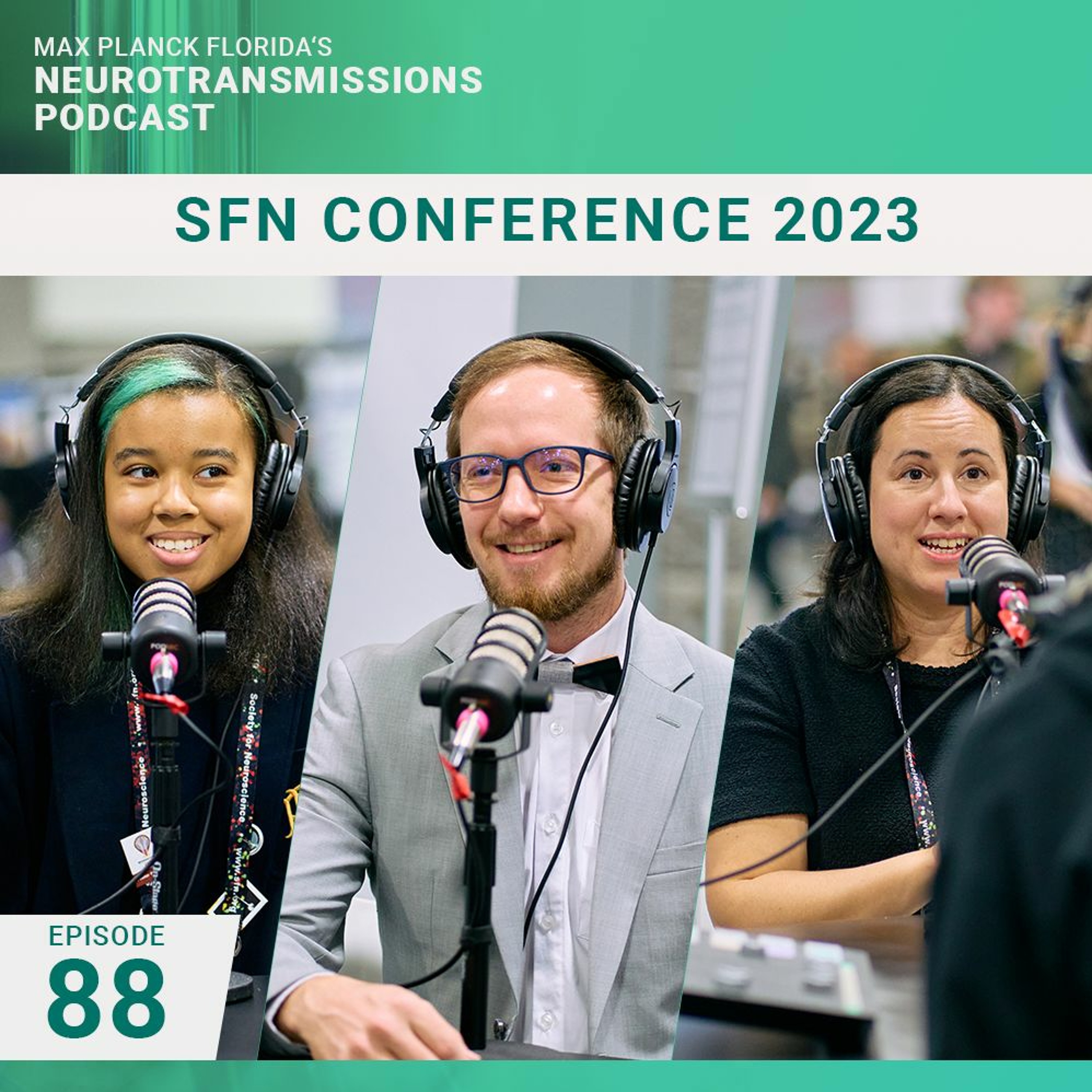
Max Planck Florida’s Neurotransmissions Podcast88. SFN 2023 with Carolyn Rodriguez, Tim Holford, And Alexis GreenIn this special 2023 Society for Neuroscience Meeting, Lesley discusses the experience of attending the SfN conference for the first time with postbaccalaureate at the National Eye Institute, Alexis Green; presenting a poster and developing connections at SfN with postdoctoral researcher at MPFI, Dr. Tim Holford; and further discuss new insights in Obsessive Compulsive Disorder (OCD) research with Professor, and Associate Dean for Academic Affairs at Stanford University School of Medicine, Dr. Carolyn Rodriguez.
Episode Guests:
Alexis Green
Tim Holford
Carolyn Rodriguez @CRodriguezMDPhD
https://med.stanford.edu/rodriguezlab
Do you enjoy watching the podcast? Feel free to like this episode and...
2023-11-2138 min
Science Social - Conversations on History, Science, and SocietySpecial Episode: There Is No One History of Science (But It’s All Interconnected)What is truth? When does a pandemic “end”? What decisions do we want to leave to artificial intelligence… and which would we rather not?
These are some of the questions “that keep them up at night,” as science journalist Pakinam Amer puts it. “They” are researchers at the Max Planck Institute for the History of Science: Adrien de Sutter, Alexander Blum, Dora Vargha, and Yishu Mao. In this special episode of Science Social, Pakinam and host Stephanie Hood sit together with them to journey through the multifaceted ideas and concepts at the intersections of science, society, and history.
In conversation, we explore how...
2023-08-2800 min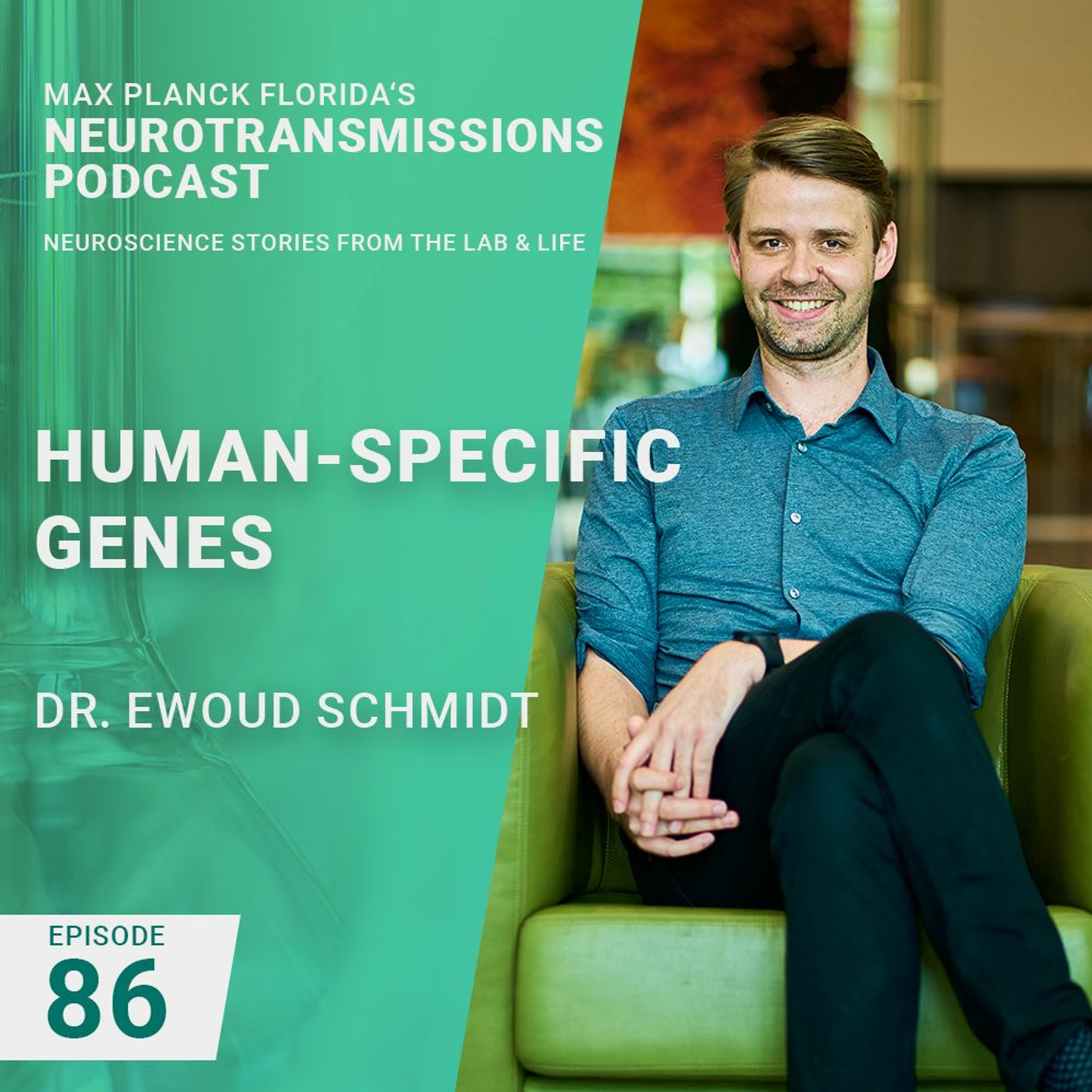
Max Planck Florida’s Neurotransmissions Podcast86. Human-Specific Genes with Ewoud SchmidtIn this episode, hosts Joe and Lesley chat with Dr. Ewoud Schmidt about his work in studying neuronal circuit development, function, and behavior and how human-specific genes shape neuronal circuits in health and disease. Dr. Schmidt is an Assistant Professor and the Principle Investigator for the Schmidt Lab at the Medical University of South Carolina.
Episode Guest:
Ewoud Scmidt @ereschmidt
Episode Hosts:
Lesley Colgan @colgan_lesley
Joe Schumacher @JWscience
Max Planck Florida's Neurotransmissions Podcast
Website: https://www.mpfi.org/news-media/podcast
Social Media: @MPFneuro
Twitter: https://twitter.com/MPFNeuro
Instagram: https://www.instagram.com/mpfneuro
Facebook: https://www.facebook.com...
2023-08-1632 min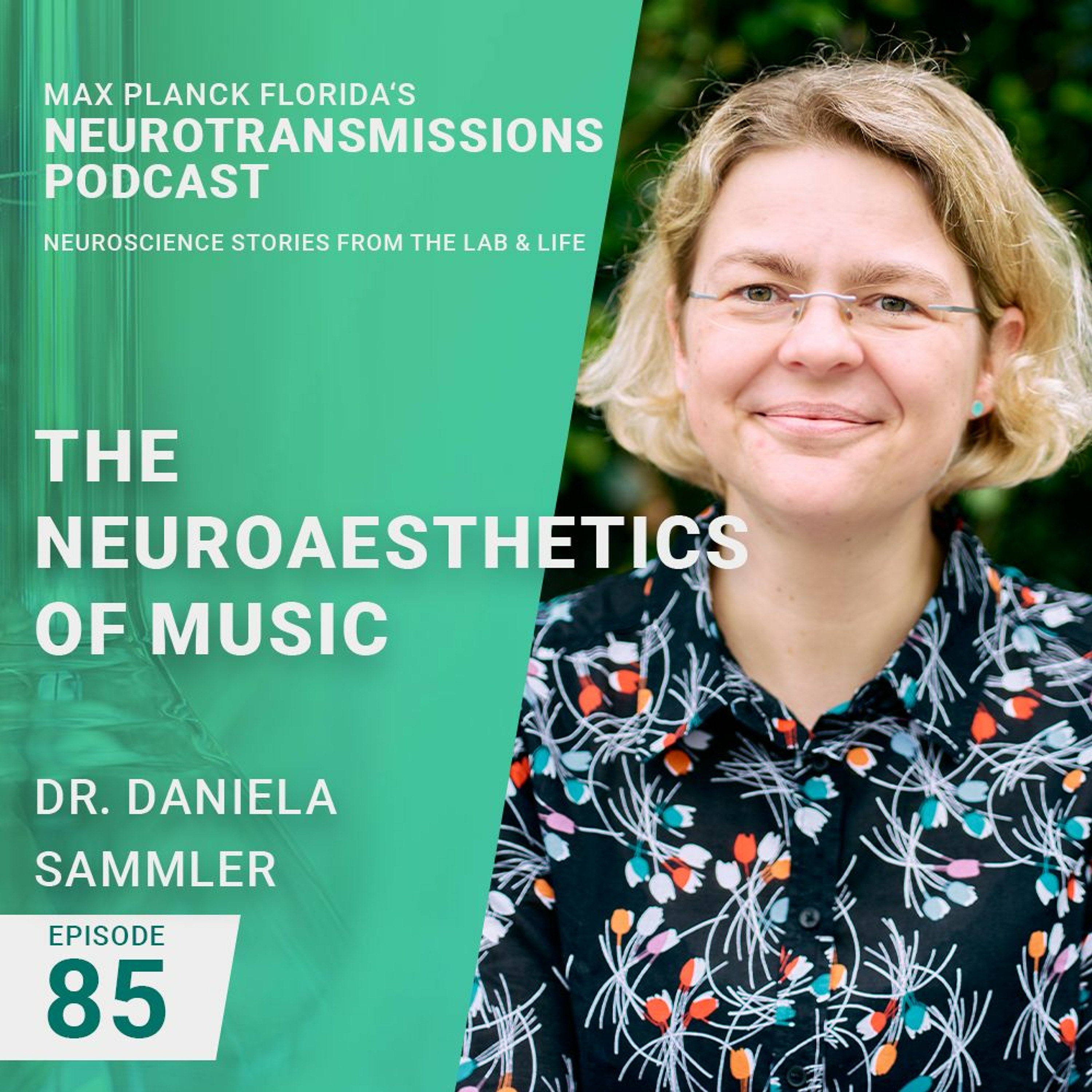
Max Planck Florida’s Neurotransmissions Podcast85. The Neuroaesthetics of Music With Daniela SammlerIn this episode, hosts Joe and Lesley sit down with Daniela Sammler, a researcher investigating neurocognitive functions related to language and music, and how they might complement each other. A number of fascinating areas are discussed including her work her working on methods for recording human brain activity during complex tasks such as playing piano while in an fMRI.
Episode Guest:
Daniela Sammler @DanielaSammler
Episode Hosts:
Lesley Colgan @colgan_lesley
Joe Schumacher @JWscience
Podcast episode produced and edited by Kevin Guy Albertini - @KGAlbertini
Do you enjoy listening to the podcast? Feel free to like this episode and follow us...
2023-07-2638 minDoing Time, Talking CrimeWas bringt mir eine wissenschaftliche Karriere bei Max Planck?Zu Gast: Annika Hampel
Offen und ehrlich spricht Recruitment Officer Annika Hampel über die Herausforderungen, mit denen sich Wissenschaftlerinnen und Wissenschaftler in deutschen Forschungseinrichtungen auseinandersetzen müssen – befristete Verträge, starke Hierarchien, enormer Leistungsdruck. Auch weiß sie zu berichten, dass potenzielle Bewerberinnen und Bewerber aus dem Ausland sich von Berichten über die überbordende Bürokratie, die schwere deutsche Sprache und die vermeintlich fehlende Gastfreundschaft abschrecken lassen. Warum sie dennoch aus voller Überzeugung und mit gutem Gewissen wissenschaftliche Talente aus der ganzen Welt ans Freiburger Max-Planck-Institut holt, berichtet sie in der neuen Folge unseres Podcasts.
2023-07-0328 min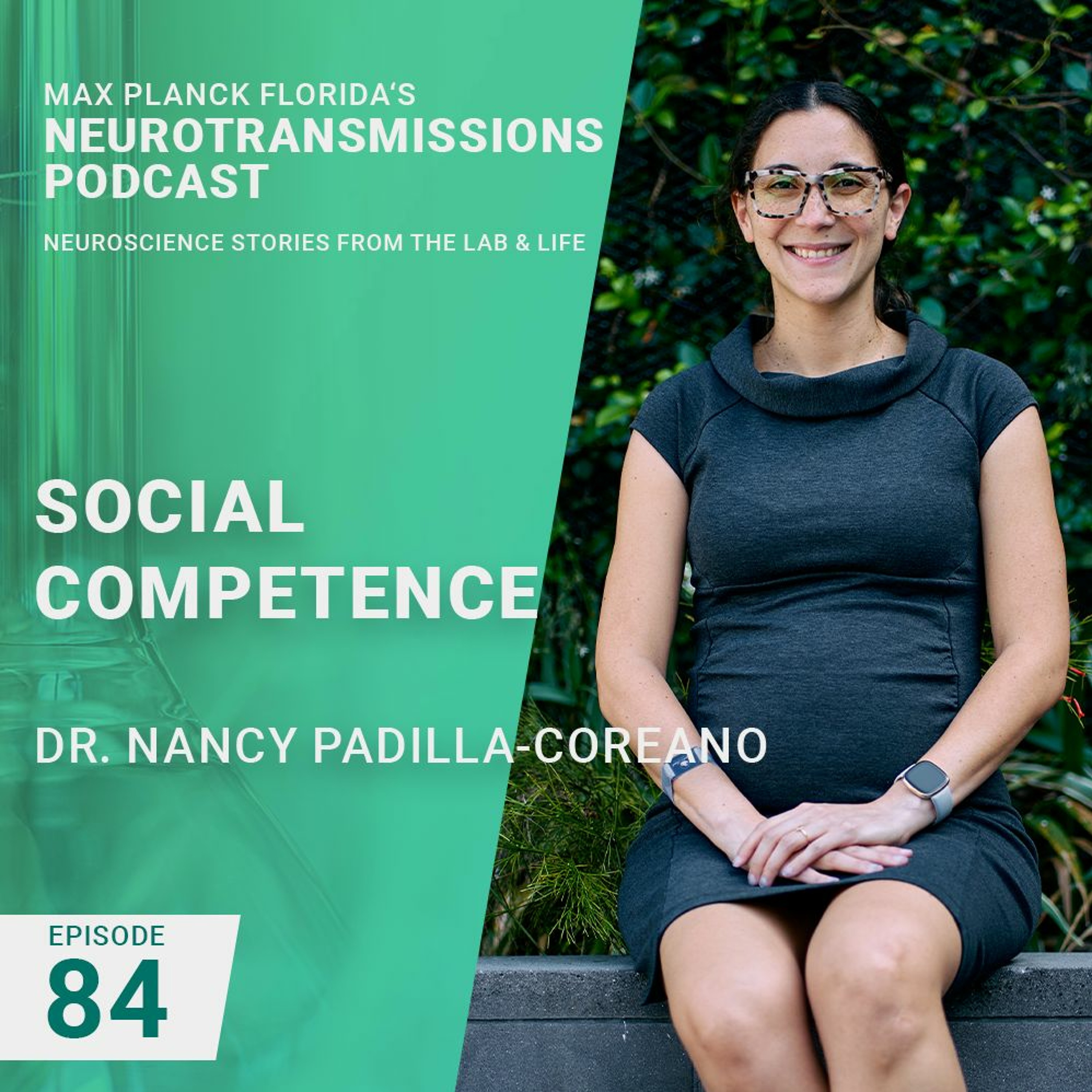
Max Planck Florida’s Neurotransmissions Podcast84. Social Competence with Nancy Padilla-CoreanoIn this episode, hosts Joe and Lesley sit down with Nancy Padilla-Coreano, a Principal Investigator at the University of Florida, to discuss the expanding field of social behavior and her work into the brain mechanisms behind social dominance and social competence.
Be sure to check the multimedia platform Stories of Women in Neuroscience co-founded by Dr. Padilla-Coreano: https://www.storiesofwin.org
Episode Guest:
Nancy Padilla-Coreano @DrNancyPadilla
Episode Hosts:
Lesley Colgan @colgan_lesley
Joe Schumacher @JWscience
Podcast episode produced and edited by Kevin Guy Albertini - @KGAlbertini
Do you enjoy listening to the podcast? Feel free to like this episode and...
2023-06-2845 min
Max Planck Florida’s Neurotransmissions Podcast83. SFN 2022 Part 2 with Justus Kebschull, Rachel Arey, and Ubadah SabbaghIn this special two-episode conference podcast, Joe brings you scientific highlights from the 2022 Society for Neuroscience Meeting. In Part 2 Joe discusses new technologies for comparative connectomics and transcriptomics with Dr. Justus Kebschull, cognitive decline in aging C. elegans with Dr. Rachel Arey and thalamic-cortical circuits and our responsibility for science advocacy with Dr. Ubadah Sabbagh.
Episode Guests:
Justus Kebschull @JustusKebschull https://www.kebschull-lab.org/
Rachel Arey @AreyLab. https://www.bcm.edu/people-search/rachel-arey-17679
Ubadah Sabbagh@neubadah https://ubadahsabbagh.com/
Episode host:
Joe @JWScience
Podcast episode produced and edited by Kevin Guy Albertini - @KGAlbertini
Do you enjoy watching the podcast...
2023-06-141h 14
Max Planck Florida’s Neurotransmissions Podcast82. SFN 2022 Part 1 with Gordon Smith, Won Chan Oh, and Bethany StanhopeIn this special two-episode conference podcast, Joe brings you scientific highlights from the 2022 Society for Neuroscience Meeting. In Part 1 Joe catches up with some old friends to chat about their latest science and career journeys. He discusses network development with Dr. Gordon Smith, double spines with Dr. Won Chan Oh, and evolutionary adaptations of cavefish with Dr. Bethany Stanhope. They also discuss the excitement and challenges of starting an independent lab and advice for first-time SfN attendees
Episode Guests:
Gordon Smith https://med.umn.edu/bio/gordon-smith
Won Chan Oh https://sites.google.com/view/wonchanoh/home
Bethany Stanhope @BA...
2023-06-141h 11
Last Week on Earth with GARIEarth's past & future with Director of Max Planck Institute Bjorn StevensBjorn Stevens is the Director of the Max Plank Institute for Meteorology in Berlin - Bjorn is a top climate scientist, with particular expertise in clouds. New climate model simulations of the world - EVE) Earth Virtualisation EnginesHuman vs science-centric climate scienceEarth in 100 yearsDarwin and the theory of e-0volutionIt's also clear that humans are responsible for global warming and not enough is being done if the goal is to stop the warming, whats the scientific consequence of that?What's the difference between 2 and 1,5 degrees of warming?How AI aids people with different backgrounds and knowledge bases to u...
2023-06-0743 min
Max Planck Florida’s Neurotransmissions Podcast81. Pain and Plasticity With Sang Jeong KimIn this episode, Lesley has a chat with Dr. Sang Jeong Kim about his research on the neural mechanisms of pain and plasticity. Dr. Kim is the Director for the Neuroscience Research Center and a professor at the Seoul National University, College of Medicine in South Korea.
Do you enjoy listening to the podcast? Feel free to like this episode and follow us to hear more.
Max Planck Florida's Neurotransmissions Podcast
Website: https://www.mpfi.org/news-media/podcast
Social Media: @MPFneuro
Twitter: https://twitter.com/MPFNeuro
Instagram: https://www.instagram.com/mpfneuro
Facebook: https://www.facebook.com/MPFNeuro
Episode Host:
...
2023-06-0130 min
Max Planck Florida’s Neurotransmissions Podcast80. Neuroscience of Locomotion with Ole KiehnLocomotion is a universal motor action expressed as the output of many integrated brain functions, with brainstem circuits acting as the gate between brain areas regulating innate, emotional, or motivational locomotion and executing spinal motor circuits.
In this episode, Joe and Lesley have a chat with Dr. Ole Kiehn about his research on the relationships between locomotion in health and disease. Dr.Kiehn is a professor of Integrative Neuroscience at the Department of Neuroscience, University of Copenhagen, Denmark.
Do you enjoy listening to the podcast? Feel free to like this episode and follow us to hear more.
Max Planck Florida's...
2023-05-1738 min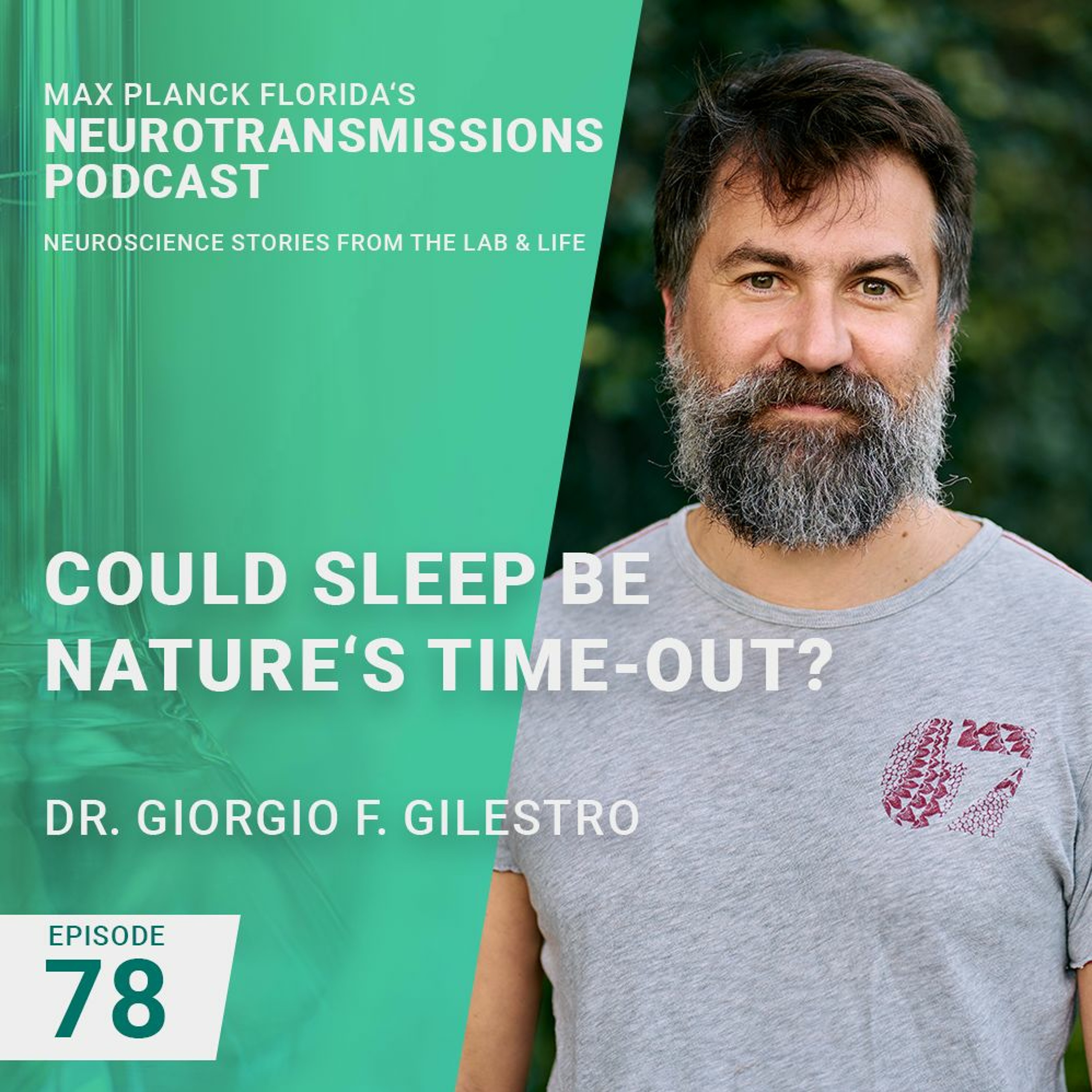
Max Planck Florida’s Neurotransmissions Podcast78. Could Sleep be Nature's Time-out? | Giorgio F. GilestroSleep is a highly conserved behavior among the animal kingdom, appearing as distant as jellyfish and elephants. It is generally believed that sleep serves a crucially important yet mysterious “core function” that is shared among all animals and that drives its evolution, but the evidence behind this hypothesis is lacking.
In this episode, Lesley has a fun chat with Dr. Giorgio F. Gilestro, an Associate Professor from Imperial College in London, England who for the past 15 years has been researching sleep and its link to biology and behavior.
Episode Guest:
Giorgio F. Gilestro @giorgiogilestro
Gilestro Lab: https://lab.gilest.ro/the...
2023-04-1241 min
KüstoryKüstory 8.2 | Max Planck und das KriegsendeGast: Marco Büchmann (Kiel)
Die Ereignisse der letzten Kriegsjahre machten auch vor einem großen Wissenschaftler wie Max Planck nicht halt. 1943 wurde auch seine Wohnung in Berlin-Grunewald zerstört, wodurch auch große Teile seiner privaten Unterlagen verloren gingen. Planck selbst floh nach Göttingen, wo er eine notdürftige Unterkunft fand. Im Gespräch mit Laura erzählt der Kieler Student Marco Büchmann vom Schicksal Max Plancks in den letzten Kriegsmonaten.
Diese Bonusepisode entstand als Ergebnis des praxisorientierten Seminars "Max Planck in Kiel. Sicherung, Sichtung und Auswertung seines unbekannten Nachlasses", das im Wintersemester 2022/23 am Historisc...
2023-02-2216 min
tegory% |Max-Planck-Institut | Takiwātanga | Gerüchte in der SchuleIn der neuesten Episode des Radiorebell Podcasts erzähle ich von meinem Besuch auf einem Symposium im Max-Planck-Institut für Kernphysik und für Astronomie in Heidelberg, wir erklären den Namen eine unserer Mitgliedschaften auf Steady, Takiwātanga, sprechen über Gerüchte, die an meiner Schule kursieren, über Zeugnisse, Corona, den Niedergang von Twitter und wie wir damit umgehen wollen. Mein Besuch im Max-Planck-Institut Am Wochenende war ich auf einem Symposium der Physik-Preisträger*innen von Jugend forscht eingeladen. Während ich beim gemeinsamen Abendessen im Innenraum Pandemie-bedingt nur etwas trinken konnte, war der darauffolgende Tag in den Max-Planck-Instituten für Astron...
2023-02-2100 min
Radiorebell-Podcast der WochenendrebellenTakiwātanga am Max-Planck-Institut und Inzestgerüchte in der SchuleIn der neuesten Episode des Radiorebell Podcasts erzähle ich von meinem Besuch auf einem Symposium im Max-Planck-Institut für Kernphysik und für Astronomie in Heidelberg, wir erklären den Namen eine unserer Mitgliedschaften auf Steady, Takiwātanga,
In der neuesten Episode des Radiorebell Podcasts erzähle ich von meinem Besuch auf einem Symposium im Max-Planck-Institut für Kernphysik und für Astronomie in Heidelberg, wir erklären den Namen eine unserer Mitgliedschaften auf Steady, Takiwātanga, sprechen über Gerüchte, die an meiner Schule kursieren, über Zeugnisse, Corona, den Niedergang von Twitter und wie wir damit umgehen wollen.
Mein Besuch i...
2023-02-2140 min
Max Planck Florida’s Neurotransmissions Podcast76. Gene Transcription and Its Regulation with Patrick CramerIn this episode, hosts Lesley and Joe chat with the Max Planck Society President-elect, Dr. Patrick Cramer. Dr. Cramer is a chemist and molecular biologist currently serving as Managing Director at the Max Planck Institute for Multidisciplinary Sciences in Göttingen, Germany. In June 2023, he will become the next president of the 75-year-old Max Planck Society, the number one biomedical nonprofit worldwide.
Watch Patrick Cramer's full-length talk at Science Meets Music: https://youtu.be/AuFI_z_K1eo
Podcast episode produced and edited by Kevin Guy Albertini - @KGAlbertini
Do you enjoy listening to the podcast? Feel free to like t...
2023-02-1547 min
Max Planck Florida’s Neurotransmissions Podcast75. Neural Computation in Flies with Lukas GroschnerIn this episode, host Joe chats with Dr. Lukas Groschner, a Max Planck NeuroMEETS invited speaker, about his curiosity-driven research into the molecules and mechanisms that mediate information processing in flies. Don't miss Dr. Groschner's story of being inspired after listening to a past episode of the podcast.
For more information about the NeuroMEETS seminar series, visit https://www.mpfi.org/science/max-planck-neuromeets
Do you enjoy listening to the podcast? Feel free to like this episode and follow us to hear more.
Website: neuropodcast.org
Podcast episode produced and edited by Kevin Guy Albertini - @KGAlbertini
2023-01-1730 min
KüstoryKüstory 8.1 | Kiel, Quanten und Kondolenzen. Max Planck und sein Kieler NachlassGäste: Prof. Dr. Michael Bonitz (Kiel) und Anne Krohn (Kiel)
Er gehört zu den ganz Großen Namen der deutschen Wissenschaft: Max Planck. Er entdeckte die Quantenphysik, erhielt den Nobelpreis und gab der größten deutschen Forschungseinrichtung seinen Namen. Was viele aber nicht wissen: geboren wurde er in Kiel!
Seit 2020 befindet sich sein privater Nachlass in der Universität seiner Heimatstadt, wo er von einem interdisziplinären Team bearbeitet wird. Karen und Laura haben in der aktuellen Episode die Historikerin Anne Krohn und den Physiker Prof. Dr. Michael Bonitz zu Gast. In dem Gespräch geht es...
2022-12-0745 min
Max Planck Florida’s Neurotransmissions Podcast74. The Power of Democratizing Neurotechnologies with Ed BoydenIn this episode, hosts Joe and Jeremy catch up with Dr. Ed Boyden on the many applications of his neurotechnologies such as optogenetics and expansion microscopy, the power of combining these technologies to establish a computational model of a small organism, and Dr. Boyden's latest technology- signaling reporter islands.
Do you enjoy listening to the podcast? Feel free to like this episode and follow us to hear more.
Podcast episode produced and edited by Kevin Guy Albertini - @KGAlbertini
Max Planck Florida's Neurotransmissions Podcast
Website: https://www.mpfi.org/news-media/podcast
Social Media: @MPFneuro
Twitter: https://twitter.com/MPFNeuro
Instagram...
2022-12-0238 min
The MicroscopistsStefan Hell (Max Planck Institute)#56 — Stefan Hell is Director at the Max Planck Institute for Multidisciplinary Sciences in Göttingen and at the Max Planck Institute for Medical Research in Heidelberg. In this episode of The Microscopists, Stefan tells Peter O'Toole about his quest to overcome the diffraction barrier, why he doesn't think of himself as a microscopist, and staying motivated after winning a Nobel Prize. They also chat about food, hiking in the hills, and spending time with family. Watch or Listen to all episodes of The Microscopists here: https://themicroscopists.bitesizebio.com/
2022-11-181h 02
Max Planck Florida’s Neurotransmissions Podcast73. The Role of a Dopamine System in Decision Making with Erin CalipariIn this episode, hosts Joe Schumacher and Anant Jain chat with award-winning research scientist, educator, and advocate Erin Calipari about a new role for dopamine in the brain, drug addiction, and steps we can take to increase diversity and equity in academia.
Podcast episode produced and edited by Kevin Guy Albertini - @KGAlbertini
Do you enjoy listening to the podcast? Feel free to like this episode and follow us to hear more.
Max Planck Florida's Neurotransmissions Podcast
Website: https://www.mpfi.org/news-media/podcast
Social Media: @MPFneuro
Twitter: https://twitter.com/MPFNeuro
Instagram: https://www.instagram.com/mpfneuro
Facebook: https...
2022-11-1158 min
Max Planck Florida’s Neurotransmissions Podcast72. New Techniques for 3D Optogenetics with Valentina EmilianiIn this episode, hosts Jeremy and Ingo chat with Dr. Valentina Emiliani. Dr. Emiliani's lab has pioneered the use of wave-front shaping for neuroscience. In particular, they demonstrated a number of new techniques based on computer-generated holography to gain 3D optogenetic control of neural populations.
Max Planck Florida's Neurotransmissions Podcast
Website: https://www.mpfi.org/news-media/podcast
Social Media: @MPFneuro
Twitter: https://twitter.com/MPFNeuro
Instagram: https://www.instagram.com/mpfneuro
Facebook: https://www.facebook.com/MPFNeuro
2022-09-2644 minDoing Time, Talking Crime„Nein heißt Nein“ – Das deutsche Sexualstrafrecht auf dem Prüfstand (German)Zu Gast: Céline Feldmann
„Nein heißt Nein“ – dieser Grundsatz wurde 2016 erstmals ins deutsche Sexualstrafrecht aufgenommen. In unserer neuen Podcast-Folge erklärt die Juristin und Max-Planck-Doktorandin Céline Feldmann inwieweit die Erwartungen an das reformierte Gesetz erfüllt wurden, wo es noch Probleme gibt und was wir uns bei unseren europäischen Nachbarn noch abschauen könnten.
2022-09-0525 min
Unboxing AI: The Podcast for Computer Vision EngineersBody Models Driving the Age of the Avatar – with Michael J. Black, Director, Perceiving Systems Department, Max Planck Institute for Intelligent SystemsIn this episode of Unboxing AI, I host Michael J. Black from the Max Planck Institute. We speak about body models, his journeys in industry and academia, representing all human body types and the age of the avatar. Michael explains about the early days of computer vision, his experiences commercializing body models through his startup, Body Labs, and how the metaverse and our avatars will revolutionize our everyday lives.
Episode transcript and more at UnboxingAI.show
TOPICS & TIMESTAMPS
00:39 Guest Intro
01:41 What are body models and why are they so useful?
04:17 Human...
2022-07-1459 min
Max Planck Florida’s Neurotransmissions Podcast71. Dopamine in the Brain with Stephen LammelIn this episode, hosts Misha and Ingo chat with Dr. Stephen Lammel. Dr. Lammel’s lab at UC Berkley explores the circuitry behind neuropsychiatric diseases with a focus on the dopamine reward system in the brain.
Max Planck Florida's Neurotransmissions Podcast
Website: https://www.mpfi.org/news-media/podcast
Social Media: @MPFneuro
Twitter: https://twitter.com/MPFNeuro
Instagram: https://www.instagram.com/mpfneuro
Facebook: https://www.facebook.com/MPFNeuro
2022-06-3035 min
Against the Grain - The PodcastA Conversation with Colleen Campbell, Max Planck Digital LibraryJoin us for our latest podcast episode featuring a conversation between Colleen Campbell, Max Planck Digital Library, and Matthew Ismail, Editor in Chief of the Charleston Briefings and Conference Director. Colleen lives near Florence, Italy, and after many years working for Casalini Libri and ITHAKA in Europe, she currently works with the Max Planck Digital Library (MDPL) which is based in Munich, Germany. She leads external engagement in the open access transition, and advises on stakeholder engagement in implementation of Germany's nationwide transformative agreements. Colleen also coordinates two international initiatives that are hosted by MPDL involving research organizations and l...
2022-06-0659 min
MARISAPATIÑO,entrevistas para TU BIENESTARALERTA NEURODEGENERATIVAS: SIMPOSIO INST.MAX PLANCK ROSARIO + DIAde la TIERRA GEOLOGIA,HOY, en MARISAPATIÑO entrevistasNuestra solidaridad, y VALORACIÓN... que lleva PAZ.. a TODOS los agentes de SALUD, locales e internacionales, que dieron, dan y darán lo mejor..no sólo académicamente, sino de corazón.. integralmente.. Nuestra invitación a poner en VALOR EL ACTO MEDICO, Y EL ACTO QUIRURGICO..en apoyo a la cirujana del Hospital Eva Perón, que fue agredida.. STOP VIOLENCIA..= PONER EN VALOR EL ACTO MEDICO Y ACTO QUIRURGICO..
GRACIAS DR.CLAUDIO FERNÁNDEZ, lider del INST.MAX PLANCK ROSARIO, partner del INST. MAX PLANCK ALEMANIA, con resonancia aa nivel mundial en sus investigaciones en NEURODEGENERATIVAS.. que si n...
2022-04-2354 min
Science We Speak52 | Max Planck and Quantum WorldMax Planck was a German theoretical physicist who discovered the quantum of action, now known as Planck's constant, h, in 1900. Here is what you should know more about him.Keywords: Max Planck, Planck's constant, Einstein, Thermodynamics, Quantum mechanicsSUPPORT: **Patreon: https://www.patreon.com/ScienceWeSpeakSOCIAL MEDIA: *Instagram: https://www.instagram.com/sciencewespeak/*Facebook: https://www.facebook.com/ScienceWeSpeak*Telegram: https://t.me/sciencewespeak
2022-04-0412 min
Max Planck Florida’s Neurotransmissions Podcast70. Homeostasis in the Body with Yuki OkaDr. Yuki Oka is an assistant professor at CalTech where his research focuses on understanding the neural and molecular basis of motivated behaviors toward homeostatic regulation. The long-term goal of our research is to understand how the brain integrates internal body state and external sensory information to maintain homeostasis in the body.
Listen to Misha, Ingo, and Ka as they ask Dr. Oka about his research.
Max Planck Florida's Neurotransmissions Podcast
Website: https://www.mpfi.org/news-media/podcast
Social Media: @MPFneuro
Twitter: https://twitter.com/MPFNeuro
Instagram: https://www.instagram.com/mpfneuro
Facebook: https://www.facebook.com/MPFNeuro
2022-01-2034 minDoing Time, Talking Crime„Ich will ihm in die Augen blicken“- Täter-Opfer-Ausgleich in deutschen Strafverfahren (German)Zu Gast: Michael Kilchling
Opfer von Straftaten bleiben nach einem Strafprozess oftmals ratlos zurück. Auch wenn eine Tat als juristisch aufgeklärt gilt, bleiben viele ihrer Fragen offen – etwa nach den Beweggründen der Täter. Hier kann ein sogenannter Täter-Opfer-Ausgleich helfen. In gemeinsamen Gesprächen suchen Täter und Opfer - gemeinsam mit einer dritten unabhängigen Partei - eine Lösung, die am Ende beiden einen Gewinn bringen soll. In unserer neuen Podcast-Folge erklärt der Jurist und Max-Planck-Wissenschaftler Dr. Michael Kilchling die gesellschaftliche Bedeutung dieses Instruments und berichtet praxisnah, wie eine solche Wiedergutmac...
2022-01-1445 min
Philosophy For Our TimesWas Max Planck right about consciousness? | Patricia Churchland, Brian Greene, Amanda Gefter and Laura Mersini-HoughtonWas Planck wrong or was he into something? Our experts discuss.Looking for a link we mentioned? It's here: https://linktr.ee/philosophyforourtimesMost of us, scientists included, see physics as an attempt to provide an objective description of the world independent of human subjectivity and consciousness. Yet, Max Planck, one of major scientific figures of the twentieth century and the founder of quantum mechanics, stated as a result of his investigations and experiments: “I regard consciousness as fundamental. I regard matter as derivative from consciousness.”Should we listen to Planck? Can we plaus...
2021-10-1944 minPhilosophy For Our TimesWas Max Planck right about consciousness? | Patricia Churchland, Brian Greene, Amanda Gefter and Laura Mersini-HoughtonWas Planck wrong or was he into something? Our experts discuss.Looking for a link we mentioned? It's here: https://linktr.ee/philosophyforourtimesMost of us, scientists included, see physics as an attempt to provide an objective description of the world independent of human subjectivity and consciousness. Yet, Max Planck, one of major scientific figures of the twentieth century and the founder of quantum mechanics, stated as a result of his investigations and experiments: “I regard consciousness as fundamental. I regard matter as derivative from consciousness.”Should we listen to Planck? Can we plaus...
2021-10-1944 minScience Social - Conversations on History, Science, and Society07 - Leonardo's Intellectual CosmosLeonardo da Vinci is commonly known as the great inventor of creative machines, the artist of the famous drawing of the Vitruvian Man. But Leonardo was also an avid reader: his personal library contained nearly 200 books on science and technology, literature, and religion. The Max Planck Institute for the History of Science (MPIWG), with the Museo Galileo and the Staatsbibliothek zu Berlin, has reconstructed the lost book collection for the exhibition "Leonardo's Intellectual Cosmos," where visitors can now marvel at many of these outstanding old works.
What can his books and codices tell us about this world-renowned artist, scientist, and...
2021-06-1100 minScience Social - Conversations on History, Science, and Society06 - Grasping the InvisibleAnalogies have been used throughout history as a means of explaining the world, and of grasping phenomena that could not otherwise be understood. In this episode of the "Science Social" podcast series, host Stephanie Hood and Postdoctoral Fellow Hannah Erlwein visit the "Islamic Golden Age," a period of cultural, theological, and scientific flourishing where analogies were central to understanding how the world was made and how science and religion connected.
From the art of debating to Newton's shoot for the moon, from Aristotle to Avicenna, from mind-boggling "What Ifs?" to current advances in artificial intelligence, we explore how people are...
2021-05-0300 minScience Social - Conversations on History, Science, and Society05 - The Discovery of Black HolesOver the past century, physicists and astronomers have brought to light one of the most elusive and powerful phenomena in our universe: black holes. Unobservable to the human eye, even their sheer existence has been contested until recently. The breathtaking first-ever image of a black hole, taken by the Event Horizon Telescope (EHT) in 2019, marks just one step in a complex ongoing history of revealing and understanding them. Further recent discoveries, including telescope pictures of a black hole in polarized light, continue to amaze and captivate not only scientists but the world at large.
So what did it take for...
2021-04-2600 minScience Social - Conversations on History, Science, and Society04 - "The 'How' of 'How-To?'"Some people use them as doorstops, a few even for weightlifting, and others actually read them! In this podcast episode we talk about books—or specifically, handbooks and manuals. From cooking to chemistry, these seemingly simple objects provide knowledge in a structured and standardized order. Yet despite their ubiquity and centuries-long history, many of us today are more likely to sit down in front of our computer and google "How To...".
In this episode of Science Social, host Stephanie Hood chats with historians Mathias Grote and Elaine Leong about manuals, handbooks, and how we have gathered, framed, and used knowledge on...
2021-03-1800 min
Max Planck Florida’s Neurotransmissions Podcast63 - Dr. Peter Dayan and Computational NeuroscienceHow can quantitative methods help us understand how the brain works? On this episode Joe, Jeremy, and Alex are joined by Dr. Peter Dayan the director of the Max Planck Institute for Biological Cybernetics in Tubingen, Germany. They'll discuss the different computational approaches taken to understand how the brain works, Dr. Dayan's own work using models to understand reinforcement learning and the role of the neurotransmitter dopamine in this process, and the goal of the International Brain Laboratory. Enjoy!
2021-02-2343 minScience Social - Conversations on History, Science, and Society03 - LoGaRT: History 4.0Digitization has changed our present lives in many unexpected ways—also for historical research. So what happens if we look at the past through a digital lens?
Scholars Shih-Pei Chen and Joseph Dennis use LoGaRT, a set of online digital tools for investigating a historical resource called Chinese Local Gazetteers. In doing so they work at an intersection between history and Big Data, and where digitization is transforming an entire academic field.
In this third episode of the Science Social podcast, Shih-Pei and Joseph chat about open access, the differences between doing research pre- and post-digitization, and why it's sometimes sm...
2020-12-0900 min
MARISAPATIÑO,entrevistas para TU BIENESTARDIA MUNDIAL PREVENCION ACV, CIENCIAS VIVAS ,del MAX PLANCK CONICET ROSARIO, en MARISA PATIÑO entrevistas p/TU BIENESTARGRACIAS DR.CLAUDIO FERNANDEZ, director del MAX PLANCK ROSARIO..PREMIO HUMBOLT, conectando la excelencia cientifica y divulgación social. Miembro de SOCIEDAD MAX PLANCK. INTERNACIONAL, que 2de sus miembro recibieron la distinción de PREMIO NOBEL de FISICA Y QUIMICA.
GRACIAS DRA. GUADALUPE BRUERA, por tu genetica, y labor docente, y de investigación en NEUROLOGIA.. de UNR. y ahora tambien en el MAX PLANCK.
"La mejor vida, no es la más larga, sino la más rica, en buenas acciones. " Marie Curie.
GRACIAS...
ABRAZOTES de PAZ Y ESPERANZA .
MARISAPATIÑO.Fundadora,Productora. www.esperanzaargentina.com.ar
EmbajadoradePaz.
Neurociencias Aplica...
2020-10-2955 minScience Social - Conversations on History, Science, and Society02 - The Mask—ArrayedIt seems straightforward: we wear a mask because it protects us from pollution, from a contagious virus. Yet the Covid-19 pandemic has taught us that this seemingly simple object can also become a powerful symbol—one that can divide or unite us, silence or empower us. So how is it that this small piece of fabric can have political meaning? What role does it play in different cultures around the globe? And what can a mask reveal to us about social inequalities?
In this second episode of "Science Social," scholars Carolin Roeder and Marianna Szczygielska unveil layer by layer the hi...
2020-10-2900 minScience Social - Conversations on History, Science, and Society01 - "China on the Rise in Science"China is well on its way to becoming a global leader in science. The country has become the world's largest producer of scientific articles, pours a staggering amount of money into funding research, and is home to scientists whose groundbreaking and sometimes controversial findings increasingly make international news.
If science needs freedom to thrive, how is this rise possible where a political system limits rights and controls information on a wide scale? How does science interact with societal values and ethical principles? And what does China's rise in science mean globally? Political sociologist and sinologist Anna Lisa Ahlers answers some...
2020-10-2100 min
Planeta BibliotecaPlaneta Biblioteca 2020/05/13. Biblioteca del Instituto Max Planck de LuxemburgoHemos conversado con Esther Sánchez Coro, bibliotecaria encargada de revistas electrónicas de la Biblioteca del Instituto Max Planck de Luxemburgo sobre diferentes cuestiones profesionales en torno a las bibliotecas especializadas de organismos internacionales. Esther nos ha contado que es el Instituto Max Planck. También la importancia del instituto Max Planck de Luxemburgo y su labor en el área del Derecho, La importancia de la curación de contenidos en una biblioteca de este tipo, la labor del bibliotecario de enlace o integrado en los equipos de investigación, que trabajo están realizando en favorecer una ciencia más abi...
2020-05-1131 min
Max Planck Florida’s Neurotransmissions Podcast50 (Part One): Building MPFI with Dr. Bert SakmannHow does a Max Planck Institute end up in Florida? On this special 50th episode we have the first part of a two-part series of interviews recorded in June 2016, with Dr. Bert Sakmann, Nobel Prize Recipient and the Inaugural Scientific Director of Max Planck Florida Institute for Neuroscience. Joe and Misha sit down with Dr. Sakmann as he recounts the early days of Max Planck Florida: kiteboarding, recruiting scientists to the institute and developing a scientific program.
2020-01-2328 min
Max Planck Florida’s Neurotransmissions PodcastEp 49 - Language: Constructing Knowledge Beyond Words with Dr. David PoeppelHow does language get processed in the brain? New research is taking our understanding of how the brain processes language and speech beyond Broca and Wernicke's areas. This week Joe and Misha are joined by Dr. David Poeppel Director of the Department of Neuroscience at the Max Planck Institute for Empirical Aesthetics in Frankfurt and Professor of Psychology and Neural Science at New York University to discuss the finer details of language.
2020-01-0247 min
Max Planck Florida’s Neurotransmissions Podcast46: Connectomics with Dr. Moritz HelmstaedterWhat approaches are researchers taking to understand which neurons talk to each other in the brain? Joe and Misha sit down with Dr. Moritz Helmstaedter, Scientific Director and Head of the Department of Connectomics at the Max Planck Institute for Brain Research in Frankfurt Germany. They'll discuss the current state of connectomics, the approaches researchers are taking, the challenges of working with the large datasets necessary to understand neuronal connections, and the work that Dr. Helmstaedter's group is doing with electron microscopy to map the connections within the brain.
2019-11-1540 min
Max Planck Florida’s Neurotransmissions Podcast42- A New Zealander in Germany with Dr. Jason KerrOn this episode, we returned to our vault and found this March 2016 discussion (our first recording ever!), where Joe, Misha, and Ben were joined by Dr. Jason Kerr, Director of the Department of Behavior and Brain Organization the Center of Advanced European Studies and Research (caesar). In a wide-ranging conversation, they’ll discuss the adventure in neuroscience that would end up with a New Zealander living in Germany, what it is like to be a group leader and director in the Max Planck system, the importance of studying natural behaviors and dive deep into the specialization of the visual system ac...
2019-08-1651 min
Max Planck Florida’s Neurotransmissions Podcast33: The Plastic Brain with Dr. Brenda BloodgoodOn this episode of Max Planck Florida's Neurotransmissions Podcast Misha and Paul sit down with Dr. Brenda Bloodgood, assistant professor in the Division of Biological Sciences at the University of California San Diego. Hear how Dr. Bloodgood’s path from aspiring undergraduate neuroscientist to professor informs her approach to not only her lab’s research linking gene expression to neural plasticity, but also to her philosophy of teaching and the greater role scientists can play in their communities.
2019-03-1427 min
Max Planck Florida’s Neurotransmissions PodcastSynaptic Plasticity and Cancer in Intellectual Disabilities with Dr. Claudia BagniOn this episode of Max Planck Florida's Neurotransmissions Dr. Paul Evans, former Postdoc in the Yasuda lab and current MPFI Academic Programs Coordinator, and Dr. Audrey Bonnan, Postdoc in the Christie lab, are joined by Dr. Claudia Bagni. Dr. Bagni is the Professor and Chair in Fundamental Neuroscience at the University of Lausanne where her group has been studying the cellular and molecular mechanisms of synaptic plasticity and their dysfunction in inherited intellectual disabilities. Learn about how Dr. Bagni's research has led her beyond neuroscience into cancer research and how she has pursued opportunities to translate her research from the...
2019-03-0133 min
Max Planck Florida’s Neurotransmissions Podcast31: Peering into the Fly Brain with Dr. Vivek JayaramanSometimes studying smaller, simpler problems can give us valuable insights into larger, more complex ones. On this episode of Max Planck Florida's Neurotransmissions podcast, Joe and Dan Wilson, former IMPRS student and current postdoc at Harvard, sit down with Janelia Group Leader Dr. Vivek Jayaraman to discuss his circuitous path from aerospace engineering to neuroscience. Learn how the simplest of circuits, the crab stomatogastric ganglion, inspired him to delve deeper into neural networks, and led him to study the fruit fly.
2019-02-0838 min
Podcast Desde el Sur: explorando el CosmosPrograma 482 - Max Planck: el padre de la Física moderna.Tratamos los siguientes temas:
- Max Planck: el padre de la Física moderna.
- La caja de herramientas de Planck, por Daniel Migueles.
- La Física después de Planck.
- El gran legado de la sonda Planck.
2018-09-052h 29
PhD Career Stories#045: Max Planck Alumni Association group discussionOur guests today are the Max Planck Alumni Irene, Maria, Sneha and Arnold, whom we met at the 2nd Max Planck Symposium for Alumni and Early Career Researchers in Berlin in early September last year. In one of the breaks, we got the chance to sit down with these inspiring people to discuss the importance of keeping in contact with peers through your alumni association. We also talk about how events such as the Max Planck Symposium for Alumni and Early Career Researchers can broaden your horizon on possible career opportunities after a PhD and also help...
2018-03-3020 min
Conversations Beyond Science and Religion - Philip ComellaConversations Beyond Science And Religion – Sir James Jean & Max PlanckThe world needs a vision and for a vision we will need a Mind. As the physicist, Sir James Jeans, said almost a century ago, “today there is a wide measure of agreement, which on the physical side of science approaches almost to unanimity, that the stream of knowledge is heading towards a non-mechanical reality; the universe begins to look more like a great thought than a great machine.”
And then, as Max Planck, the founder of quantum theory, said, “mind is the matrix of all reality.” Quantum theory shows the physical world is made not of things...
2017-10-0603 min
Max Planck Florida’s Neurotransmissions Podcast#16: Metabolic Mayhem: Energy Homeostasis with Dr. Jens BruningEverything we do requires energy, so it's not surprising that our brains are wired to regulate how we acquire and use that energy for survival. In this episode, Joe is joined by Dr. Jens Bruning, Director at the Max Planck Institute for Metabolism Research in Cologne, Germany, to discuss how the brain regulates feeding behavior and energy use in the body. Dr. Bruning also describes the surprising ways in which our evolutionary history conflicts with our current lifestyles in a way that contributes to modern day health problems. After hearing this, you won't think about food the same way again!
2017-07-2532 min
Max Planck Florida’s Neurotransmissions Podcast#6: Biology and Sexism - Equality for Women in Scientific CareersWomen are awarded over half of all doctorate degrees in the life sciences, but account for a small fraction of high-ranking academic positions. To investigate this phenomenon, Joe and Misha explore the various barriers and experiences unique to women in science with Dr. Leslie Vosshall of The Rockefeller University, Dr. Na Ji of Janelia Research Campus, and Ellie Hozhabri at the Max Planck Florida Institute for Neuroscience.
2016-06-2430 min
alpha-ForumPetra Schwille, Direktorin Max-Planck-Institut für BiochemiePetra Schwille war Professorin für Biophysik an der Technischen Universität Dresden, seit 2011 ist sie Direktorin am Max-Planck-Institut für Biochemie, einem von etwa 80 Forschungsinstituten der Max-Planck-Gesellschaft. Ihr Ziel ist die Förderung von Grundlagenforschung.
2016-06-2000 minalpha-ForumAngela Friederici, Direktorin der Abteilung Neuropsychologie am Max-Planck-Institut für Kognitions- und NeurowissenschaftenAngela Friederici ist Direktorin der Abteilung Neuropsychologie am Max-Planck-Institut für Kognitions- und Neurowissenschaften in Leipzig und Vizepräsidentin der Max-Planck-Gesellschaft. Ein Schwerpunkt ihrer Forschung ist die Architektur der Sprache und ihre neuronalen Grundlagen.
2016-06-0100 min
Max Planck Florida’s Neurotransmissions Podcast#1: Basic Science, the Brain, and Going to Mars, with Dr. David FitzpatrickWhat is basic science, and how is it significant in the realm of brain research and the future progress of our society? Your hosts Joe, Misha, and Ben sit down with Dr. David Fitzpatrick, Scientific Director of the Max Planck Florida Institute for Neuroscience and tackle those questions and more on the first episode of the Neurotransmissions podcast, tackling neuroscience stories from the lab and life - a special episode to celebrate Brain Awareness Week, 2016.
2016-03-1839 min
De Tierra del Fuego a Tijuana – La serie especial sobre Latinoamérica | Deutsche WelleEl primer Instituto Max Planck de LatinoaméricaTras años de deterioro, el barrio de Palermo revivió llenándose de cafés y galerías. Ahora acoge al “Polo Científico”, un centro de investigación donde también participa el primer Instituto Max Planck de Latinoamérica.El barrio de Palermo en Buenos Aires llevaba años deteriorándose. Pero con el tiempo se ha ido llenando de cafés y galerías. En unas antiguas bodegas se está construyendo uno de los centros de investigación más modernos, el “Polo Científico”, donde estará presente también el primer Instituto Max Planck de Latinoamérica. El promotor del proyec...
2010-03-2503 min
Ciencia y genios - Cienciaes.comMax Planck y el enigma del cuerpo negro.Nuestra visión del mundo ha ido cambiando con el tiempo. Los avances en el conocimiento de la luz, su naturaleza, la forma de propagación, la descomposición de la luz blanca en sus colores básicos o su pertenencia a un conjunto más amplio de radiaciones electromagnéticas marcaron nuevas formas de visión del Universo. Cuando todo ello parecía cuadrar en un marco coherente, el científico Max Planck dinamitó el conocimiento con una revelación sorprendente: La luz, o la energía en general, no es continua, se mueve en pequeños paquetes a los que llamó...
2009-03-0300 min
Discover Top Full Audiobooks 2025 in Biography & Memoir, History & Culture[German] - Max Planck by Ernst Peter FischerPlease visit https://thebookvoice.com/podcasts/1/audiobook/473856 to listen full audiobooks. Title: [German] - Max Planck Author: Ernst Peter Fischer Narrator: Ernst Peter Fischer Format: Abridged Audiobook Length: 1 hour 15 minutes Release date: November 21, 2007 Genres: History & Culture Publisher's Summary: Max Planck (1858 - 1947) gehört zu den Menschen, vor denen man sich verneigen sollte. Planck war groß als Physiker und sein Name ist - mindestens durch das Plancksche Quantum der Wirkung - unsterblich geworden. Sein Name wird durch die (seit 1948) nach ihm benannte Gesellschaft in alle Welt verbreitet. Er war überzeugend als Philosoph, wobei sein Name hier das stete Bemühen um ein...
2007-11-2103 min
Jura - Open Access LMU - Teil 02/02Die Max-Planck-Gesellschaft steht vor den größten Herausforderungen in ihrer GeschichteZacher, Hans Friedrich (1992): Die Max-Planck-Gesellschaft steht vor den größten Herausforderungen in ihrer Geschichte. In: Jahrbuch / Max-Planck-Gesellschaft: pp. 13-22.
1992-01-0100 min