Shows

Cyborg GoddessSeason 4 Episode 4, Brain Pioneers: Patient Rights and Neuroethics with Michelle PhamIt’s really surprising how little we know about the brain. But have you ever thought about how we know what we do know? And whose brains were on the line when it came to obtaining that information? In today’s episode, Jill interviews Dr. Michelle Pham about her research in the field of neuroethics. We examine […]
2025-09-051h 10Cyborg GoddessSeason 4 Episode 4, Brain Pioneers: Patient Rights and Neuroethics with Michelle PhamIt’s really surprising how little we know about the brain. But have you ever thought about how we know what we do know? And whose brains were on the line when it came to obtaining that information? In today’s episode, Jill interviews Dr. Michelle Pham about her research in the field of neuroethics. We examine […]
2025-09-051h 10Cyborg GoddessSeason 4 Episode 4, Brain Pioneers: Patient Rights and Neuroethics with Michelle PhamIt’s really surprising how little we know about the brain. But have you ever thought about how we know what we do know? And whose brains were on the line when it came to obtaining that information? In today’s episode, Jill interviews Dr. Michelle Pham about her research in the field of neuroethics. We examine […]
2025-09-051h 10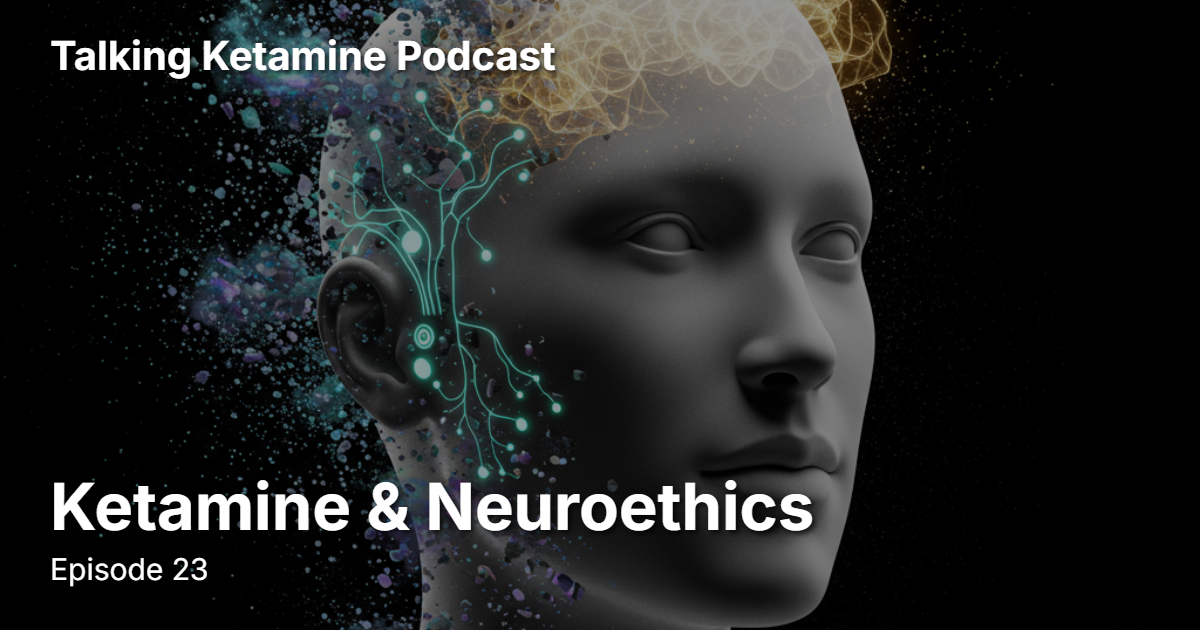
Talking Ketamine PodcastKetamine & Neuroethics
We delve into how ketamine’s unique altered states of consciousness, like ego dissolution and dissociation, could serve as a blueprint for future brain-computer interfaces. This episode reveals how neurochemistry might inspire technology to design new modes of consciousness, going beyond simply repairing the brain to potentially enhancing or redesigning consciousness itself.
Learn more from the study discussed:
Wilson, J. A., Johnson, S. E., & Price, D. J. (2023). Neurochemical Horizons: Elon Musk, Ketamine, and the Future of Neural Interface Design. ResearchGate. https://doi.org/10.13140/RG.2.2.20903.05287
The post Ketamine & Neuroethics appeared first on Talking Ketamine Po...
2025-07-2109 min
Talking Ketamine PodcastKetamine & Neuroethics
We delve into how ketamine’s unique altered states of consciousness, like ego dissolution and dissociation, could serve as a blueprint for future brain-computer interfaces. This episode reveals how neurochemistry might inspire technology to design new modes of consciousness, going beyond simply repairing the brain to potentially enhancing or redesigning consciousness itself.
Learn more from the study discussed:
Wilson, J. A., Johnson, S. E., & Price, D. J. (2023). Neurochemical Horizons: Elon Musk, Ketamine, and the Future of Neural Interface Design. ResearchGate. https://doi.org/10.13140/RG.2.2.20903.05287
The post Ketamine & Neuroethics appeared first on Talking Ketamine Po...
2025-07-1709 min
Neuroethics TodayThe Battle for Your Brain: Defending the Right to Think Freely in the Age of Neurotechnology - Nita FarahanyDo we need to protect ourselves from brain tracking and hacking? Do we need a right for cognitive liberty?
In her groundbreaking new book, Professor Nita Farahany explores the profound ethical and legal challenges posed by emerging neurotechnologies. These innovations have the potential to reshape how we understand, influence, and define ourselves—but they also come with significant risks. In this episode, we discuss the promise and peril of neurotechnology, the urgent need for a right to cognitive liberty, and what these developments mean for our personal freedoms. Don’t miss this thought-provoking conversation on t...
2024-11-2751 min
The Dissenter#1005 Joshua May - Neuroethics: Agency in the Age of Brain Science******Support the channel******
Patreon: https://www.patreon.com/thedissenter
PayPal: paypal.me/thedissenter
PayPal Subscription 1 Dollar: https://tinyurl.com/yb3acuuy
PayPal Subscription 3 Dollars: https://tinyurl.com/ybn6bg9l
PayPal Subscription 5 Dollars: https://tinyurl.com/ycmr9gpz
PayPal Subscription 10 Dollars: https://tinyurl.com/y9r3fc9m
PayPal Subscription 20 Dollars: https://tinyurl.com/y95uvkao
******Follow me on******
Website: https://www.thedissenter.net/
The Dissenter Goodreads list: https://shorturl.at/7BMoB
Facebook: https://www.f...
2024-10-111h 42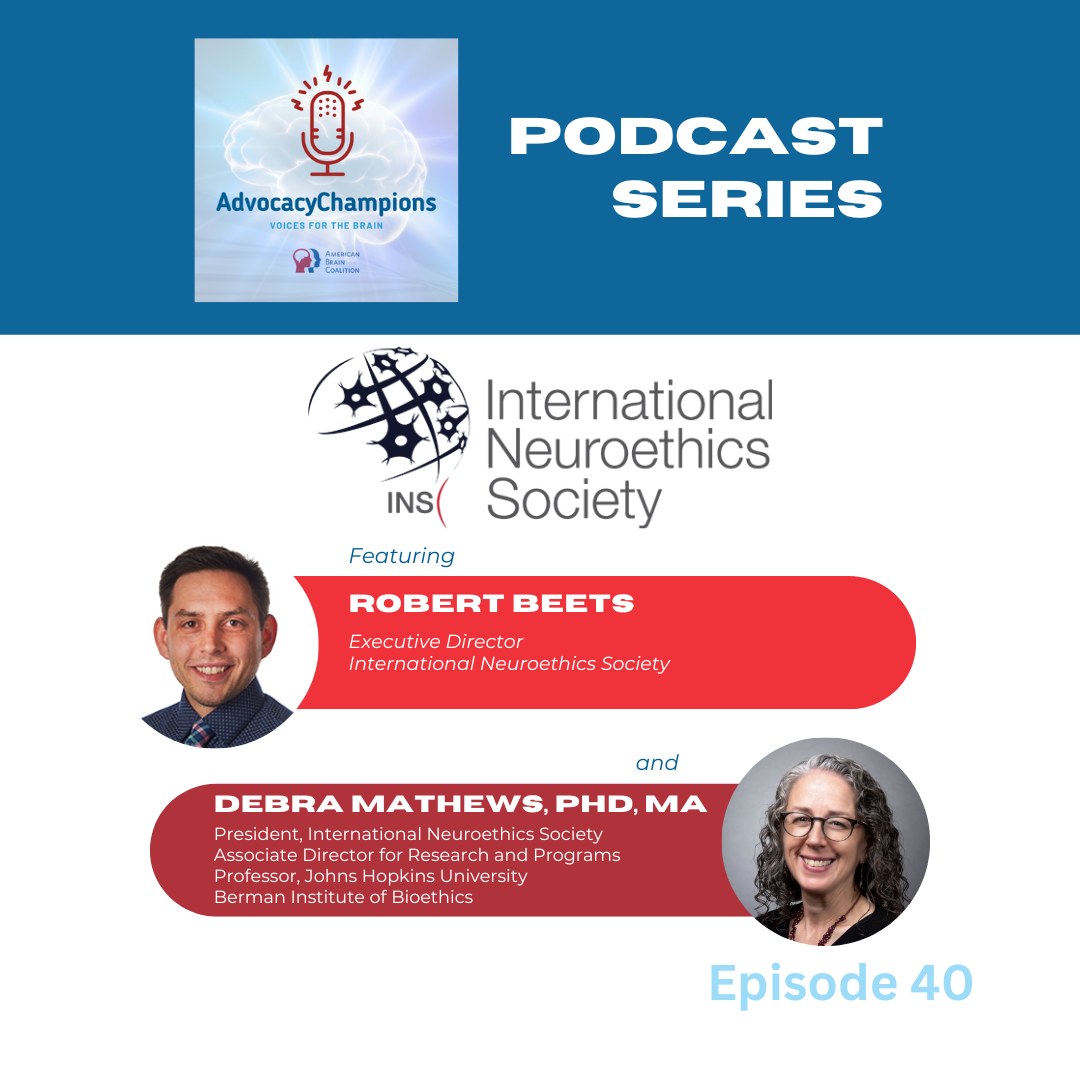
Voices for the BrainEpisode 40 ~ International Neuroethics SocietyListen in as ABC Executive Director, Katie Sale, connects with Robert Beets, Executive Director and Debra Mathews, PhD, MA, President, of the International Neuroethics Society. Learn about their society and their continued advocacy internationally in the neuroethics space.
2024-09-2620 min
Bioethics DialoguesEP 6: Neuroethics- Brain Research & Cognitive EnhancementsWelcome to EP 6: Neuroethics! This topic is becoming relevant in our society faster than ever but is not being talked about enough- that's where this podcast comes in! Join us in this fascinating episode! Please make sure to like, follow, and drop a rating! Thank you!
As always, here are some resources for you! Happy exploring :)!!
https://www.physio-pedia.com/Neuroplasticity#:~:text=It%20was%20not%20until%201948,plastic%20changes%20in%20the%20brain'.
https://www.verywellmind.com/what-is-brain-plasticity-2794886#toc-how-neuroplasticity-was-discovered
https://www.dvrphx.com/advances-in-neuroimaging-exploring-the-brains-mysteries.html
https://www.ncbi.nlm.nih.gov...
2024-08-3005 minNeuroethics TodayNeuroethics: Agency in the Age of Brain Science - Joshua MayHis new book covers a wide range of ethical discussions in the fields of neuroscience and neuroethics including questions such as ""Is free will an illusion?" and "Is addiction a brain disease?". Joshua May writes in a lively and accessible manner, a book dedicated for students, teachers, and scholars alike across both the sciences and humanities.
Season 4 of , hosted by Dr. Katherine Bassil, explores the ethical dimensions of neuroscience and neurotechnology through interviews with authors of prominent neuroethics books. Tune in!
2024-08-2855 min
InfoPointDr. Walter Sinnott-Armstrong: A Deep Dive into AI, Morality, and Neuroethics
Today's guest is Dr. Walter Sinnott-Armstrong, a distinguished professor at Duke University with appointments in the departments of philosophy, practical ethics, and neuroscience. He has authored numerous books and research articles, including his most recent work, Moral AI: And How We Get There. In this episode, we will explore the intersections between morality and AI and dive into fascinating topics such as neuroethics, morality, and free will.
2024-07-1937 min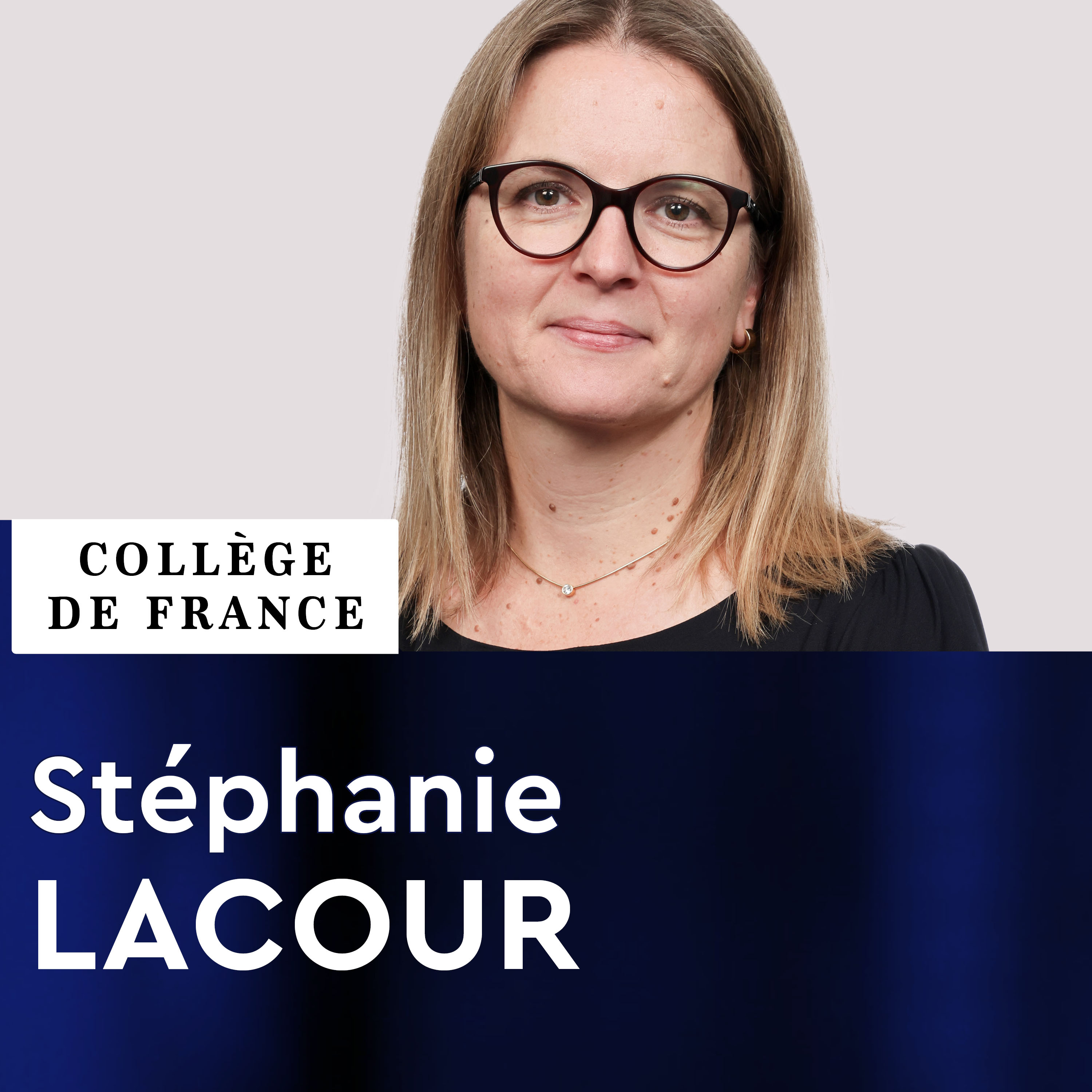
Innovation technologique Liliane Bettencourt (2023-2024) - Stéphanie LacourColloque - La neurotechnologie : Navigating Ethical Translation of Neurotech that Benefits AllStéphanie LacourCollège de FranceInnovation technologique Liliane Bettencourt (2023-2024)Année 2023-2024Colloque - La neurotechnologie : Navigating Ethical Translation of Neurotech that Benefits AllInnovating Responsibly: Neurotechnology Standards and Societal EthicsColloque coorganisé par Stéphanie Lacour, chaire Innovation technologique Liliane Bettencourt et Mme Karen Rommelfanger.Intervenant(s)Karen Rommelfanger, Director, Institute of Neuroethics Think and Do Tank & CEO, Ningen Neuroethics Co-LabIn this talk, Dr Romme...
2024-06-1437 minNeuroethics TodayConviction: The Making and Unmaking of the Violent Brain - Oliver RollinsCan neuroscience research measure violence in the brain?
His new book highlights some ethical dilemmas of neuroscience research on violence. As a Black man, Dr. Oliver Rollins warns that such research could potentially lead to (racial) profiling, escalating inequities in society. In his recent book, he warns against a dystopian future where behavior is reduced to our biology.
Season 4 of Neuroethics Today, hosted by Dr. Katherine Bassil, explores the ethical dimensions of neuroscience and neurotechnology through interviews with authors of prominent neuroethics books. Tune in!
2024-05-061h 06
The Free Will ShowEpisode 79: Neuroethics and Moral Responsibility with Josh MayIn this episode, we talk with Josh May about issues in neuroethics and the law and also about mental disorders and moral responsibility.Josh's website: https://www.joshdmay.com/Josh's book, Neuroethics: Agency in the Age of Brain Sciecne: https://global.oup.com/academic/product/neuroethics-9780197648094?cc=us&lang=en&Twitter: https://twitter.com/thefreewillshowInstagram: https://www.instagram.com/thefreewillshow/?hl=enFacebook: https://www.facebook.com/The-Free-Will-Show-105535031200408/
2024-05-0634 min
NeuroCentury13. Art of Doing Good: Making Neuroethics ActionableWhat is neuroethics and how it has evolved to make brain research and neurotechnology ethical in both medical and non-medical applications. In the latest episode of NeuroCentury, Paweł Świeboda explores these questions with Dr Arleen Salles, Founding Board Member of the Institute of Neuroethics in Atlanta, Georgia and Director of Neuroética in Buenos Aires, Argentina. Arleen co-led the work on Responsible Research and Innovation in the Human Brain Project (2014-2023) and serves as an Executive Board Member of the International Neuroethics Society.
Paweł and Arleen discuss methods of integrating ethical and social considerations into neuroscience and neuro...
2023-12-1229 min
Currents in ReligionChristian Neuroethics? A Conversation with Neil MesserIn this episode, Zen speaks with Neil Messer, who has recently come to Baylor as Professor of Theological Bioethics. The discussion considers Neil's work in neuroethics.
The episode also includes a plug for Autism and Worship: A Liturgical Theology by Armand Léon van Ommen. This new book is out now from Baylor University Press.
Related Episodes:
Interdisciplining Theology: How the Psychological Sciences Help Theology
Should We Abandon Inclusion? Erin Raffety on Disability and the Church
An Era of Soft Eugenics? Devan Stahl on Disability's Challenge to Theology
2023-10-2735 min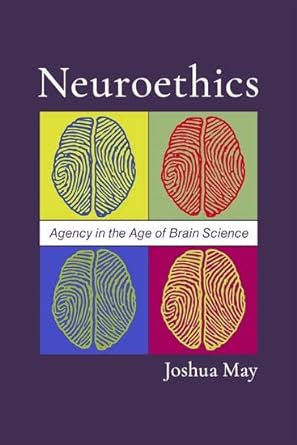
Voices in Bioethics PodcastNeuroethics & Agency: A Discussion with Joshua May, PhDJoshua May is a philosophy professor at University of Alabama, Birmingham. He holds a PhD from UC, Santa Barbara. His recent book, Neuroethics: Agency in the Age of Brain Science brings together neuroscience and philosophy to create a nuanced view of human agency as surprisingly diverse and flexible. He joins the Voices in Bioethics podcast…
2023-10-0848 min
NBN Book of the DayJoshua May, "Neuroethics: Agency in the Age of Brain Science" (Oxford UP, 2023)Is free will an illusion? Is addiction a brain disease? Should we enhance our brains beyond normal? Neuroethics: Agency in the Age of Brain Science (Oxford UP, 2023) blends philosophical analysis with modern brain science to address these and other critical questions through captivating cases. The result is a nuanced view of human agency as surprisingly diverse and flexible. With a lively and accessible writing style, Neuroethics is an indispensable resource for students and scholars in both the sciences and humanities.Joshua May is Associate Professor of Philosophy and Psychology at the University of Alabama at Birmingham. He is t...
2023-10-0757 min
New Books in the History of ScienceJoshua May, "Neuroethics: Agency in the Age of Brain Science" (Oxford UP, 2023)Is free will an illusion? Is addiction a brain disease? Should we enhance our brains beyond normal? Neuroethics: Agency in the Age of Brain Science (Oxford UP, 2023) blends philosophical analysis with modern brain science to address these and other critical questions through captivating cases. The result is a nuanced view of human agency as surprisingly diverse and flexible. With a lively and accessible writing style, Neuroethics is an indispensable resource for students and scholars in both the sciences and humanities.Joshua May is Associate Professor of Philosophy and Psychology at the University of Alabama at Birmingham. He is t...
2023-10-0755 min
New Books in ScienceJoshua May, "Neuroethics: Agency in the Age of Brain Science" (Oxford UP, 2023)Is free will an illusion? Is addiction a brain disease? Should we enhance our brains beyond normal? Neuroethics: Agency in the Age of Brain Science (Oxford UP, 2023) blends philosophical analysis with modern brain science to address these and other critical questions through captivating cases. The result is a nuanced view of human agency as surprisingly diverse and flexible. With a lively and accessible writing style, Neuroethics is an indispensable resource for students and scholars in both the sciences and humanities.Joshua May is Associate Professor of Philosophy and Psychology at the University of Alabama at Birmingham. He is t...
2023-10-0757 min
New Books in Science, Technology, and SocietyJoshua May, "Neuroethics: Agency in the Age of Brain Science" (Oxford UP, 2023)Is free will an illusion? Is addiction a brain disease? Should we enhance our brains beyond normal? Neuroethics: Agency in the Age of Brain Science (Oxford UP, 2023) blends philosophical analysis with modern brain science to address these and other critical questions through captivating cases. The result is a nuanced view of human agency as surprisingly diverse and flexible. With a lively and accessible writing style, Neuroethics is an indispensable resource for students and scholars in both the sciences and humanities.Joshua May is Associate Professor of Philosophy and Psychology at the University of Alabama at Birmingham. He is t...
2023-10-0757 min
New Books in NeuroscienceJoshua May, "Neuroethics: Agency in the Age of Brain Science" (Oxford UP, 2023)Is free will an illusion? Is addiction a brain disease? Should we enhance our brains beyond normal? Neuroethics: Agency in the Age of Brain Science (Oxford UP, 2023) blends philosophical analysis with modern brain science to address these and other critical questions through captivating cases. The result is a nuanced view of human agency as surprisingly diverse and flexible. With a lively and accessible writing style, Neuroethics is an indispensable resource for students and scholars in both the sciences and humanities.Joshua May is Associate Professor of Philosophy and Psychology at the University of Alabama at Birmingham. He is t...
2023-10-0757 min
New Books in Critical TheoryJoshua May, "Neuroethics: Agency in the Age of Brain Science" (Oxford UP, 2023)Is free will an illusion? Is addiction a brain disease? Should we enhance our brains beyond normal? Neuroethics: Agency in the Age of Brain Science (Oxford UP, 2023) blends philosophical analysis with modern brain science to address these and other critical questions through captivating cases. The result is a nuanced view of human agency as surprisingly diverse and flexible. With a lively and accessible writing style, Neuroethics is an indispensable resource for students and scholars in both the sciences and humanities.Joshua May is Associate Professor of Philosophy and Psychology at the University of Alabama at Birmingham. He is t...
2023-10-0757 min
New Books in PsychologyJoshua May, "Neuroethics: Agency in the Age of Brain Science" (Oxford UP, 2023)Is free will an illusion? Is addiction a brain disease? Should we enhance our brains beyond normal? Neuroethics: Agency in the Age of Brain Science (Oxford UP, 2023) blends philosophical analysis with modern brain science to address these and other critical questions through captivating cases. The result is a nuanced view of human agency as surprisingly diverse and flexible. With a lively and accessible writing style, Neuroethics is an indispensable resource for students and scholars in both the sciences and humanities.Joshua May is Associate Professor of Philosophy and Psychology at the University of Alabama at Birmingham. He is t...
2023-10-0757 min
In Conversation: An OUP PodcastJoshua May, "Neuroethics: Agency in the Age of Brain Science" (Oxford UP, 2023)Is free will an illusion? Is addiction a brain disease? Should we enhance our brains beyond normal? Neuroethics: Agency in the Age of Brain Science (Oxford UP, 2023) blends philosophical analysis with modern brain science to address these and other critical questions through captivating cases. The result is a nuanced view of human agency as surprisingly diverse and flexible. With a lively and accessible writing style, Neuroethics is an indispensable resource for students and scholars in both the sciences and humanities.Joshua May is Associate Professor of Philosophy and Psychology at the University of Alabama at Birmingham. He is t...
2023-10-0757 min
ParadigmThomas Metzinger: Neuroethics, Psychedelics, and Conscious AIThomas Metzinger is a philosopher and author whose work focuses neuroethics, neurotechnology, and the philosophy of mind. Thomas is the author of books on the philosophy of mind, consciousness, and the self, including the Ego Tunnel, Being No One, and The Elephant and the Blind.
Today’s topics include the prospects for engineering post-biotic conscious systems, and the ethical implications of doing so; psychedelic drugs and psychedelic experiences, and what these might teach us about the nature of the mind; the range of possible conscious experiences available to human beings and other systems; climate change; intellectual honesty; an...
2023-09-201h 41
ParadigmThomas Metzinger: Neuroethics, psychedelics, and conscious AIThomas Metzinger is a philosopher and author whose work focuses neuroethics, neurotechnology, and the philosophy of mind. Thomas is the author of books on the philosophy of mind, consciousness, and the self, including the Ego Tunnel, Being No One, and The Elephant and the Blind.Today’s topics include the prospects for engineering post-biotic conscious systems, and the ethical implications of doing so; psychedelic drugs and psychedelic experiences, and what these might teach us about the nature of the mind; the range of possible conscious experiences available to human beings and other systems; climate change; intellectual honesty; an...
2023-09-141h 41 2023-09-1316 min
Future Science GroupBrain-computer interfaces and neuroethics with Uthman AliBrain-computer interfaces and neuroethics with Uthman Ali by Taylor & Francis Group
2023-07-2416 min
Future Science GroupBrain-computer interfaces and neuroethics with Uthman AliBrain-computer interfaces and neuroethics with Uthman Ali by Taylor & Francis Group
2023-07-2116 min
The SnifferNeuroethics and summer boating techThis time, Nora Young refers to this article on brain implants and emerging questions for neuroethics, and our increasingly intimate relationship with tech.Cathi Bond has a summertime take on personal watercraft. How about the GoBoat?
2023-06-2611 min
The Neurophilia PodcastNeurology and Ethics: Recognizing Values in Patient Care and Learning to Address Neuroethical DilemmasSend us a textIn this week's episode of the Neurophilia Podcast, we sat down with Dr. Paul Ford, Ph.D., and Professor Lauren Sankary, JD to discuss the relationship between neurology and clinical ethics. We talk about the emerging and rapidly changing field of neuroethics, share common ethical dilemmas in neurology, and discuss ways to recognize and uphold patient values during difficult decisions.Dr. Paul Ford, Ph.D. is currently the director of the Neuroethics Program at Cleveland Clinic and has more than 20 years of experience providing ethics consultations to patients, research participants, healthcare professionals...
2023-06-2655 min
The Dissenter#776 Adina Roskies: Neuroimaging Studies, Neuroethics, and Free Will------------------Support the channel------------
Patreon: https://www.patreon.com/thedissenter
PayPal: paypal.me/thedissenter
PayPal Subscription 3 Dollars: https://tinyurl.com/ybn6bg9l
PayPal Subscription 5 Dollars: https://tinyurl.com/ycmr9gpz
PayPal Subscription 10 Dollars: https://tinyurl.com/y9r3fc9m
PayPal Subscription 20 Dollars: https://tinyurl.com/y95uvkao
This show is sponsored by Enlites, Learning & Development done differently. Check the website here: http://enlites.com/
Dr. Adina Roskies is The Helman Family Distinguished Professor and Chair of...
2023-05-011h 17
Neurology MinuteCareers in Neurology: NeuroethicsDr. Katrina Ignacio discusses the emerging career path in neuroethics. Show references: https://n.neurology.org/content/98/12/505
2023-02-1502 minNeuroethics TodaySocial Justice and Neuroethics: Looking back, moving forwardDuring Episode 6 of our special season highlighting last year’s International Neuroethics Society meeting, we focused on important take-home messages. Our guest host was Dr. Tim Brown, assistant professor in the Department of Bioethics and Humanities at the University of Washington. Our speakers were Dr. Jasmine Kwasa, postdoc at Carnegie Mellon’s Neuroscience Institute; Juhi Farooqui, PhD student in neural computation at Carnegie Mellon University; Dr. Kate Webb, postdoc at McLean Hospital and Harvard Medical School; Erin Morrow, PhD student in cognitive psychology at UCLA; and Katherine Bassil, founder and host of Neuroethics Today and PhD candidate in neuroscience at Ma...
2023-02-131h 01Neuroethics TodayEnvironmental NeuroethicsDuring Episode 5 of our special season highlighting last year’s International Neuroethics Society meeting, we focused on the emerging field of environmental neuroethics. Our co-guest hosts were Dr. Laura Cabrera, J. Lloyd Huck Career Chair in Neuroethics at Pennsylvania State University; and Erin Morrow, PhD student in cognitive psychology at UCLA. Our speakers were Rudi Louis Taylor-Bragge - Iowendjeri Boonwurrung Kulin from Birraranga, Naarm (Australia), PhD candidate in psychology at Monash University; Dr. Judy Illes, Distinguished Professor in Neuroethics at the University of British Columbia; and Louise Harding, who recently completed her master’s degree at the School of Popu...
2023-02-061h 07Neuroethics TodayBarriers to Social Justice Work in NeuroethicsDuring episode 4, we focused on the questions: 'What is anti-racist neuroscience? Is there space for social justice in academic institutions? How can neuroethics truly engage meaningfully with social justice and anti-racism?' Episode 4 of the special INS season of Neuroethics Today brings together Dr. Keisha Ray, Assistant Professor at the McGovern Center for Humanities & Ethics at UT Health Houston, and Dr. Oliver Rollins, Assistant Professor of American Ethnic Studies at the University of Washington along with guest hosts Dr. Timothy Brown and Juhi Farooqui, to dive into these questions and more. Join this difficult but essential discussion by tuning...
2023-01-301h 13Neuroethics TodayDisability, Neurotechnology, and JusticeDuring episode 3, we focused on the question 'How do disability, neurotechnology, and social justice all interact?'. Join guest host Dr. Sara Goering and three incredible panelists as they explore how emerging technologies interact with ableist structures and how neuroethics can better challenge these ableist structures. This week’s panelists are Gregor Wolbring, Professor at the University of Calgary, Jasmine Harris, Professor of Law at the University of Pennsylvania Law School, and Ricardo Chavarriaga, Research Associate at the ZHAW School of Engineering Centre for Artificial Intelligence. Want to hear more? Hit play and tune in to the conversation!
...
2023-01-231h 16Neuroethics TodayCommunity-centered Social JusticeDuring episode 2 our special INS season brings together diverse voices on community-centered social justice and neuroethics. Led by guest hosts Dr. Laura Specker Sullivan and Dr. Nicole Martinez, this panel delves into the role of identity and of communities in mental health work and advancing social justice. In this episode, we hear from Dr. Neely Myers, Associate Professor of Anthropology at Southern Methodist University, Dr. Gulamabbas Lakha, DPhil Candidate in Neuroscience, Ethics and Society at the University of Oxford, and Dr. Eunice Kamaara, Professor of Religion at Moi University in Kenya. Ready to learn more about how mental health...
2023-01-161h 11Neuroethics TodaySocial Justice and NeuroethicsDuring Episode 1 of our special season highlighting last year’s International Neuroethics Society meeting, we focused on the meeting theme. This conference centered social justice and neuroethics, and in this episode we defined these terms and discussed the importance of their intersection. Our guest host was Dr. Nita Farahany, immediate past president of the INS. Our speakers were Dr. Anita L. Allen, Henry R. Silverman Professor of Law and Professor of Philosophy at the University of Pennsylvania; and Dr. Khara Ramos, the Vice President of Neuroscience & Society at the Dana Foundation. Drs. Farahany, Allen, and Ramos consider several critical qu...
2023-01-0947 min
Carnegie Council PodcastsNeuroethics: An Ethics of Technology, with Dr. Joseph FinsIn this far-reaching Artificial Intelligence & Equality podcast, Weill Cornell's Dr. Joseph Fins discusses with Senior Fellow Wendell Wallach the hype and realities surrounding contemporary neuroscience and neuroethics. He shares insights from his own seminal research on patients who may be mistakenly presumed to be in a vegetative state when they are actually in a minimally conscious state. Indeed, technology may be used to provide these patients with a way to communicate and a modicum of agency. For more, plesae go to carnegiecouncil.org.
2023-01-041h 12
Beauty At WorkBeauty and the Brain: The Science of Neuroaesthetics with Dr. Anjan ChatterjeeOur guest today is Anjan Chatterjee, MD, FAAN. He is a Professor of Neurology, Psychology, and Architecture at the University of Pennsylvania and has served as the Chair of Neurology at Pennsylvania Hospital. While his clinical work focuses on cognitive disorders, the focal points of his research are in neuroaesthetics, spatial cognition, language, and neuroethics. His multidisciplinary knowledge has won him recognition and awards. It has led him to author his book, The Aesthetic Brain, a study on how art has embedded itself into the human mind as investigated through the lens of neuroscience and evolutionary psychology.
2022-12-0154 min
ANA InvestigatesANA Investigates Disruptive Technologies: Neuroethics Role in Advancing Innovation Neurotechnology like DBS or transcranial magnetic stimulation have clear benefits in diagnosis and therapy and are largely embraced by the medical community. But what about recent accelerated development from tech entrepreneurs to harness cognitive pathways for everyday tasks? This is referred to as brain computer interface technology or BCI. Commercial products such as Neuralink, attempt to implant chips promising to link brain activity with tasks such as accessing phones or cars. This brings up real questions on autonomy, privacy, and medical implications, but is there more to these technological advancements that could provide medical benefit for our patients? We...
2022-11-2820 minNeuroethics TodayVeronika Schöpf: "I received death threats."During Episode 11 of Season 2, we focused on the role of neuroscience in the overturning of Roe v. Wade in the U.S. Katherine Bassil - founder and host - together with Dr. Veronika Schöpf - head of Natural Science and engineering at the Austrian Science Fund FWF and former professor of neuroimaging- discuss the ethical implications of misinterpreting neuroscientific findings in non-research settings, such as legal settings. Dr. Shöpf weighs in on the discussion by providing both her scientific and personal perspective as a woman who has worked in the field of fetal brain development for several ye...
2022-09-2340 minNeuroethics TodayJonathan D. Moreno: "A human being is the weakest and strongest link in the chain."During Episode 10 of Season 2, we focused on a rather controversial topic: Military neurotechnologies and dual-use. Katherine Bassil - founder and host - together with Dr. Jonathan D. Moreno - philosopher and professor at University of Pennsylvania - discuss the ethics of using neuroscience research for military purposes, the dangers and advantages of dual-use neurotechnologies, and the challenges in regulating military neurotechnologies. We covered questions such as: What is dual-use? Why is military-funded neuroscience research important? Will neurotechnologies be the next arms race? Can we benefit from military-funded neuroscience research? Do we need neurorights to protect soldiers from emerging neurotechnologies...
2022-08-1657 min
Neuroethics TodayKaren Herrera-Ferrá - "We need more aggressive education."During Episode 9 of Season 2, we decided to focus our attention on mental health equity, namely mental health equity between low/middle-income and high-income countries. Katherine Bassil - founder and host - together with Dr. Karen Herrera-Ferrá - clinical MD, clinical psychologist, cognitive behavioral therapist, and founder and former president of the Mexican Association of Neuroethics - discuss the drivers of mental health disparities in low income countries, with a focus on Mexico (her home country), highlighting the cultural, socio-economic factors contributing to challenges in ensuring mental health equity. Dr. Herrera-Ferrá weighs in as an expert in neuroethics but also bu...
2022-07-2653 min
Neurratives - A Podcast about Neuroscience in FictionEpisode 20 - A special panel episode with neuroscience friends!It's a special in-person panel episode of Neurratives! In this celebration of our 20th episode, Nick and Stephen have assembled an awesome panel for an episode of neuro-shenanigans and friendly competition. We're joined for a second time by Jessi Mischel, who returns to 'redeem' herself from the Matrix episode (her words, not mine) and for the first time by Alicia Colvin and Spencer Kellis. Our panelists will learn a bit more about each other, sample some ketogenic epilepsy diet recipes, and have discuss neuroethics in brain-computer interfaces. What do you call someone who studies astrocytes? Who will discover an...
2022-07-201h 44
Brain Ponderings podcast with Dr. Mark MattsonModulating the Mind: Pondering NeuroethicsProfessor Judy Illes of the University of British Columbia talks about ethical considerations that have arisen from rapid advances in neurotechnologies such as genetic engineering, brain implants, and brain-computer interfaces. Everyone has a stake in neuroethics – scientists, policy-makers, the media, information technology companies, and individual citizens. Professor Illes has been working to identify major issues in neuroethics and to facilitate interactions amongst the different stakeholders. Links: Neuroethics Canada: http://www.neuroethicscanada.ca
2022-07-1557 minNeuroethics TodayChristian Herff - "We are NOT decoding thoughts."During Episode 8 of Season 2, Katherine Bassil - founder and host - together with Dr. Christian Herff - Assistant Professor at Maastricht University - discuss brain-computer interfaces (BCI) and the ethical implications of this neurotechnology. We covered questions such as: What are BCI? What are associated hopes and hypes of this technology? How do private companies like Neuralink influence BCI research? What are the dangers of BCI? That covers just the top of the iceberg of what we discussed on this episode. Curious for more? Tune in NOW!
Useful Links:
Neuroethics Today website
Neuroethics Today...
2022-06-0639 minNeuroethics TodayNicole Martin-Martinez - "Chat bots simply can't replace therapists. They just can't."During Episode 7 of Season 2, we decided to focus our attention on digital mental health interventions, namely mental health mobile applications. Katherine Bassil - founder and host - together with Dr. Nicole Martinez-Martin - Assistant Professor at Stanford University - discuss the ethics of mental health mobile apps, their advantages, challenges, and implications of using such tools. We covered questions such as: Are mental health apps safe to use despite lack of robust scientific evidence? Are digital mental health interventions regulated before hitting the market? Can they replace therapists? How has the COVId-19 pandemic changed the way we deal with...
2022-05-1159 min
THE ONE'S CHANGING THE WORLD -PODCASTNEUROTECH THE GATEWAY TO EXPONENTIAL TECH- DR JAMES GIORDANO- NEUROSCIENTIST & NEUROETHICIST#neurotech #neuroethics #neuroscience
James Giordano, PhD, MPhil, is a Professor in the Departments of Neurology and Biochemistry, Chief of the Neuroethics Studies Program, leads the Sub-program in Military Medical Ethics of the Pellegrino Center for Clinical Bioethics; is Special Advisor to the Brain Bank, and is Co-director of the O'Neill-Pellegrino Program in Brain Science and Global Health Law and Policy at Georgetown University Medical Center, Washington, DC, USA. He is also a Distinguished Visiting Professor of Brain Science, Health Promotions, and Ethics at the Coburg University of Applied Sciences, Coburg, Germany, and was formerly JW Fulbright Foundation V...
2022-04-251h 05Neuroethics TodayJackson Boonstra: Why Neuralink won't work (monologue)During Episode 6 of Season 2, Jackson Boonstra - a neuroscience PhD candidate at Maastricht University - argues why he is of the opinion that "Neuralink won't work". In his monologue, Jackson provides arguments on how Neuralink's aims and goals are theatrical and science-fiction in nature.
TUNE in NOW!
Useful links:
Neuroethics Today website
Neuroethics Today on Twitter
Neuroethics Today on Instagram
Neuroethics Today Blog
--- Send in a voice message
2022-04-0427 minNeuroethics TodayKatleen Gabriels - “I’m not worried about AI getting consciousness.”During Episode 5 of Season 2, we focused on the topic of the hour: Artificial Intelligence (also known as AI). Katherine Bassil - founder and host - together with Dr. Katleen Gabriels - moral philosopher and assistant professor at Maastricht University - discuss the ethics of AI, the promises and pitfalls, and the need for legislation and AI guidelines. We covered questions such as: What does a moral philosopher do? What is AI? Will AI ever become conscious? Can AI make ethical decisions? What are unique ethical implications of AI in neurotechnologies? Why should we control AI? Curious for more? TUNE...
2022-03-071h 02
Brain BeatA Masterclass in Neuroethics with Dr. Nada GligorovDr. Nada Gligorov, the Director of Graduate Studies and Associate Professor at the Alden March Bioethics Institute at Albany Medical College, joins Peter Stavinoha on the podcast today to talk about neuroethics. Prior to joining the Bioethics Institute, she was Associate Professor of Medical Education at the Icahn School of Medicine at Mount Sinai. Dr. Gligorov has published in leading journals in bioethics and philosophy including the Hastings Center Report, the American Journal of Bioethics, Neuroscience, Neuroethics, and the Monist. She has served as a member of the American Philosophical Association's Committee on philosophy and medicine from 2018 to 2020, and...
2021-11-2348 min
Neural Implant podcast - the people behind Brain-Machine Interface revolutionsDr Paul Tubig and Dr Darcy McCusker on neuroethics workshopsDr Paul Tubig and Dr Darcy McCusker are graduates from the University of Washington. Dr Tubig now works at at Georgia Southern University teaching neuroethics and is teaching social and political philosophy, bioethics, neuroethics, and philosophy of disability. Top 3 Takeaways: "There have been reports and testimonies of users who have experienced a sense of depersonalization, a sense of alienation and a sense that they are no longer themselves [after using implanted neurotechnology]." "It turns out that when you have an ethicist in the room, you end up asking really different kinds of questions of y...
2021-11-0826 min
The Minhaaj's PodcastBCIs, Neuro Modulation and NeuroEthics with Harrison CanningHarrison Canning is a student at the Rochester Institute of Technology in the School of Individualized Studies, Founder of The BCI Guys & Neurotechnology Exploration Team. He makes videos on his Youtube channel The BCI Guys and has designed his own degree centered around brain-computer interface technology (BA in Neurotechnology).
The BCI Guys is a media company dedicated to removing the barrier to entry and increasing interest in the field of neurotechnology. It produces engaging, sensational, digestible, and informative content via YouTube, podcasts, and blog posts. Its aim is to lead the conversation around neurotechnology through a science-based...
2021-10-161h 49
Diálogos entre amigos18 NeuroeticaNEUROÉTICA
Una conversación con el P. Alberto Carrara, LC, Doctor en Biotecnología Médica, Profesor del Pontificio Ateneo Regina Apostolorum y de la Universidad Europea de Roma y miembro de la Pontificia Academia Pro Vita.
1) Neuroética: ¿Qué es? 2) Ética de la Neurociencia y Neurociencias de la Ética 3) ¿Estamos condicionados a ser de tal o cual forma? Libre albedrío y condicionamientos genético, cultural, social, etc. 4) Juicio moral, comportamiento humano y tecnología: los NeuroDerechos 5) Ejemplos y aplicaciones de la Neuroética.
NEUROETHICS
Talking with Fr. Alberto Carrara, LC, P...
2021-09-1130 min
Free Range with Mike LivermoreICA4.5 Philipp Kellmeyer on NeuroethicsMike Livermore speaks with ICA Fellow Dr. Philipp Kellmeyer, head of the Neuroethics and AI ethics Lab at the University Medical Center, Freiburg. Kellmeyer’s research focuses on the intersection of neurotechnology, ethics, artificial intelligence, and big data. In addition to his academic work, Kellmeyer is a board-certified neurologist.
The podcast begins with Kellmeyer discussing his background and how a medical practitioner ended up working in the field of neurotechnology (:40 – 4:55). He then summarizes the current state of neurotechnology, with a focus on deep-brain stimulation, which Kellmeyer describes as the most advanced area of the field. This leads to a longer disc...
2021-09-101h 03
Neuroethics Today#TIPsyThursday: Cognitive Enhancers: Who should take them?In the third episode of our podcast mini-series #TIPsyThursday* we discuss the 'Cognitive Enhancers'. Host Katherine, together with co-hosts Mariel and Susan have an open discussion about what are 'Cognitive Enhancers', and what are the ethical issues that can be associated with this emerging HOT technology. Some of the questions we discussed include: What are the different types of cognitive enhancers? Should some individuals be allowed to take them and others prohibited? Why do we have a resistance to accept the widespread use of cognitive enhancers in our society?
Key takeaways:
1. Cognitive enhancers can be e...
2020-08-3131 min
Neuroethics TodayMichelle Muller - "That is clearly discrimination."During Episode 4 of Season 2, we invited Michelle Muller, a scientist-turned-artist with a family history of Huntington's Disease. Michelle shared her experience with genetic testing, the emotional turmoil that accompanied it, and the ethical implications that were running through her mind. As a former early-career scientist, Michelle was driven to find a cure for Huntington's to help her family members that were at risk and suffering from the disease, but after several disappointments, she discovers her own way to cope with the results of her genetic test and embarks on an artistic and spiritual journey. Tune in now and listen...
2020-08-0342 min 2020-07-1601 min
Beyond the BooksNeuroscience and Neuroethics with Dr. Georg NorthoffDr. Georg Northoff, Canada Research Chair in Mind, Brain Imaging, and Neuroethics, joins Beyond the Books! We discuss his work dealing with the brain, how the psychological response to COVID-19 in North America is different from the rest of the world, his thoughts on mental health apps, and more!
2020-06-2525 min
Neuroethics TodayAnna Wexler - "The misleading claims is the most concerning aspect of DTC Neurotechnology."During Episode 3 of Season 2, we decided to focus our attention on an increasingly emerging topic in neuroethics: Direct-to-Consumer (DTC) Neurotechnology. Katherine Bassil - founder and host - together with Dr. Anna Wexler - Assistant Professor at the University of Pennsylvania - discuss the ethics of DTC Neurotechnology, associated misconceptions, concerns, and advantages of working closely with neurotech companies. We covered questions such as: What are known DTC neurotechnologies? What should consumers beware of when purchasing a DTC Neurotechnology? What are advantages of working closely with neurotech companies? What has changed in the past decade and what should we look...
2020-05-0142 min
Neuroethics Today#TIPsyThursday: Brain Biomarkers : Would You Want to Know?In the second episode of our podcast mini-series #TIPsyThursday* we discuss the 'Biomarkers for Brain Diseases'. Host Katherine, together with co-hosts Mariel and Susan have an open discussion about what are 'Brain Biomarkers', and what are the ethical issues that can be associated with this this technology. We even raised personal questions such as: Would you want to know of a risk to psychiatric and/or neurological diseases? Do you have a responsibility to act on the results that you are given? How should sensitive 'risk profiles' be communicated with the patient/individual?
Key takeaways:
1. C...
2020-04-1632 min
Neuroethics Today2-minutes Neuroethics: What is the Neuroscience of Ethics?2-minutes Neuroethics: What is the Neuroscience of Ethics?
2020-03-2402 min
Neuroethics Today2-minutes Neuroethics: What is the Ethics of Neuroscience?2-minutes Neuroethics: What is the Ethics of Neuroscience?
2020-03-2401 min
Neuroethics TodayAndrew Neff - "Scientists are not always very transparent"During Episode 2 of Season 2, we decided to discuss one of the most relevant topic in neuroscience and neuroethics: Science Communication. Katherine Bassil - founder and host - together with Dr. Andrew Neff - creator of Neuroscience from Underground - discuss the importance of science communication, its challenges and pitfalls. We covered questions such as: What are the faux-pas of researchers, journalists, and the consumer (or the general public) in science communication of neuroscience research? What are the implications of uninformed consumers? What can scientists do to better communicate their science in a transparent, honest, and correct way? This episode...
2020-03-2335 min
Neuroethics Today#TIPsyThursday: Morality Pill as Treatment?We are launching our podcast mini-series #TIPsyThursday* to discuss the 'Morality Pill'. Host Katherine, together with co-hosts Mariel and Susan have an open discussion about what is a 'Morality Pill', what "issues" can be associated with this pill, who should consider taking it, should it be given as 'treatment', and much more questions raised.
Key takeaways:
1. Morality is not located in ONE brain region and hence is not an ON or OFF switch.
2. Morality has deep roots in culture and hence will not be viewed similarly across countries.
3. Consuming a Morality P...
2020-03-1228 min
Neuroethics TodayWhat the he** is Neuroethics?With the launch of Season 2, we are taking you back to the roots (or shall we say, to the bottom of the ocean). Katherine Bassil - founder and host - together with episode 1 co-hosts Mariel Kalkach and Susan Kravitz discuss what is Neuroethics and why YOU should care! Have you ever wondered about the relationship between Neuroethics and the ocean? Were you ever skeptical about your involvement in Neuroethics? Have you ever wondered how you can contribute? This episode is just the ride dose of neuroethics for you. Not too much information, just the right dose for your curious...
2020-02-0328 min
Neuroethics Today12 Neuroethics Lessons from 12 Neuroethics DiscussionsDuring episode 13, Katherine Bassil shares 12 neuroethics lessons from 12 neuroethics discussions that took place on season 1 of the Neuroethics Police podcast. Katherine also answers questions from the audience and finishes off by announcing the winner of the Instagram #neuroethicsmeme Giveaway! Find out more details on episode 13 - the final episode of season 1 - of the Neuroethics Police podcast!
N.B. This episode also includes a special announcement about the 2020 annual meeting of the Italian Neuroethics Society.
Useful links:
Neuroethics Police website
Neuroethics Police on Twitter
Neuroethics Police on Instagram
Become a Patreon
Neuroethics Police Merch
2019-12-3039 minNeuroethics TodayLaurens Landeweerd - "You never know when Science Fiction becomes Science Fact."Laurens Landeweerd joins host Katherine Bassil in discussion on the ethical implications of human and cognitive enhancement, a topic that has been buzzing on all media platforms for the last couple of years. In the first part of this episode, Laurens answers questions on lifespan extension and living "forever" from a philosophical point of view. In the second part, he shares with us his insights on cognitive enhancement. Finally, Laurens sheds light on current debates in the field of genetic editing, particularly with developments in the revolutionary technology "CRISPR". Why do humans want to live forever? Should humans want...
2019-11-2545 minNeuroethics TodayYasin Temel - "Your personality is everything, but for each individual it's different."Yasin Temel joins host Katherine Bassil in discussion on the ethical implications of deep brain stimulation (or DBS), a neurotechnology that has been the number one therapeutic strategy for brain disorders like Parkinson's disease. In the first part of this episode, Yasin elaborates on what is DBS and how is it being used in the clinics nowadays. In the second part, he shares with us how patients feel towards carrying this brain implant for the rest of their lives and whether they develop any kind of attachment to it once it is removed. Finally, Yasin sheds light on changes in p...
2019-10-2838 min
Communicating Brain ScienceInternational Neuroethics Society Incoming President Nita FarahanyNita Farahany, Duke University law and philosophy professor and founding director of Duke Science & Society (scienceandsociety.duke.edu/), discusses what the International Neuroethics Society hopes to accomplish under her watch as its new president, her experience on the Presidential Commission for the Study of Bioethical Issues (bioethicsarchive.georgetown.edu/pcsbi/about.html), and what it means to be a Duke basketball fan. Podcast Transcript: https://www.dana.org/wp-content/uploads/2020/01/nita-farahany-transcript-cerebrum-podcast-2019.pdf
2019-10-2500 min
Her Stem StoryA Neuroscientist, Science Writer & PodcasterOur guest today is Katherine Bassil, s doctoral fellow at the School of Mental Health and Neuroscience, Department of Psychiatry and Neuropsychology at Maastricht University, The Netherlands. Prior to beginning her doctorate, Katherine obtained an MSc degree in Fundamental Neuroscience from Maastricht University and a BSc Biology degree from the Lebanese American University, in Byblos, Lebanon. Katherine is also a freelance science writer, she is a frequent contributor to Nature magazine, Massive Science, The Observant newspaper and more. Among other topics, she has written about women in STEM, neuroethics, and rejection in academia. Finally, Katherine recently founded and hosts...
2019-10-2430 minNeuroethics TodayAndrea Lavazza - "As a philosopher, I am proud of this."Andrea Lavazza joins host Katherine Bassil in discussion on the ethical implications of cerebral or brain organoids, a technology that has been developing with high speed ever since its conception. In the first part of this episode, Andrea elaborates on the thought experiment of the philosopher Hilary Putnam on "brains in a vat" and explains why brain organoids carry ethical implications, stressing on what is hope and what is hype. In the second part, we discuss in detail the implications of a recent study where brain function was restored after death. Finally, Andrea sheds light on the importance of f...
2019-09-3058 minNeuroethics TodayMarcello Ienca - "Neuroethics is not about policing on Neuroscience"Marcello Ienca joins host Katherine Bassil in discussion on the implementation of new “neuro” human rights with newly emerging neurotechnologies. In the first part of this episode, Marcello explains why our societies are in need of new human rights in a day where we are witnessing a neurotechnology revolution. In the second part, we discuss in detail the implications of emerging neurotechnologies and why it is important to protect the consumer against misuse. Finally we shed light on Marcello’s opinion on a group that has already taken action based on his suggestions for new human rights, by formulating a petit...
2019-09-021h 13Neuroethics TodaySaskia Valk - "The artist is a bridge builder between two distant worlds"Saskia Valk joins host Katherine Bassil in discussion on science communication through ART. In the first part of this episode, Saskia takes us into her world of interdisciplinary art, where she works along with philosophers, scientists and other stakeholders in training upcoming artists to bridge the fields of science, technology and other societal issues. In the second part, we discuss the involvement and importance of artists in communicating science and its practices with a wider non-expert yet implicated audience. Can Art translate science to the wider public? Can Art bridge the worlds of scientists with the general public? Does...
2019-07-2942 minNeuroethics TodayDavid Roef & Antonia Waltermann - "You reduce a person to a brain, you keep them out of the courtroom."Prof. dr. David Roef & Dr. Antonia Waltermann join host Katherine Bassil in discussion on neurolaw. In the first part of this episode, we discuss the involvement of neuroscience in the courtroom. In the second part, we delve into philosophical concepts such as free-will and neuroscience. Finally, we discuss how neuroscientific findings can be used to reshape current policies, focusing on criminal cases of juveniles. Can Neuroscience be misused in the courtroom? Did Neuroscience Destroy Free Will? Can Neuroscience influence Criminal Policies? Find out more details on episode 7 of the Neuroethics Police podcast!
In this episode:
The...
2019-07-011h 24Neuroethics TodayMatthew L. Baum - "We change our behavior knowing it might rain"Dr. Matthew L. Baum joins Sophie Okolo and host Katherine Bassil in discussion on the neuroethics of biomarkers. Focusing on major concepts discussed in his book "The Neuroethics of Biomarkers", Matthew explains the motive behind it all. From discussing pre-disorders, limitations in current diagnostic manuals and the concept of moral responsibility, this episode highlights the implications of biomarkers in our daily lives. Are you held accountable if you were involved in a car accident, knowing you were at higher risk of having a seizure? Find out more details on episode 6 of the Neuroethics Police podcast!
2019-06-101h 01Neuroethics TodayOpen discussion - Head transplants and beyondNeuroscience PhD candidates Clara Snijders, Jackson Boonstra, Megan Sieg and Masters student Ieva Gembutaite joined the Neuroethics Police in an open discussion. In this episode, several ethical and societal implications were discussed concerning recent neuroscience research, including keeping pig brains "alive", human brain organoids, brain-computer interfaces (or BCI), artificial intelligence (or AI) and last but not least human head transplants. During this open discussion the ethical and societal implications of similar research were raised with more questions asked than answered. What neuroscience research keeps you awake at night?
2019-05-0551 minNeuroethics TodayDorothee Horstkötter - "My journey led me out of the office and into a prison"Assistant Professor Dorothee Horstkötter discusses the neuroethics of forensic psychology and psychiatry focusing on her previous experience with juvenile delinquents in the Netherlands. With a background in practical philosophy and applied bioethics, Dr. Dorothee highlights the problematic implications of forensic psychology and psychiatry. She also provides a critical perspective on introducing artificial intelligence in the courtroom.
2019-03-2945 minNeuroethics TodayDaniël van den Hove - "We should not want to live forever"Associate Professor Daniël van den Hove discusses the neuroethics of biomarkers in Alzheimer's Disease and Depression, accompanied by a short trip into the future.
2019-02-2531 minNeural Implant podcast - the people behind Brain-Machine Interface revolutionsFrederic Gilbert Explains the Ethics and Effects of Deep Brain Stimulation Doctor Frederic Gilbert works at the University of Tasmania in Australia and studies neuroethics. A major theme is how Deep Brain Stimulation affects personality disorders. In a very limited amount of research, studies have indicated that some patients have experienced strong personality changes inclining them to depression, addiction and sometimes even suicide. Gilbert paints the importance of medical ethics when making medical innovations in order to protect patients. He argues that medical ethics must involve informing patients and their families of all risks associated with treatment. Top Three Takeaways: Deep Brain Stimulation may cause personality disorders to oc...
2019-02-0424 minNeuroethics TodayIntroduction - "I took upon myself to raise awareness"Why Neuroethics Today? Who is the host? Learn more about the motive behind this podcast, and what to expect.
2019-02-0310 minNeuroethics TodayJos Prickaerts - "The train left the station without us"Professor Jos Prickaerts discusses his relationship with neuroethics including the challenges he encouters as a scientist, and the importance of neuroethics training.
2019-01-2124 min
Communicating Brain ScienceMeet Our Neuroethics ColumnistMeet our new neuroethics columnist Philip M. Boffey, former New York Times Editorial Page deputy editor and Pulitzer Prize winner, who discusses clear science writing and his plans for the column. Podcast Transcript: https://www.dana.org/wp-content/uploads/2019/07/Boffey-Podcast-Transcript.pdf
2019-01-0100 min
Sci on the FlyNeuroethics and Students on Stimulants, tDCS, and other Cognitive EnhancementAdvances in drug development and neurotechnology over the last century have noticeably increased our ability to target cognitive-behavioral networks and help those with physical disabilities. These and future advances could potentially provide a pathway by which to use drugs and/or devices to consistently enhance human cognition and behavior, rather than just treat or manage the symptoms of medical conditions. Currently, several prescription medications are being taken by the general public solely for their cognitive enhancing effects, and do-it-yourselfers are making neurostimulation devices at home in attempts to modulate the functioning of their own brains. In this Sci on the F...
2018-10-0525 min
Communicating Brain ScienceNeuroethics Pioneer Steven E. HymanOne of the leaders in the effort to organize the first neuroethics conference was Steven E. Hyman, M.D., director of the Stanley Center for Psychiatric Research at Broad Institute of MIT and Harvard University and the founding president of the International Neuroethics Society. On the 15th anniversary of the conference, “Neuroethics: Mapping the Field,” which took place over two days in May in San Francisco in 2002, we asked Hyman to reflect on how far the field has come in 15 years and where it may be going in the next 15. Hyman, who has also served as director of the Nati...
2017-11-0100 minNeural Implant podcast - the people behind Brain-Machine Interface revolutionsDr James Giordano tells us about what's coming in terms of NeuroethicsJames Giordano PhD, MPhil., is Professor in the Departments of Neurology and Biochemistry, Chief of the Neuroethics Studies Program of the Pellegrino Center for Clinical Bioethics, and Co-director of the O'Neill-Pellegrino Program in Brain Science and Global Health Law and Policy at the Georgetown University Medical Center, Washington DC. As well, he is Distinguished Visiting Professor of Brain Science, Health Promotions and Ethics at the Coburg University of Applied Sciences, Coburg, Germany, and was formerly Fulbright Visiting Professor of Neuroscience and Neuroethics at the Ludwig-Maximilians University, Munich, Germany. He currently serves as a member of the Department...
2017-10-1646 min
Uehiro Centre for Practical EthicsImplicit Bias and RacismPaper presented by Neil Levy at the MT16 Oxford-Valencia Neuroethics Workshop. Exploring various themes in neuroethics, the MT16 Oxford-Valencia Neuroethics showcased the wealth of philosophical research at Valencia and Oxford.
2016-11-2320 minUehiro Centre for Practical EthicsThe Contribution of Neuroethics for Responsible Management EducationPaper presented by José Félix Lozano Aguilar at the MT16 Oxford-Valencia Neuroethics Workshop. Exploring various themes in neuroethics, the MT16 Oxford-Valencia Neuroethics showcased the wealth of philosophical research at Valencia and Oxford.
2016-11-2322 minUehiro Centre for Practical EthicsNeurointerventions to Prevent Crime and the Problem of Unjustified IncarcerationPaper presented by Katrien Devolder at the MT16 Oxford-Valencia Neuroethics Workshop. Exploring various themes in neuroethics, the MT16 Oxford-Valencia Neuroethics showcased the wealth of philosophical research at Valencia and Oxford.
2016-11-2324 minUehiro Centre for Practical EthicsThe New Problem of Personal Force in MoralityPaper presented by Emilian Mihailov at the MT16 Oxford-Valencia Neuroethics Workshop. Exploring various themes in neuroethics, the MT16 Oxford-Valencia Neuroethics showcased the wealth of philosophical research at Valencia and Oxford.
2016-11-2322 minUehiro Centre for Practical EthicsCan we Dissociate Reason from Feelings? Ten Critical Philosophical Questions to Greene's Dual Process TheoryPaper presented by Javier Gracia and Andrés Richard at the MT16 Oxford-Valencia Neuroethics Workshop. Exploring various themes in neuroethics, the MT16 Oxford-Valencia Neuroethics showcased the wealth of philosophical research at Valencia and Oxford.
2016-11-2318 minUehiro Centre for Practical EthicsMoral Reasoning is Not Like a Dog's Tail: A Critical Analysis of Social Intuitionism's Two Illusions of Moral DeliberationPaper presented Pedro Jesús Pérez Zafrilla the MT16 Oxford-Valencia Neuroethics Workshop. Exploring various themes in neuroethics, the MT16 Oxford-Valencia Neuroethics showcased the wealth of philosophical research at Valencia and Oxford.
2016-11-2318 minUehiro Centre for Practical EthicsHomo reciprocans from Neuroscience: a limited reciprocity. A criticism from neuroethicsPaper presented by Elsa González Esteban at the MT16 Oxford-Valencia Neuroethics Workshop. Exploring various themes in neuroethics, the MT16 Oxford-Valencia Neuroethics showcased the wealth of philosophical research at Valencia and Oxford.
2016-11-2320 minUehiro Centre for Practical EthicsNo pain, no praise: motivational enhancement and the meaning of lifePaper presented by Julian Savulescu at the MT16 Oxford-Valencia Neuroethics Workshop. Exploring various themes in neuroethics, the MT16 Oxford-Valencia Neuroethics showcased the wealth of philosophical research at Valencia and Oxford.
2016-11-2318 min
Games – Darwin College Lecture Series 2016Games for the BrainThere is nothing more important than good brain health and wellbeing throughout our lives. Yet while many people are concerned with their physical health and utilise wearable tech and mobile devises to monitor their exercise, steps, heart rate etc, we are not yet using technology to enhance our brain health and wellbeing. In this lecture, I will discuss how neuroscientists can work together with other experts in game development, IT and computing to develop enjoyable games for enhancing cognition, such as memory. In addition, I will discuss how we can use games to improve cognition, motivation and the ability to...
2016-03-031h 09
Lift conferenceAnders Sandberg - The Man-Machine: Are we living in the 1970s of brain hacking?Exploring the Future of Humanity: Anders Sandberg has a background in computer science, neuroscience and medical engineering but is currently in the philosophy department of Oxford University, at theFuture of Humanity Institute. Anders’ research centres on management of societal and ethical issues surrounding human enhancement and new technology, estimating the capabilities of future technologies, and low-probability high-impact risks. Topics of particular interest include global catastrophic risk, cognitive biases, cognitive enhancement, collective intelligence, neuroethics and public policy.He is currently senior researcher in the FHI-Amlin collaboration on systemic risk of risk modelling. He is also re...
2014-11-1000 min