Shows
Becoming Centered40. Residential Counselor 101 Pt. 7 - Resilience to Traumatic StressPsychological Debriefing is a technique for reducing the impact of traumatic stress after a neurologically intense experience. On a neuropsychological level that experience could be anything that triggers a release of certain hormones such as cortisol (known as “the stress hormone”) and adrenaline. On a behavioral level that typically includes situations such as being involved in a physical intervention, being exposed to aggressive posturing, being yelled at, or really any situation that triggers significant danger signals in your body. Exactly what moves a person significantly out of their comfort zone is going to differ from person to person...
2024-06-0530 minBecoming Centered39. Residential Counselor 101 Pt. 6 - Empathy vs. Processing & Coping Activities Coping Activities Diversions – any hobby or activity that engages your attention. Writing, drawing, painting, crafts Listening to music, playing an instrument, singing, dancing, acting Gardening Taking a walk, or going for a drive Watching television or a movie Guided Imagery Meditations Playing a game Shopping Reading Taking a break or vacation Tension Releasers Going on a walk Exercising Breathing Exercises Playing sports Systematic Muscle Relaxation Playing a musical instrument Taking a hot shower or bath Eating a little chocolate Crying Laughing Singing Organizing Tasks – any activity that involves ordering things. Cleaning Organizing your environment Putting things away Sudoku, Cros...
2024-05-2231 minBecoming Centered38. Residential Counselor 101 Pt. 5 - Scout Skills & ProcessingThe Aspect Compass, part of the Meta-Compass Model, divides areas of the brain and aspects of the psyche into four parts called: The Artist, The Scout, The Warrior, and The Chief. The Artist represents those parts of the brain and psyche that understand the world in terms of emotions. The Artist communicates, in terms of feelings and moods, to the rest of the brain. Helping The Artist feel centered involves making The Artist feel heard and seen. Creative arts activities can be emotionally centering activities. Co-Regulating with others and Experiencing empathy from others is especially centering. Empathic Listen...
2024-05-1527 minBecoming Centered37. Residential Counselor 101 Pt. 4 - Executive Skills & LabelingExecutive Skills are abilities that part of the brain can develop that used to regulate other parts of the brain. There’s two Executive Skills that describe ways that the emotional parts of the brain are regulated. Reaction Inhibition is the ability to stop yourself from automatically reacting. More specifically, it’s the ability to stop the action-focused parts of the brain, what I call the inner Warrior, from mindlessly reacting to the emotions being communicated by the parts of the brain I call the inner Artist. Your body will have internal behaviors in reaction to ever...
2024-05-0828 minBecoming Centered36. Residential Counselor 101 pt. 3 - Co-Regulation & Empathic Listening Posture: The parts of the brain that control the physical body (the inner Warrior) and the parts of the brain that operate in terms of emotions (the inner Artist) are tightly linked in the brain. Changes in one automatically trigger changes in the other. So, getting kids to become more aware of their posture, and to habitually adopt good posture, supports being in a positive emotionally state-of-mind. The art is being able to frequently help kids improve their posture without it becoming obnoxious. Co-Regulation: When you synchronize your nervous system and a client’s nervous system. ...
2024-04-2430 min
Becoming Centered35. Residential Counselor 101 pt. 2 - The Aspect Compass The vertical axis of the Seven-Directions Meta-Compass Model, represents the core functions involved in caring for children who are literally placed in the care of a residential treatment program. The Upward direction (Relationships) involves all the activities a Residential Counselor does to care for the kids. These are things that have to happen simply because the clients are children, regardless of whatever individual treatment issues a client presents. The Downward direction (Task Responsibilities) involves all the tasks involved in caring for the kids, caring for the facility, and being an employee. The Inward (Self) direction involves caring for...
2024-04-1031 min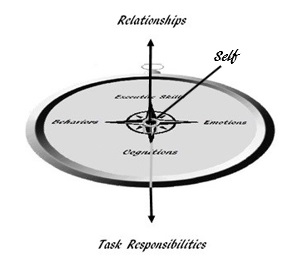
Becoming Centered34. Residential Counselor 101 pt. 1 - Science, Art, and Craft The Role of a Residential Counselor: Care and Treatment CARE: Relationships: A core responsibility is to attend to the care, well-being, and safety of the clients. This requires caring and respectful relationships between staff and clients. Self: In order to take care of the clients, you have to be able to take care of yourself. This work is very stressful and your ability to become centered will strongly effect your ability to help the kids become centered. Task Responsibilities: A Residential Counselor has numerous core tasks related to the implem...
2024-03-2030 minBecoming Centered33. GroupsEffective residential treatment for troubled children and youth depends upon teamwork among both staff and residents. The goal is to transform a group of struggling kids into a supportive team. Many kids in these programs crave friendship, which is often lacking due to their life challenges and the displacement of residential treatment. A major goal in treatment programs is to help the child and youth clients learn how to make and keep friends. Residential treatment does a lot of that teaching through various group activities, including recreational, therapy-based, and house meetings. These gatherings require active participation from s...
2024-02-2828 minBecoming Centered32. Supervisor Orientation Pt. 3This podcast mini-series aims to aid residential staff who find themselves supervising shifts and providing individual supervision for residential counselors. It explores various aspects of these roles through the Seven-Directions Meta-Compass Model. Each episode focuses on a cardinal direction, representing different perspectives. Episode one emphasized supportive supervision (East) and the role of the supervisor as teacher (South). Episode two focused on coaching (West) and focused on teamwork (North). The current episode delves into the Upward perspective, addressing the relationship challenges of transitioning from peer to supervisor and maintaining professional boundaries. The importance of refraining from pa...
2024-02-1427 minBecoming Centered31. Supervisor Orientation Pt. 2In this podcast episode, looking at the role of the Residential Supervisor shifts to the perspective of the West cardinal direction in the Meta-Compass Model. The West is the direction of behaviors, physiology, and for this podcast, especially is concerned with setting behavioral goals for supervisees. It’s suggested that setting behavioral goals be based on encouraging Residential Counselors to develop their own executive skills. Focusing on executive skills, and using the language of executive skills, helps separate out asking supervisees to develop their professional skills, versus language that makes supervisees feel like their supervisor is judging their...
2024-02-0730 minBecoming Centered30. Supervisor Orientation Pt. 1This podcast aims to guide residential staff taking on the role of supervising a shift, emphasizing the complexities involved in managing a group of kids and supporting a team of direct care staff. The role of a Residential Supervisor involves overseeing shifts, and in some agencies includes providing one-on-one office-based supervision, which includes conducting performance appraisals, managing personnel issues, and facilitating communication between staff and management. To organize this wide-ranging topic, the 7-Directions Meta-Compass Model, inspired by Native American concepts, is used as a framework to explore different aspects of the supervisor's role. The East...
2024-01-3129 minBecoming Centered29. Managing Problem BehaviorsThis podcast episode presents a system for managing behavior problems, utilizing a variety of interconnected tools and techniques. The concept of contagion is introduced, explaining how behaviors, feelings, and thoughts can spread among individuals. The importance of interrupting behavioral patterns is highlighted, particularly using a technique known as "pattern interrupts." These interrupts aim to prevent escalation and promote a return to baseline functioning. A detailed example of a structural pattern interrupt is provided, involving a campaign to reduce swearing among middle-school boys in a residential cottage. The podcast suggests the use of three types of ti...
2024-01-2442 minBecoming Centered28. Twelve Transformational BeliefsThis episode focuses on Beliefs as a powerful regulatory mechanism. Beliefs act as filters through which individuals perceive reality, and the host emphasizes the importance of consciously choosing beliefs. The key idea is that beliefs need not be evaluated based on their imagined truth, but on their usefulness and how well they serve an individual. Empowering and healthy beliefs can be consciously cultivated through two main strategies: tasking your brain to find evidence supporting the new belief, and taking action as if the belief were already true. Twelve Transformational Beliefs are presented: People are no...
2024-01-1730 minBecoming Centered27. The Aspect Compass & Self-TalkThis podcast episode is intended to increase your awareness of Self-Talk and how you can coach your clients to use more effective and healthier Self-Talk. It uses the Aspect Compass (part of the Meta-Compass Model) to present different qualities of Self-Talk that appeal to the four cardinal aspects of your psyche called The Artist, The Scout, The Warrior, and The Chief. Using the Aspect Compass begins with the Artist (in the East), representing the domain of emotions. As children explore the world, the Scout (in the South) emerges, making associations and developing thoughts. The Warrior (in the We...
2024-01-1027 minBecoming Centered26. Developing Executive SkillsIn this podcast episode, the focus is on aiding children and youth in residential treatment to develop executive skills, which are crucial for regulating emotions, thinking, and behavior. Developing residents executive skills is essential because it’s their deficits in being able to regulate their own feelings, thoughts, and behaviors that accounts for why they need to live at a treatment program in order to receive services, instead of living in the community / with their families. Executive skills begin developing in childhood but can be delayed or overwhelmed by environmental challenges, trauma, deprivation, insufficient parenting, or neurological con...
2024-01-0329 minBecoming Centered25. The Eight GiftsThis podcast presents a system of eight values and fits them within the Meta-Compass Model. This podcast explores the interplay between executive functions, values, and emotional, cognitive, and behavioral health, offering a practical framework for understanding and fostering these aspects in individuals, particularly children and youth. Values, separate from Executive Skills, serve as a mechanism for your inner Chief to regulate the other cardinal aspects of your psyche, the Artist, the Scout, and especially the Warrior by providing boundaries for behaviors. A values system is presented that is inspired by Native American traditions, particularly the Se...
2023-12-2731 minBecoming Centered24. Heroes, Courage, and FearThis podcast builds off of the concept that, overall, our brains understand the totality of our life experiences as a story. It’s crucial for our mental health, and overall sense of becoming centered, to see ourselves as the hero of our own life-story. This is the situation for children and youth in residential treatment. Upon entering residential treatment, kids often feel at a low point, viewing their challenges as insurmountable. They need to become part of a classic story-line in which our young central character faces personal tragedy, separates from parents, finds mentors and friends, and under...
2023-12-2026 minBecoming Centered23. Helping Kids ReasonThis podcast episode builds off of the concept of four different types of reasoning simultaneously performed by distinct parts of the brain. The inner Artist engages in Emotional-Reasoning, associating experiences with emotions. The inner Scout employs Magical-Reasoning, finding patterns and correlations to make sense of the world. The inner Warrior relies on Logical-Reasoning, basing actions on evidence and logic. The inner Chief, responsible for regulating the brain, uses Influencer-Reasoning, considering factors like relationships, authority, power, charisma, expertise, and fame. Despite the common perception of Logical-Reasoning's superiority, it’s Emotional-Reasoning th...
2023-12-1328 minBecoming Centered22. Understanding ReasoningThis podcast presents a way to understand the brain’s ability to use reasoning to become cognitively centered. Emotional centering involves regulating the intensity and switching between emotional states. Behavioral centering, particularly physiological centering, focuses on transitioning from extremes to a calm baseline. It’s a little harder to understand the concept of becoming cognitively centered, but a good place to start is with a look at how the brain employs reasoning. A traditional dictionary definition of reasoning states that it has to be logical in nature. However, reasoning is better understood as a broader action of figuri...
2023-12-0630 minBecoming Centered21. Becoming Physiologically CenteredThis episode focuses on how to help child-clients become physiologically centered. Previous episodes have focused on helping children become emotionally and cognitively centered. Emotional centering involves regulating extremes of emotions, and developing reaction inhibition and stress tolerance. Various tools, such as the Check-in and Empathic Listening can be really useful for helping kids become emotionally centered. Cognitive centering techniques include the use of tools like the Feelings Thermometer and Feelings Maps to help kids describe their feelings. A complimentary approach focuses on leveraging clients’ physiology to help them become centered. Afterall, every emotion is expressed in vari...
2023-11-2932 minBecoming Centered20. Stories - The Bear Clan Origin pt. 1-3This episode is a departure from the usual format by sharing original teaching stories. Storytelling and stories are a fundamental modality for learning. Our brains are wired to process experiences in the form of a narrative. Telling stories builds connections between adults and children, whether the adult is the storyteller or the child. Telling stories, or listening to stories together, fosters a sense of shared experience and strengthens the therapeutic alliance. Stories engage various parts of the brain, both verbal and nonverbal, conscious and unconscious, effecting every part of the psyche. Several Bear Clan stories ill...
2023-11-2228 minBecoming Centered19. Management and DelegatingThis podcast episode discusses the importance of management and delegation within residential treatment programs for children and youth. It highlights the different levels of management within such organizations, including Executive Management responsible for overall leadership, Senior Management overseeing major aspects of the agency's operations, Middle Managers handling specific service units, and Frontline Managers leading shifts. It emphasizes that effective management is essential to provide quality care to the clients. The episode explores various roles within residential programs, such as coordinators responsible for specific tasks like organizing activities or managing facility supplies. It also delves into the role...
2023-11-1529 minBecoming Centered18. Processing Suicidal IdeationThis podcast episode is the second part of a series that addresses how to intervene when dealing with suicidal ideation in children and youth. It emphasizes the importance of training for counselors and aims to make discussing this sensitive subject more approachable. An important focus is for counselors is to help clients understand suicidal ideation as a symptom rather than delving into the "why" behind it, which is a task for therapists. The episode emphasizes the need to distance clients from these thoughts and work on developing their executive skills, especially stress tolerance. The counselor's...
2023-11-0827 minBecoming Centered17. Suicidal IdeationThis podcast episode discusses the challenging issue of dealing with suicidal ideation among child-clients in residential treatment. The podcast offers insights into different scenarios where staff may encounter suicidal ideation in child-clients and explains the unique challenges residential staff face, such as having to be the front-line mental health professionals, despite formal training. The episode introduces the Columbia Protocol, a set of questions used to assess suicidal ideation, and discusses the importance of empathetic listening and creating a safe space for clients to express their thoughts and emotions. The speaker emphasizes that the...
2023-11-0128 minBecoming Centered16. The Aspect Compass & Meeting Kids' NeedsThis podcast presents a powerful perspective for helping your child-clients become centered. It’s based on understanding your kids’ needs through The Aspect Compass, a model representing four aspects of the psyche: The Artist (emotions), The Scout (cognitions), The Warrior (behaviors), and The Chief (executive skills). Each aspect has unique needs that, when addressed, can help children become centered and balanced: For the inner Artist: Getting sufficient attention. Experiencing a full range of feelings. Achieving emotional stability. Expressing feelings. Facing fears. Grieving. Attention and validation are essential for children's emotional well-being. Offering appropriate outlets for expressing emotions through w...
2023-10-2531 minBecoming Centered15. Processing FeelingsThis episode explores various techniques for helping children process their feelings and develop emotional regulation skills. The episode begins with a recap of previous discussions on physiological coregulation and processing aimed at helping kids become cognitively centered. The focus then shifts to processing feelings, which can be more difficult, because emotions are challenging for children to articulate. Check-in’s are a basic tool for helping kids express their emotions. These check-in’s involve asking children about their current emotional state. It often times is a good practice to focus on basic needs like hunger, thirst, and fatigue as p...
2023-10-1825 minBecoming Centered14. Time OutsThis podcast episode discusses the use of timeouts as a common and effective technique in residential treatment programs working with children and adolescents. Timeouts are employed to manage disruptive behaviors and prevent the spread of problematic behaviors and emotions within a group, similar to containing a fire's spread. The episode emphasizes the importance of setting limits in a firm but non-harsh manner to encourage cooperation and internalization. While timeouts can be used as a purely behavioral intervention, their effectiveness can be enhanced by targeting cognitive development. Warnings and timeouts can be combined, encouraging self-awareness and...
2023-10-1131 minBecoming Centered13. Setting Firm LimitsThis podcast episode explores the crucial role of structure and firm, yet respectful, limit-setting in residential care for troubled children. Structures and external boundaries are essential for creating order in a group environment, especially when dealing with children facing various challenges such as trauma, ADHD, developmental delays, and mental health issues. A core value in a treatment setting is that respect should not be something earned but freely given, as it is a gift that helps build trust and facilitates change in child-clients. The podcast stresses the need for residential staff to be firm but...
2023-10-0432 minBecoming Centered12. Structure and Structural InterventionsThis podcast delves into the fundamental structures of residential treatment programs and the concept of structural interventions. While theoretically residential treatment could customize programs for each individual, practicality dictates the need for a standardized framework designed to meet the overall needs of a group of kids. The concept of program structures includes physical aspects like room configurations and the flow of rooms, as well as how clients are allowed to move throughout a program. Other major structures are elements such as the daily schedule, analogous to a class schedule in school. Additionally, program structures include rules, expectations, and...
2023-09-2732 minBecoming Centered11. Neurological CoregulationThis podcast discusses the importance of coregulation in residential treatment settings for children who are emotionally, cognitively, and behaviorally disorganized. Coregulation refers to the process where an adult's nervous system synchronizes with a child's, helping the child learn self-control and emotional regulation. Coregulation starts from infancy when a baby's nervous system is linked with the mother's. Over time, babies learn to independently regulate their bodily functions, but they still rely on coregulation for emotional stability, and for learning how to organize thoughts, and regulate behaviors. Human Beings use coregulation before they learn self-regulation. Self-regulation involves...
2023-09-2029 minBecoming Centered10. After Physical RestraintsThis podcast episode is part four of a series addressing the use of physical restraints and interventions in response to extreme client behaviors, particularly in residential treatment settings. The previous episodes discussed the uncomfortable nature of these interventions and the necessity of their use for the safety of both staff and clients. The focus of this final episode is on post-restraint procedures to protect staff from the traumatic effects of such incidents. After a physical hold, staff are advised to relax their muscles, engage in deep breathing, and attend to basic needs like drinking water. These self-care...
2023-09-1329 minBecoming Centered9. Trauma Protection with Physical RestraintsPhysical Restraints tend to be in response to intense, often times violent, situations and will have some degree of traumatizing effect on both the staff and the client. The neurochemical changes in the brain that are caused by traumatic incidents don’t automatically reset. Instead, memories of the incident are stored in your brain with the emotional content that the incident evoked. Parts of your body, your muscles and nervous system, also store the stress caused by the incident, long after the incident has ended. It can be very tempting to turn to coercion, essentially inti...
2023-09-0630 minBecoming Centered8. Physical RestraintsPhysical Restraints are, in my opinion, the best option for safely dealing with violent behaviors among children and youth in residential treatment. Self-injurious behaviors need to be stopped before they lead to permanent, or at least significant, damage. Assaultive behaviors need to be stopped before they lead to harm. Runaway behavior is a more nuanced judgement call. Sometimes staff can continue to monitor a runaway child or youth. However, allowing a troubled kid to be on their own in a wilderness, urban, or other environment can place them in serious danger. Property damage can...
2023-08-3028 minBecoming Centered7. Physical InterventionsPhysical Restraints are a complex and controversial subject that might be triggering for some people. There are scholarly articles on this subject and many national organizations have expressed opinions on the use of physical restraint. My perspective is primarily driven by my professional experiences participating in physical restraints, mechanical restraints, chemical restraints, and seclusion; and reviewing and reporting on thousands of these sorts of incidents. Ethical concerns around the use of physical restraints, per Scheurmann in the Journal of Disability Policy Studies 27(2), include: 1. Potential for death or injury. 2. Failure to use the l...
2023-08-2330 minBecoming Centered6. The Aspect Compass and Setting LimitsThis episode uses The Aspect Compass to frame the role of a Residential Counselor as serving as The Chief function with the clients to set limits, to help regulate, the kids’ emotions, cognitions, and behaviors. When residential staff don’t set enough limits, you’ll see a phenomenon called contagion. This comes from firefighting and describes how a fire will spread from one tree to another. It’s also used to describe how a disease will spread from one organism to another. The Artist responds to emotional appeals, highly dependent on your relationship with each kid. This...
2023-08-1633 minBecoming Centered5. The Domain Compass and LabelingThis episode reviews The Domain Compass, which is a way to visualize four domains of psychological functioning. In the East, there’s the domain of emotions, consisting of feelings and moods. In the South, there’s the domain of cognitions, consisting of thoughts and beliefs. In the West, there’s the domain of behaviors. That’s includes both external behaviors and all the internal workings of your physical body and nervous system. In the North, there’s the domain of executive skills. That’s where self-control is found. Another helpful way to...
2023-08-0919 minBecoming Centered4. Team BuildingHigh level team work is an absolutely essential aspect of being an effective Residential Counselor. There’s a classic way to think about the formation of effective teams. It breaks team development into 5 over-lapping phases: Forming, Storming, Norming, Performing, Adjourning. (1) Forming refers to all the dynamics that happen between team-mates when you’re relatively new to working with one another. · The key to moving through the forming phase is constant communication among team members. Let your partners know where you are, what you’re doing, and which kids, or zone, you’re covering. (2) In the Stor...
2023-08-0224 minBecoming Centered3. Therapeutic RelationshipsTherapeutic relationships help your clients become centered in four domains of psychological functioning. This can be visualized using The Domain Compass: · In the East, there’s the domain of emotions, consisting of feeling and moods. · In the South, there’s the domain of cognitions, consisting of thoughts and beliefs. · In the West, there’s the domain of behaviors, consisting of both all external actions and the internal actions of the physical body. · In the North, there’s the domain of executive skills and self-regulation. 1. Three relationship qualities to strive for within the domain of emotions...
2023-07-2629 minBecoming Centered2. Professional Boundaries for Residential CounselorsProfessional boundaries includes: 1. the schedule of when you’ll have contact with the kids, 2. limits on physical touch, 3. limits on personal disclosure, and 4. the general tone of the professional relationship. 1. Your contact with clients is during scheduled hours. Be polite but minimize any accidental contact with clients outside of work. Don’t talk about your clients in public. 2. Limits on physical touch. Providing Physical Assistance: If your clients require physical assistance with hygiene, always be business-like and clinical. Affectionate Touch: Kids thrive on affectionate touch but because of the treatment issues common in resident...
2023-07-1934 minBecoming Centered1. The Role of Residential CounselorWelcome to the first episode of Becoming Centered. This episode begins the Residential Counselor Orientation series, designed for the new Residential Counselor. It introduces a way to understand your role, your relationship with clients and other counselors, and introduces some basic tools for becoming a skilled Residential Counselor. Episode 1 focuses on a specific understanding of the role of a Residential Counselor. For related resources check out the Bear Clan, llc website at www.BearClanllc.com. There’s different types of residential treatment programs for serving school-age children. The length of treatment and the setting can greatly va...
2023-07-1221 min
La biblioteca del gatto rossoRacconti: Jerusalem's Lot, di Stephen KingIl maestro del brivido ci regala un interessante racconto dai temi e dalle atmosfere fortemente lovecraftiane in una splendida raccolta di racconti che ruotano attorno ai miti di Cthulhu, scritti dagli anni '30 in poi. Gli autori, oltre a Lovecraft stesso, sono: Clark Asthon Smith Robert E. Howard Frank Belknap Long August Derleth Robert Bloch Henry Kuttner Fritz Leiber Brian Lumley Ramsey Campbell Colin Wilson Joanna Russ Karl Edward Wagner Philip José Farmer Stephen King Richard A. Lupoff.
2022-09-0411 min
Uncommon SenseHome, with Michaela BensonHome means something to everyone. More than just bricks and mortar, it’s about security and belonging, citizenship and exclusion. Michaela Benson has researched it all: from the UK’s self-build communities, to people seeking a new lifestyle abroad. She tells Alexis and Rosie about this and her own experience of home, including her mother’s relationship to her place of birth: Hong Kong.Plus, Kwame Lowe and Alice Grahame introduce us to the Rural Urban Synthesis Society in London. What does it take to build your own “Grand Design” and why would anyone want to do that? What...
2022-04-2240 min
Kiitsu—Returning-to-OneS01 #10 - What was, must be testedSend us a textSome (positive) Christian atheist reflections on the seasons of Advent & Christmas drawing on the work of the twentieth-century German, Marxist philosopher Ernst Bloch's 1972 book, "Atheism in Christianity". The full text of this podcast can be found at the following link:https://andrewjbrown.blogspot.com/2020/11/what-was-must-be-tested-some-positive.htmlPlease feel free to post any comments you have about this episode there.Music, "New Heaven", written by Andrew J. Brown and played by Chris Ingham (piano), Paul Higgs (trumpet), Russ Morgan (drums) and Andrew J. Brown (double bass)
2020-11-2816 min
Your Leadership LegacyLive Now: Encouraging others to live full out by Louisa PercudaniOn today's episode of Your Leadership Legacy Podcast, Tina Paulus-Krause talks with Louisa Percudani, contributing author of Live Now, speaker and host of the podcast Live Now. Louisa is passionate about encouraging others to live full out no matter what their circumstance. Listen to her story that led her new blueprint in life is to simply live full out, right now in the present; to empower others and help them realize that they can integrate and transcend life's twists and turns with courage, power, and grace. Listen to this podcast to learn: How her...
2020-01-1636 min
HDO - JazzX5HDO 352. Lena Bloch and Feathery, Sergio Gruz, Wilfried Wilde QuintetHeart Knows (Fresh Sound New Talent, 2017) de Lena Bloch & Feathery (Lena Bloch, Russ Lossing, Cameron Brown, Billy Mintz), Indios (Fresh Sound New Talent, 2017) de Sergio Gruz Trío (Sergio Gruz, Paco Weht, Ramiro Rosa), y Oscilenscope (Fresh Sound New Talent, 2017) de Wilfried de Wilde Quintet (Wilfried de Wilde, Xan Campos, Iago Fernández, Demian Cabaud, Charley Rose, Wilfried de Wilde) son las grabaciones que suenan en la entrega 352 de HDO, segunda parte del programa que comenzaba con HDO 351.
Tomajazz: © Pachi Tapiz, 2017
HDO es un podcast editado, presentado y producido por Pachi Tapiz.
2017-11-2246 minHDO - JazzX5HDO 352. Lena Bloch and Feathery, Sergio Gruz, Wilfried Wilde QuintetHeart Knows (Fresh Sound New Talent, 2017) de Lena Bloch & Feathery (Lena Bloch, Russ Lossing, Cameron Brown, Billy Mintz), Indios (Fresh Sound New Talent, 2017) de Sergio Gruz Trío (Sergio Gruz, Paco Weht, Ramiro Rosa), y Oscilenscope (Fresh Sound New Talent, 2017) de Wilfried de Wilde Quintet (Wilfried de Wilde, Xan Campos, Iago Fernández, Demian Cabaud, Charley Rose, Wilfried de Wilde) son las grabaciones que suenan en la entrega 352 de HDO, segunda parte del programa que comenzaba con HDO 351.
Tomajazz: © Pachi Tapiz, 2017
HDO es un podcast editado, presentado y producido por Pachi Tapiz.
2017-11-2246 minHDO - JazzX5HDO 352. Lena Bloch and Feathery, Sergio Gruz, Wilfried Wilde QuintetHeart Knows (Fresh Sound New Talent, 2017) de Lena Bloch & Feathery (Lena Bloch, Russ Lossing, Cameron Brown, Billy Mintz), Indios (Fresh Sound New Talent, 2017) de Sergio Gruz Trío (Sergio Gruz,...
[[ This is a content summary only. Visit my website for full links, other content, and more! ]]
2017-11-2246 min