Shows
UnTextbooked | A history podcast for the futureBonus Episode: How Does a Chicana Activist Find Her Place in History?In honor of Women’s History Month, we are sharing a special bonus episode featuring Chicana activist and artist Irma Lerma Barbosa. Her legacy will be preserved for years to come in the Smithsonian’s National Museum of American History Collections.Irma attended college at a time when the Chicano movement was just gaining momentum – and she jumped right into fighting for her community. Picture this – a legacy that includes being welcomed into Cesar Chavez's family home through her time in the United Farm Workers Movement, leadership with the Brown Berets, spearheading a free breakfas...
2024-03-0718 minUnTextbooked | A history podcast for the futureEncore: History fails when it ignores the BIPOC women who made itIn honor of Black History Month, Untextbooked is sharing a favorite episode from our archive. Women of color have been at the forefront of many movements, yet are often neglected, demonized, or ignored. Your history class probably didn’t teach you about Josephine Baker, who was not only a famous Black dancer and entertainer, but also a spy aiding in the French Resistance. You likely didn’t learn about Claudette Colvin either. She was the Black, pregnant fifteen year old whose civil disobedience kicked off the Montgomery Bus Boycott. We live in a world of w...
2024-02-2935 minUnTextbooked | A history podcast for the futureEncore: How did Black Americans forge a cultural identity?In honor of Black History Month, UnTextbooked is sharing a favorite episode from our archive. UnTextbooked producer Sydne Clarke thinks that African American history is often oversimplified or overlooked. Often that history is taught as things that happened to African Americans. We don’t often hear about the ways in which African Americans fought for and took care of themselves. Dr. Leslie Alexander studies Black resistance movements, particularly in America. In her research Dr. Alexander has discovered communities and people who were vital to Black activism, but are often forg...
2024-02-2219 min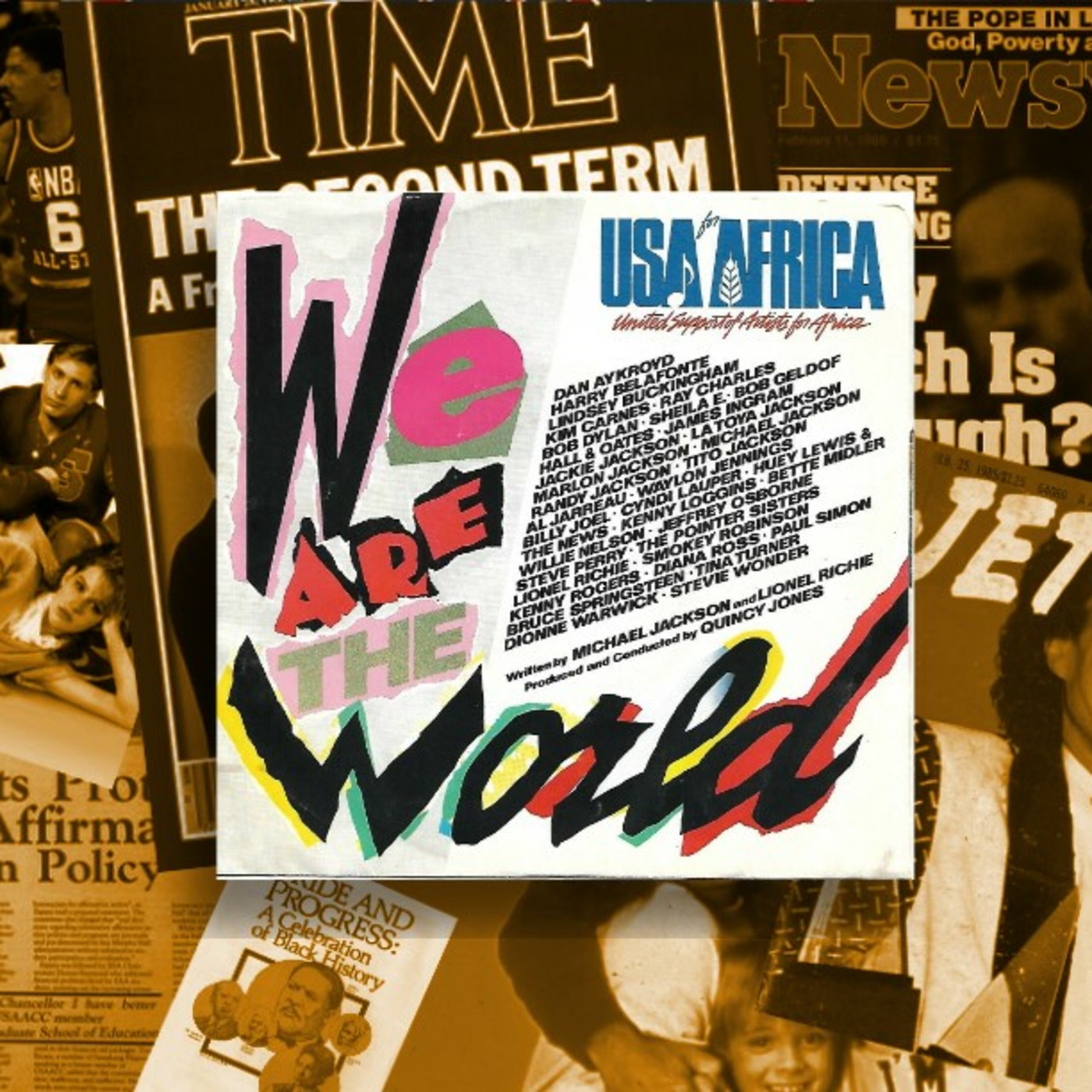
Everything is a Primary Source"We Are the World" (1985)S3E21: "Heal the World"CeCe from History Co:Lab and their Ambie Award-nominated podcast, UnTextBooked stopped by to talk about "We Are the World" the 1985 fundraising single organized by Harry Belafonte, Quincy Jones, Michael Jackson and Lionel Richie to respond to the devastating famine affecting millions in Ethiopia in the time period. What can this song featuring over two dozen musicians tell us about the society, culture, politics and economics of 39 years ago?
2024-02-2219 minUnTextbooked | A history podcast for the futureWhat Can Anonymous & Hacker Collectives Teach Us About Internet Activism?In 2008, Anonymous posted a video declaring war against Scientology. Some people flocked to join the hacker collective while corporations started re-evaluating their security protocols. This week on Untextbooked, producer Caroline Somers dives into the history of the hacker collective and asks what can we learn about internet activism. Gabriella Coleman is the author of “Hacker, Hoaxer, Whistleblower, Spy: The Many Faces of Anonymous”. She is a full professor in the Department of Anthropology at Harvard University. She is the founder and editor of Hack_Curio, a video portal into the cultures of hacking. In 2022, she h...
2024-02-1523 minUnTextbooked | A history podcast for the futureWhat’s the Complicated Legacy of Betty Friedan?In 1963, Betty Friedan’s book The Feminine Mystique was a galvanizing force for the Feminist movement. Now, nearly six decades later, feminist discourse has gone through several evolutions, Betty Friedan is no longer a household name, and her radical ideas don’t sound so radical anymore. This week, Producer Gavin Scott sits down with Rachel Shteir, author of “Betty Friedan: Magnificent Disrupter”, to talk about the legacy and controversy around Betty Friedan, including how she coined the term ‘Lavender Menace.’Listen to new episodes every Thursday. Follow the show on Spotify, Apple Podcasts, Amazon Music, or wh...
2024-02-0818 minUnTextbooked | A history podcast for the futureHow does Disneyland Reflect the American Dream?What does it mean to belong in the American imagination? That’s one question we explore on this week’s episode of UnTextbooked. In another installment of “UnTextbooking the Museum Collections”, we dive into the Smithsonian's National Museum of American History exhibit named “Mirror Mirror: Disney theme parks and American stories”. Producer Victor Ye speaks with original Disney Imagineer Bob Gurr about working with Walt Disney, designing original Disney rides, and queer identity. Smithsonian Curator Bethanee Bemis shares how Walt Disneyland is a microcosm of the American dream. Listen to new episodes every Thursday. Follow the sho...
2024-02-0141 minUnTextbooked | A history podcast for the futureWhat Can We Learn From Historic Youth Movements?UnTextbooked is back with a new episode in our series, “UnTextbooking the Museum Collections.” We're sharing the untold story of Irma Lerma Barbosa, a Chicana activist and artist whose work will be preserved for years to come in the National Museum of American History's Collections. Curator Veronica Mendez tells us how this acquisition came to be and why it’s historically significant in telling the long history of the Latina/o Civil Rights MovementIrma attended college at a time when the Chicano movement was just gaining momentum – and she jumped right into fighting for her...
2024-01-2542 minUnTextbooked | A history podcast for the futureWait, SYPHILIS Is the Reason Why We Have the Field of Dermatology?In this new miniseries we’re calling “UnTextbooking the Museum Collections,” we dive into the vast collections of the Smithsonian, the world’s largest museum complex, made up of 21 museums and the National Zoological Park, as well as research facilities. This week, producer Jenny Fan talks with curator Katherine Ott, PhD, about curating medical history at the National Museum of American History. They talk about skin – the cultural lens we view medical diagnoses, the evolution of studying skin, and why early dermatologists were obsessed with syphilis. Plus, why does the Smithsonian have 150-year-old feces in its collection? Li...
2024-01-1830 minUnTextbooked | A history podcast for the futureEncore: How do democracies die?This week, we are revisiting an important question: Is our democracy in danger? In the years after Trump’s presidency, it’s tempting to say “not anymore,” but nowadays threats to democracy are no longer as obvious as a military coup or revolution. Instead, a democracy in danger manifests in much more subtle ways including: the steady decline of longstanding political norms and weakening of essential institutions such as the United States press and its courts system, both of which are already in jeopardy.On this episode of UnTextbooked, producer Jessica Chiriboga interviews New York Tim...
2024-01-1232 minUnTextbooked | A history podcast for the futureWhat Was the Black Panther Party Fighting For?In 1968, Martin Luther King Jr. was assassinated, police killed unarmed 17-year-old Bobby Hutton, and Aaron Dixon decided it was time to join the Black Panther Party.Aaron Dixon was co-founder and Captain of the Seattle chapter of the Black Panther Party. As a college student at the University of Washington, Dixon played a key role in the formation of the Black Student Union (BSU) and the Seattle Chapter of the Student Nonviolent Coordinating Committee (SNCC). In the spring of 1968, at the funeral of Bobby Hutton in Oakland, California, Dixon met Bobby Seale and later...
2023-12-2130 minUnTextbooked | A history podcast for the futureHow Does The Legacy of Settler Expansion & Industrialization Destroy Indigenous Livelihood?Thousands of protestors joined Indigenous activists at Standing Rock to fight for clean drinking water. At its core, this fight echoes the legacy of broken treaties and settler industrialization. Producer Lily Sones talks with Dina Gilio-Whitaker (Colville Confederated Tribes) about how industrialization halted traditional indigenous food ways and how extractive industries cause health effects across today’s indigenous communities. Dina Gilio-Whitaker is an award-winning journalist and columnist. She is a lecturer of American Indian Studies at California State University San Marcos, and independent consultant and educator on environmental justice and other Indigenous policy-related issues. She...
2023-12-1430 minUnTextbooked | A history podcast for the futureWhat Do Our Clothes Reveal About History, Economics, and Gender?The clothes we wear say a lot about how we express ourselves. But an investigation into how these clothes ended up in our closets reveals a complex history dating back 400 years ago at the dawn of the Industrial Revolution. Producer Ashley Kim sits down with Sofi Thanhauser, the author of “Worn: A People’s History of Clothing” to learn how clothing can teach us about economics, gender and imperialism. Sofi Thanhauser teaches in the writing department at Pratt Institute. She has received fellowships from the Fulbright Program, MacDowell, and Ucross Foundation. Her writing has appeare...
2023-12-0725 minUnTextbooked | A history podcast for the futureWhy is Spoken Word Poetry Not Seen as ‘Real’ Literature? With Dr. Joshua BennettSpoken word poetry is an oral tradition dating back centuries. So why is this form of poetry not always taken seriously? Producer Sydne Clarke sits down with Dr. Joshua Bennett, the author of "Spoken Word: A Cultural History". His nonfiction debut is a personal investigation into the history of spoken word, specifically the Nuyorican Poets Cafe. This is a cultural hub that started in the Lower East Side living room of Miguel Algarin. Bennett has authored several books of poetry, including The Sobbing School, which was a National Poetry Series selection and a finalist fo...
2023-11-3025 minUnTextbooked | A history podcast for the futurePTSD, Poetry and Brotherhood in World War OneIn World War One, millions of soldiers saw industrial warfare unlike anything they’ve seen before: artillery shells, flame throwers, poison gas. Those who saw the war on the frontlines came home with psychological wounds the world had never quite seen before. At one military hospital in Scotland named Craiglockhart, early psychiatrists treat PTSD and soldiers turn to poetry and brotherhood to heal. UnTextbooked producer Faith Stanley sits down to talk with journalist and author Charles Glass. His recent book “Soldiers Don't Go Mad” is a comprehensive history of the Craiglockhart Military Hospital and the now...
2023-11-1621 minUnTextbooked | A history podcast for the futureWhat IS Venture Capital? Does it really run the tech world?Entrepreneurs like Elon Musk and products like Chat GPT have been fueled by Venture Capital. In fact, some argue that Venture Capital has shaped our modern technology more than any other entity. But what is Venture Capital and what makes it unique? This week, UnTextbooked producer and college student Oliver Wang talks to author Sebastian Mallaby to learn about the shadow history of venture capital. What once started as a way to liberate eight scientists from a difficult boss now is a medium to inspire innovation across the world. Sebastian Mallaby is the author o...
2023-11-0926 minUnTextbooked | A history podcast for the futureThe Many Contradictions of Longtime FBI Director J. Edgar HooverJ. Edgar Hoover was a man of contradictions. As the Director of the FBI from 1924 to 1972, he spearheaded homophobic, racist, and anti-communist policies – which arguably shaped half a century of the United States. But he also had an intimate personal relationship with a man and he believed in the role of government to support social conservatism. Beverly Gage is the author of “G-Man: J. Edgar Hoover and the Making of the American Century”, which won a Pulitzer Prize in Biography. She is a 20th-century American historian at Yale. She also wrote “The Day Wall Street Ex...
2023-11-0227 min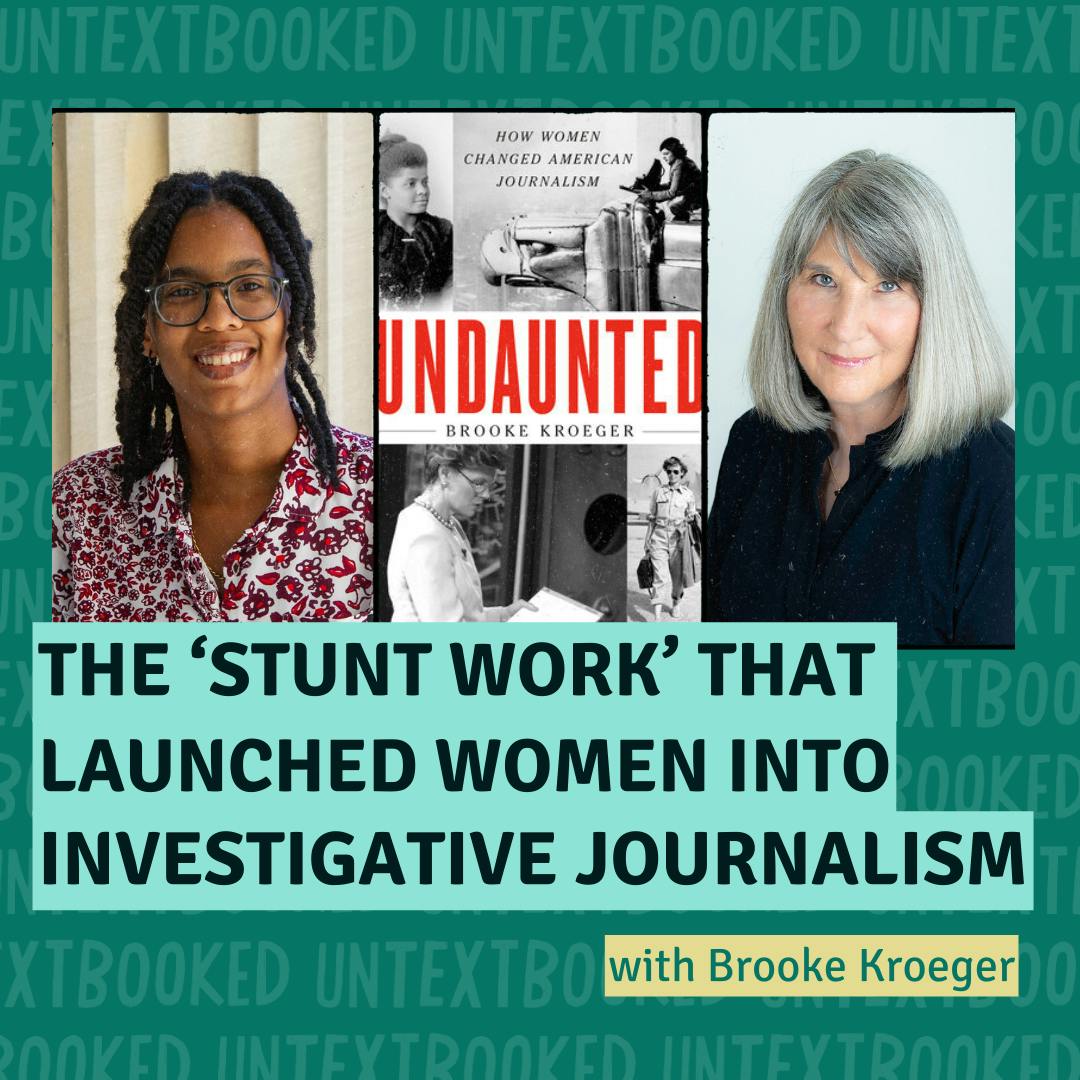
UnTextbooked | A history podcast for the futureThe ‘Stunt Work’ That Launched Women Into Investigative JournalismWomen including Ida B. Wells and Nellie Bly were on the front edge of investigative journalism in the 1800s. But even with these historical trailblazers, why were women excluded from reporting hard news until recent history? Producer Jordan Pettiford sits down with author, journalist and professor Brooke Kroeger to find out. Brooke has authored six books and her most recent book is “Undaunted: How Women Changed American Journalism”. Listen to new episodes every Thursday. Follow the show on Spotify, Apple podcasts, Amazon Music, or wherever you listen. That way you ne...
2023-10-2629 minUnTextbooked | A history podcast for the futureUnTextbooked is back with Season Four!This season, we talk to an original member of the Black Panther Party. We explore the extremely contradictory life of longtime FBI director J. Edgar Hoover. We talk to Smithsonian curators about the historical connection of Disneyland to American identity. Plus, we cover topics including censorship, fast fashion, women in journalism, PTSD, Internet hackers, and more. History is full of gems to discover and pitfalls to avoid. But you wouldn’t know it when sitting in a high school history class. That’s why we created UnTextbooked, a history podcast for the future. We’re a gr...
2023-10-1901 min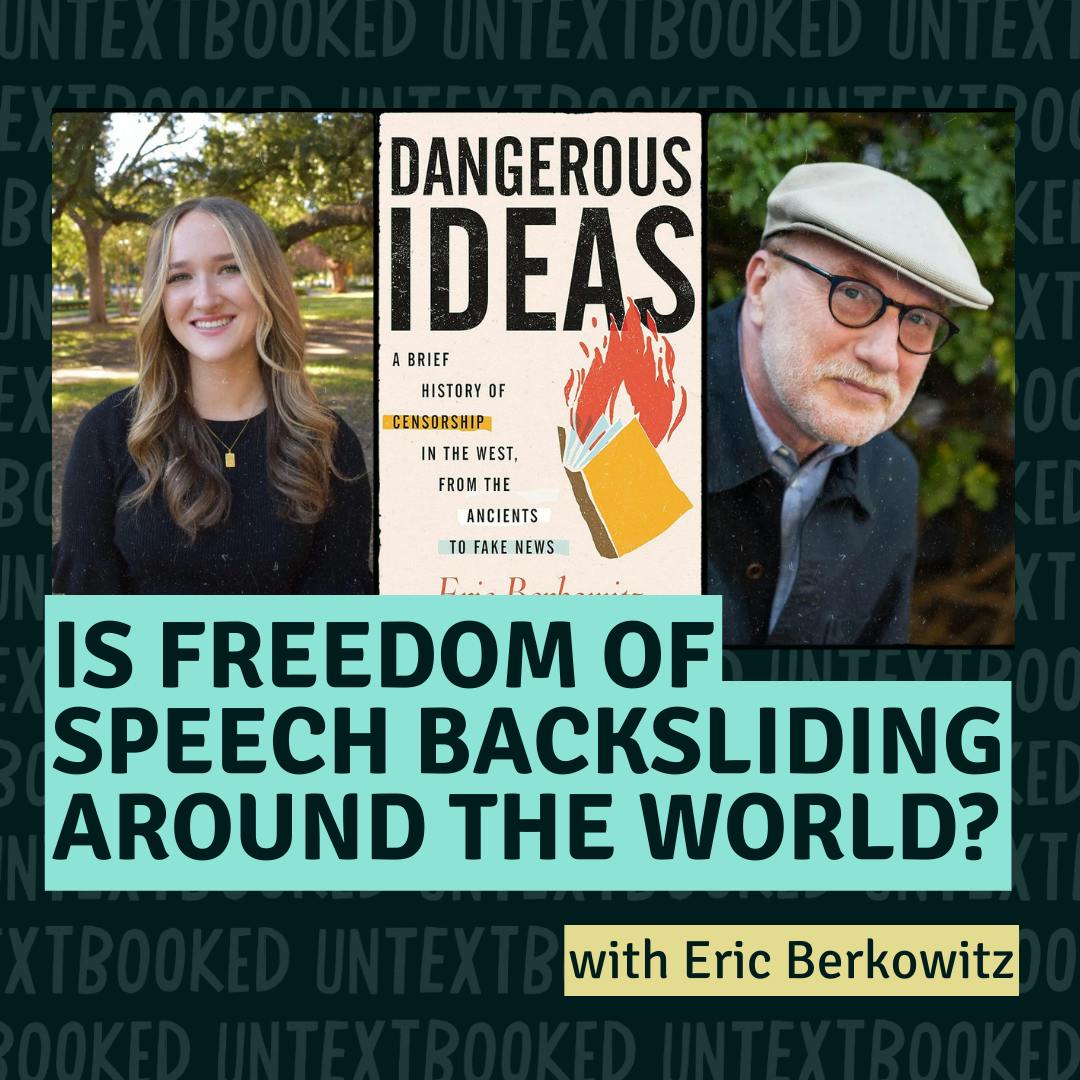
UnTextbooked | A history podcast for the futureIs Freedom of Speech Around the World Backsliding?From banned books to freedom of speech in academic settings, censorship is a topic that affects the everyday lives of young people. This week, UnTextbooked producer and college student Karly Shepherd talks to Eric Berkowitz, human rights lawyer, journalist and author. His latest book “Dangerous Ideas: A Brief History of Censorship from the Ancients to Fake News” covers about 2,000 years of censorship history. Censorship has existed since the dawn of language, consistently targeting themes like sex, religion and politics. But why does censorship exist? And does censorship even work? Listen...
2023-10-1928 min
UnTextbooked | A history podcast for the futureUnTextbooked Out of the Studio: Reimagining a New Vision for Education at the ASU+GSV SummitUnTextbooked heads to sunny San Diego, California, for the ASU+GSV Summit and we brought our microphones with us! Host Gabe Hostin and founding producer Victor Ye talked to innovative EdTech leaders, teachers and social entrepreneurs to discuss how we can collaboratively write a new chapter in the history of education. Plus, they ask the question, what else do we need to unlearn? This week’s guests:
Steven Hernandez, ESQ, Executive Director for the Connecticut Commission on Women, Children and Seniors.
Esther Wojcicki, Teacher, Author, and Founder of Palo Alto High School’s Media...
2023-09-2140 min
Getting Smart PodcastMichelle Blanchet on Preventing PolarizationThis episode of the Getting Smart Podcast is supported by the JFF Horizons Summit. Find out more at horizons.jff.org. On this episode of the Getting Smart Podcast, Tom Vander Ark is joined by Michelle Blanchet, Founder & Director of the Educator's Lab and author of Preventing Polarization: 50 Strategies for Teaching Kids About Empathy, Politics, and Civic Responsibility co-authored by Brian Deters. Michelle is also serving as a Senior Fellow for our New Pathways campaign as she helps us to highlight and share stories around keeping sustainability and citizenship at the core of pathways. ...
2023-04-2628 minUnTextbooked | A history podcast for the futureIntroducing: Changing CourseBonus Episode in Partnership with Changing Course: Host Jonathan Santos Silva speaks with leaders and educators from The Center for Black Educator Development in Philadelphia, PA, about how to create safe spaces that value and invest in young Black leaders. The Center is the first teaching academy in Philadelphia dedicated to investing in the next generation of Black teachers, starting as early as high school. Guided by the lens that excellent education is a political act, Sharif El-Mekki and his team at the Center demonstrate how restoring education to disenfranchised students is the purest form of activism.
2023-02-1640 minUnTextbooked | A history podcast for the futureBest of Season 3We’re wrapping up this incredible third season of UnTextbooked by looking back at the great work of our team of young producers. They covered topics and questions that really matter, including the rise of authoritarianism, mass incarceration, unprecedented changes in the Supreme Court, and much more! Each topic highlights how history isn’t just in the past, but also present in all of our lives.In this episode, our host Gabe Hostin and our Youth Program Coordinator CeCe Payne discuss excerpts from episodes we couldn’t stop thinking about this season:
Did the Am...
2023-02-0223 minUnTextbooked | A history podcast for the futureIs the current Supreme Court a threat to justice?In 2020, the Supreme Court was on the verge of transformation. Seismic events like the death of former Court Justice Ruth Bader Ginsburg, the appointment of conservative justice Amy Coney Barrett, and a polarizing presidential election laid the groundwork for major changes in decision-making seen today. On this episode of UnTextbooked, producer Karly Shepherd interviews Pulitzer Prize-winning New York Times journalist Linda Greenhouse to discuss the Supreme Court’s increasing politicization and domination by the religious right. With a supermajority of conservative Justices, how should we perceive the Supreme Court today and the effects of it’s polit...
2023-01-2639 minUnTextbooked | A history podcast for the futureHow do democracies die?Is our democracy in danger? In the years after Trump’s presidency, it’s tempting to say “not anymore,” but nowadays threats to democracy are no longer as obvious as a military coup or revolution. Instead, a democracy in danger manifests in much more subtle ways including: the steady decline of longstanding political norms and weakening of essential institutions such as the United States press and its courts system, both of which are already in jeopardy. On this episode of UnTextbooked, producer Jessica Chiriboga interviews New York Times best-selling author, Professor Daniel Ziblatt to discuss how to spot...
2023-01-1936 minUnTextbooked | A history podcast for the futureDid the American Civil War ever truly end?Although the American Civil War ended many years ago, the fight for “a more perfect union” never quite did. A few months after the union army’s victory, confederate-style, white supremacist resistance emerged even stronger than before. On this episode of UnTextbooked, producer Arya Barkesseh interviews Dr. Jeremi Suri, who argues that opposition to the union army’s victory started almost immediately after the war ended, preventing Lincoln’s vision of a genuinely united country from actually taking root. Today, these deep wounds of division remain fresh as citizens of the United States continue to wrestle with...
2023-01-1237 minUnTextbooked | A history podcast for the futureHow did citizen protests help end the Cold War?The Cold War was marked by a bitter rivalry between the United States and the Soviet Union. Although former WWII NATO allies, what emerged was an atmosphere of constant fear for national security and a dangerous nuclear arms race. On this episode of UnTextbooked, producer Lap Nguyen and Professor Susan Colbourn unpack the power of citizen protest and the crucial factors that eventually brought the contentious war to a peaceful end. BOOK: Euromissiles: The Nuclear Weapons that Nearly Destroyed NATOGUEST: Professor Susan ColbournPRODUCER: Lap Nguyen...
2023-01-0544 minUnTextbooked | A history podcast for the futureHow does naval domination control who runs the world?In the 1930s, six naval powers roamed the world’s oceans: Great Britain, the United States, France, Italy, Germany, and Japan. Each nation was subject to the Washington Naval Treaty, which granted 60% of the world’s battleships to the Royal and US Navy, 20% to Japan, and 20% to France and Italy. However by 1945, the United States Navy had expanded to a fleet larger than that of all the great powers. What exactly did that mean in the wake of WWII? On this episode of UnTextbooked, producer Will Bourell interviews Professor Paul Kennedy, who argues that the expans...
2022-12-2234 minUnTextbooked | A history podcast for the futureWas the fall of the USSR inevitable?By 1945, the Soviet Union was a founding member of the United Nations and a global superpower controlling half of Europe. By 1991, with five thousand nuclear missiles at its disposal and an army four million strong, the USSR was a formidable rival for the United States. But by the end of the year, the union would meet its untimely demise. Most historians have argued that the fall of the USSR was inevitable, but Vlad Zubok author of Collapse: The Fall of the Soviet Union sees things differently. In his book, Zubok offers a major reinterpretation of th...
2022-12-1544 min
History DetectiveHistory Detective Presents: Untextbooked Ben RhodesClick to join my mailing listIntroducing Untextbooked where teen changemakers interview famous historians in a quest to answer questions about the world of today and of the past. The episode I am sharing today is an interview with the writer, political commentator, national security analyst and a senior advisor to former US President Barack Obama, Ben Rhodes. The interview is about the state of Global Democracy and is a fascinating conversation. I hope you enjoy this special treat. And I’ll see you next time!If you would like to support the podcast, you an...
2022-12-0834 minUnTextbooked | A history podcast for the futureIs the U.S. government spying on its own citizens?As human beings, our privacy is one of our most basic needs and most sacred rights. However, in the modern information age, these rights are constantly under attack. How does the American federal government collect our data and what happens when the institutions meant to protect our privacy opts to instead use that information for their gain? On this episode of UnTextbooked, producer Victor Ye interviews Robert Scheer to discuss how we can best protect ourselves in an era where the U.S. government has abandoned Constitutional privacy protections in favor of 24/7 citizen surveillance. ...
2022-12-0841 minUnTextbooked | A history podcast for the futureWhat does history teach us about the future of technology?Technology plays a vital role in our society day-to-day, but what exactly is our role when it comes to managing our tech? How do our internal biases impact the products we create? Can technological advances actually be “neutral” as a product of human imagination? These are all questions to consider as we take a look at how human and computational infrastructures overlap. On this episode of UnTextbooked, producer Caroline Somers interviews Professor Thomas S. Mullaney to discuss the impact of technology– good and bad–on modern society and our role in responsibly using it. If every adv...
2022-12-0131 minUnTextbooked | A history podcast for the futureWhat was the gay bar and how did it shape gay identity?The gay bar has long since been a locale of sexual expression, community, and most importantly, identity. If the gay bar was what Atherton Lin describes as, “a place where we hoped we could find ourselves,” what does it mean for queer identity when the spaces that once shaped and defined it are steadily vanishing in urban centers world-wide? In his wistful personal and cultural memoir, Gay Bar: Why We Went Out (named one of the best books of 2021 by the New York Times, NPR, and Vogue), essayist Jeremy Atherton Lin speaks to the impact of the gay ba...
2022-11-2429 minGetting Smart PodcastPresenting: UnTextbookedWe're thrilled to bring you an episode of one of our favorite current podcasts: UnTextbooked. In each episode, a young producer talks to a scholar about a topic they're curious about. We know that you, our audience, care deeply about at least two things: Continuing to learn and challenge yourself, and celebrating others' learning, especially young folks. Get ready for a ride on the power of perspective. UnTextbooked is back with new episodes every Thursday. Follow the show wherever you listen to podcasts, so you never miss an episode. UnTextbooked Shownotes: There are more than five hun...
2022-11-1829 minUnTextbooked | A history podcast for the futureIs mass incarceration doing more harm than good?More American residents are behind bars than any other nation. While the U.S. Criminal Justice System was established to regulate peace and order, it has since become the catalyst for criminalizing of people of color. Fueled by initiatives like Nixon’s “War on Drugs” campaign, which unfairly targeted communities of color, mass incarceration has steadily been on the rise. Despite the staggering amount of people behind bars, the crime rates haven’t exactly been on the decline, raising the question: do prisons actually keep us safe? On this episode of UnTextbooked, producer Sydne Clarke interviews...
2022-11-1736 minUnTextbooked | A history podcast for the futureHow did guns divide the United States?The Second Amendment to the U.S. Constitution has roots in strong firearm regulation and gun safety policy, but over the years, it’s become a mantra for gun rights advocates. On this episode of UnTextbooked, producer Ellie Carver-Horner interviews Professor Adam Winkler about how over time, the Second Amendment to the U.S. Constitution (the right to bear arms) historically caused a major divide in the United States and the impact of that extreme split today. BOOK: Gunfight: The Battle Over the Right to Bear Arms in AmericaGUEST...
2022-11-1031 minUnTextbooked | A history podcast for the futureWhat is religious racism and how has it progressed from past to present?The first amendment to the United States Constitution guarantees that everyone has the right to practice his or her own religion or no religion at all. A similar guarantee exists in Canada under its Charter of Rights and Freedoms. However, this right to religious freedom hasn’t necessarily been assured for practitioners of traditional African religions throughout history in North America and beyond. On this episode of UnTextbooked, producer Jordan Pettiford interviews Dr. Danielle Boaz to discuss the impact of religious racism and how it’s been consistently used, from colonial times to modern day, to op...
2022-11-0339 minUnTextbooked | A history podcast for the futureAre we telling U.S. Indigenous history wrong?There are more than five hundred federally recognized Indigenous nations in the United States today, nearly three million people, but their stories have largely been omitted from the nation’s history. On this episode of UnTextbooked, producer Gavin Scott interviews acclaimed historian and activist, Professor Roxanne Dunbar-Ortiz and takes a look at U.S. History through the lens of Indigenous Peoples and unpacks what we’ve been missing as a nation without their perspective. BOOK: An Indigenous People's History of the United StatesGUEST: Professor Roxanne Dunbar-OrtizPRODUCER...
2022-10-2730 minUnTextbooked | A history podcast for the futureWhat is causing the global fall of democracy?Throughout the world, democratic progress has not only halted, but receded over the past few years and the United States has been one of the main perpetrators.On this episode of UnTextbooked, producer Oliver Wang interviews Former Deputy National Security Advisor of the United States (Obama Administration), Ben Rhodes to discover who is to blame for the global fall of democracy and how we might return to a truly democratic identity. BOOK: After the Fall: The Rise of Authoritarianism in the World We've MadeGUEST: Ben RhodesPR...
2022-10-2034 minUnTextbooked | A history podcast for the futureSeason Three: New Questions, New AnswersUntextbooked is a movement of curious students from around the world -- and we are BACK with new episodes and new questions. What perspectives do we miss in history class? What historical forces shape our lives today? We study up on topics that interest us -- indigenous history, the status of democracy, future of technology -- and then reach out to scholars to have a conversation for the podcast. Listen every Thursday wherever you listen to podcasts. Hit the follow button on Spotify or the little plus sign on Apple podcasts. That way you never mi...
2022-10-2002 minGetting Smart PodcastDr. Fernande Raine on Russia, Teaching Peace and a Global StoryOn this episode of the Getting Smart Podcast Tom Vander Ark is joined (again) by Dr. Fernande Raine, the Founder of The History Co:Lab, social entrepreneur and Russia scholar. She also leads The Learning Collaborative, an organization that works to change the way we teach and collaborate around history. LINKS: The History Co:Lab Dr. Fernande Raine On Using History and Museums to Incubate Changemakers Turning Points: New Mental Models The Asia Society: International Affairs Untextbooked Mastery Transcript Consortium XQ Asia Society: Council on Foreign Relations World Savvy: Global Competence Reimagining Migration
2022-03-2348 min
UnTextbooked | A history podcast for the futureBest of Season 2We’ve completed our second season of UnTextbooked! Our team of young producers have done phenomenal work exploring topics and questions that really matter, including episodes about the War on Terror, Native American boarding schools, population control, and much more.In this episode our editor Bethany Denton shares excerpts from four of her favorite Season 2 episodes:Is every presidency doomed to fail?Can the War on Terror ever truly end?Does population control work?Why were Native American kids required to attend boarding schools?Want to be pa...
2022-03-1014 min
Women Power Podcast with Wafa AlobaidatTransforming Your Career By Mastering Public Speaking With Jana AminIn this inspiring episode with Jana Amin, we dive into her passion for International Relations and Middle Eastern studies. She talks about being an avid public speaker and also emphasizes getting into the habit of brushing up on your strong suits and skills that would help an individual achieve their goals! Being a speaker on TedX youth talk has helped her to articulate what matters to her the most. Jana’s research focuses on the media representation of Muslim women; she curated an exhibit at the American University in Cairo titled “Princess Fawzia and the Duality of Egyptian Wome...
2022-02-1059 min
UnTextbooked | A history podcast for the futureDid anyone win the Cold War?The Cold War was a decades-long military conflict that dominated geopolitics in the latter half of the 20th century. And as Americans, we often see it framed as a binary conflict between the United States and the Soviet Union; one that ended around the time the Berlin Wall came down in 1989. But historian Odd Arne Westad, author of The Global Cold War, thinks that version of the story is incomplete. The US and USSR never engaged in direct combat with one another, so the Cold War was fought indirectly via proxy wars and embargoes, and many Third W...
2021-12-0719 min
UnTextbooked | A history podcast for the futureDid segregation in America ever really end?The United States is still reckoning with its history of racism. For a century after slavery ended, US businesses, banks, schools, and neighborhoods were segregated by race. It took a series of Supreme Court cases and acts of Congress to legally ban discrimination based on race, but discrimination isn’t just a switch that can be turned from “on” to “off.” The legacy of these unfair laws still affect Black Americans today.One example of this is is a method of housing discrimination called “redlining”. It refers to the practice of banks and federal agencies denying loans for homes in ne...
2021-12-0219 min
UnTextbooked | A history podcast for the futureWhen will Asian Americans stop being seen as "perpetual foreigners"?There is a fundamental duality in how Asian Americans are perceived in our country. They’ve at times been held up as the “model minority”, affirming this idea that the American Dream is alive and well if only immigrants could work harder. At other times they’ve been regarded as threatening and perpetually foreign. A recent example of this is the dramatic rise in anti-Asian violence in the wake of the covid-19 pandemic.On this episode of UnTextbooked, producer Victor Ye interviews Dr. Erika Lee, author of The Making of Asian America: A History. They disc...
2021-11-2927 min
UnTextbooked | A history podcast for the futureWhat does American cuisine tell us about the United States?American food is unlike anything else in the world. And it goes a lot deeper than hamburgers and pizza. The thing that makes American food special is the stunning variety of options and how accessible it is to the average consumer. Also some regional American dishes that are impossible to find anywhere else on the planetDr. Paul Freedman is a historian who thinks that all of these factors--standardization, variety, and regionality--can tell us a lot about American culture and identity.On this episode of UnTextbooked, producer Grace Davis interviews Dr. Freedman about his book...
2021-11-2524 min
UnTextbooked | A history podcast for the futureWhy do Brazilian cars run on sugar?It’s no secret that society will eventually have to transition away from fossil fuels. Some governments and businesses think the answer is biofuels,like ethanol. Ethanol is a type of alcohol—the same type of alcohol that humans have been producing for millenia. And so, in much of the world, the techniques to produce ethanol are already known and exploited. All it takes is the fermentation of sugary crop, like potatoes, corn, or sugarcane. The result is a clear liquid fuel that can power engines, similar to gasoline. Brazil has long been the world’s leading producer of...
2021-11-2222 min
UnTextbooked | A history podcast for the futureWhat does resilience look like for Iranian women?For centuries, Iran had a strict social hierarchy that prevented women—particularly upper class women—from participating in public life. This started to change in the early 20th century when Iranians became disillusioned with the ruling class and had a constitutional revolution. This new constitution established a parliament, public schools, and also opened the door for women to start asserting their own rights to education and employment. Following the constitutional revolution was a period of rapid modernization in Iran. Girls were allowed to go to school, and women were encouraged to stop veiling to look more like their...
2021-11-1819 min
UnTextbooked | A history podcast for the futureHow did tolerance become an American value?There’s a lot of evidence that America is more divided than ever. Our politics, media, and ideologies are so polarized that it puts a stress on our unity as a country. But Dr. Denis Lacorne says that, in spite of that tension, America’s strength comes from our nation’s commitment to tolerance. The trick is figuring out the balance of tolerating the intolerant.On this episode of UnTextbooked, producer Karly Shepherd interviews Dr. Lacorne about his book The Limits of Tolerance. They explore the origins of the concept, and its impact on American culture....
2021-11-1525 min
UnTextbooked | A history podcast for the futureIs every presidency doomed to fail?The Founders of the United States envisioned the presidency as an office that would be minimal in reach. They didn’t want the USA to be a monarchy. But incrementally, the executive branch has expanded. And now, scholars like Dr. Jeremi Suri argue that the modern presidency is crushed by its own power and unable to be fully wielded by the President, leading to decades of broken promises and deep disillusionment amongst citizens.On this episode, UnTextbooked producer Lap Nguyen interviews Professor Suri about the shifting nature of the presidency and why FDR is such a har...
2021-11-1124 min
UnTextbooked | A history podcast for the futureHow did Black Americans forge a cultural identity?UnTextbooked producer Sydne Clarke thinks that African American history is often oversimplified or overlooked. Often that history is taught as things that happened to African Americans. We don’t often hear about the ways in which African Americans fought for and took care of themselves. Dr. Leslie Alexander studies Black resistance movements, particularly in America. In her research Dr. Alexander has discovered communities and people who were vital to Black activism, but are often forgotten in re-telling African American history.On this episode of UnTextbooked, Sydne interviews Dr. Alexander about her book African or American? Bla...
2021-11-0820 min
UnTextbooked | A history podcast for the futureWere history’s greatest leaders generalists or specialists?The Greek poet Archilochus said “a fox knows many things, a hedgehog knows one big thing.” This phrase inspired a famous essay by a 20th century philosopher named Isaiah Berlin, who said that pretty much all people can be categorized as either “foxes” or “hedgehogs”. Foxes tend to be agile and perceptive, whereas hedgehogs tend to be resolute and hyper-focused on their end goal. Historian John Lewis Gaddis took Berlin’s framework one step further. In his book On Grand Strategy, Dr. Gaddis categorizes great political leaders as landing somewhere on the fox-hedgehog spectrum: Xerxes I, Philip II, Ro...
2021-11-0414 min
UnTextbooked | A history podcast for the futureDoes population control work?A hundred years ago, there were roughly 2 billion people in the world. Today, there are almost 8 billion. This rapid quadrupling of the world’s population has people asking, is the planet overpopulated? Some say, yes. Others say that it’s not so simple.This isn’t a new question. Researchers in the 19th and 20th centuries warned that unfettered population growth would lead to famine, poverty, and climate destruction. Some governments and aid agencies took those warnings to heart, and implemented programs to try and lower fertility rates. These programs were sometimes coercive, often incentivizing poor pe...
2021-10-2824 min
UnTextbooked | A history podcast for the futureWhy were Native American kids required to attend boarding schools?In the spring of 2021, UnTextbooked producer Gavin Scott read a headline that made his heart sink. The remains of 215 indigenous children were discovered buried in a mass grave near the Kamloops Indian Residential School in Kamloops, British Columbia. Over the next few months, more mass graves were found outside of other Canadian residential schools. Before they died, these children had been part of a program of forced assimilation. For more than a century, thousands of indigenous children in Canada were required to attend residential schools. The purpose of these schools was to teach them E...
2021-10-2527 min
UnTextbooked | A history podcast for the futureCan protests save lives? How ACT UP helped tame the AIDS crisis.One morning in 1991, Senator Jesse Helms’ house was covered with a giant fake condom in an act of protest. Helms had been a vocal opponent of funding AIDS research and he had introduced an infamous and popular bill amendment that prevented federal money from being spent on AIDS research. There were few treatments available at the time, and with no help from the government, HIV was actively spreading across the country. In 1991 alone, nearly 30,000 American died of AIDS, and the numbers would keep rising until the late nineties. The condom on Helms’ house was courtesy of the protest...
2021-10-2128 min
UnTextbooked | A history podcast for the futureCan the War on Terror ever truly end?The War On Terror is the longest foreign war the United States has ever fought. So long that many of the soldiers fighting weren’t even alive when it started. But the WoT seems unusual for another reason—it’s not a war on a nation, or even an organization—it’s a war against a concept. September 11, 2001 was the alleged start date of this conflict, after the Twin Towers fell. President George W. Bush stood before congress announcing, “Our war on terror begins with al Qaeda, but it does not end there. It will not end until every te...
2021-10-1826 min
UnTextbooked | A history podcast for the futureSeason 2 is coming soon!Season 2 of UnTextbooked is near! New episodes starting Monday, Octoberr 18th, 2021. Join us for 15 more interviews where young people ask historians the questions that matter most. Watch the video trailer: https://www.youtube.com/watch?v=nB46hxDFQ58 And come to our launch party: https://us02web.zoom.us/meeting/register/tZEkcO6vqTkiGdRvraFhbERExj8gxGWbW2DR
2021-10-1103 min
UnTextbooked | A history podcast for the futureBest of Season 1We’ve wrapped our first season of UnTextbooked! Our producers have explored race, food, piracy, gender, medicine and so much more. In this episode, UnTextbooked editor Bethany Denton shares five of her favorite moments from the season:How a Black teenager and his young lawyer changed America's criminal justice system. Most Americans eat like kings without realizing it. Damnation to the governor and confusion to the colony.Germany addressed its racist past. Can America do the same?History fails when it ignores the BIPOC women who made it.
2021-02-0417 min
Paragon: Interviews with Charities and Change-Makers9. Paragon of Global Citizenship - Jana Amin (Change-Maker)Jana Amin is an Egyptian-American girls' education activist. She works closely with The Collateral Repair Project (@crp_amman), a Jordan-based NGO dedicated to supporting refugee women and girls. She gave a TEDxYouth Talk on changing the narrative around Muslim women. Recently, she hosted a virtual event, #17for17: Advocating for Girl’s Education, where she brought together 17 influential speakers from 17 different countries and thousands of attendees. On top of that, she conducts research on the media representation of Muslim women, having presented one of her research projects at the American University of Cairo and continuing her research through her internship at...
2020-12-0420 min
UnTextbooked | A history podcast for the futureWhy did American Jews march for Black equality?Throughout this series, we’ve heard historians say that the way Americans think about race is changing, as evidenced by the unprecedented numbers of Americans marching after George Floyd’s death. And along with this surge in action are critical conversations about what it means to be an ally, and what it means to “perform” allyship.UnTextbooked producer Daniel Ardity noticed what he thought to be a lot of empty support for the Black Lives Matter movement in the summer of 2020--particularly when his Instagram feed was full of black squares one day in June. It made him wond...
2020-12-0327 min
UnTextbooked | A history podcast for the futureWhy do so many Westerners fear the veil?People in the West have many harmful perceptions about Muslim women being submissive or oppressed. In fact, a study conducted by the Pew Research Center found that only 19% of Americans believed that Islam is respectful of women. These beliefs have been reinforced for centuries through media portrayals and stereotypes. One of those persistent stereotypes is that Muslim women are forced against their will to wear hijab, and as a result the veil has come to symbolize women’s oppression. These misconceptions have led to some countries to ban or restrict hijab.UnTextbooked producer Jana Amin grew up in...
2020-11-3015 min
UnTextbooked | A history podcast for the futureMost Americans eat like kings without realizing it.It’s undeniable that the way people eat has changed drastically in the last century. It took thousands of years for human societies to transition from hunter-gatherers to farmers. By contrast, it’s only been in the last hundred years or so that people have moved away from growing their own crops and raising their own livestock to getting most of their food from a restaurant or store. Food historian Rachel Laudan thinks that this recent and rapid transition is ultimately a good thing. She takes issue with the conventional wisdom that industrialized food is a blight. In her...
2020-11-2629 min
UnTextbooked | A history podcast for the futureWhy do we forget the cruelty of the British Empire?On April 13, 1919, thousands of Indians gathered in Amritsar, Punjab to celebrate Baisakhi - a religious holiday. Such gatherings had been banned by the British colonial government, but the people gathered anyway to celebrate and to protest British imperialism. What followed was the Jallianwala Bagh Massacre; British General Reginald Dyer ordered his troops to open fire without warning on the crowd of unarmed protesters. They fired until they ran out of ammunition, killing 379 and wounding more than a thousand people (though the final death toll has been disputed over the years.) The massacre is considered a turning point t...
2020-11-2314 min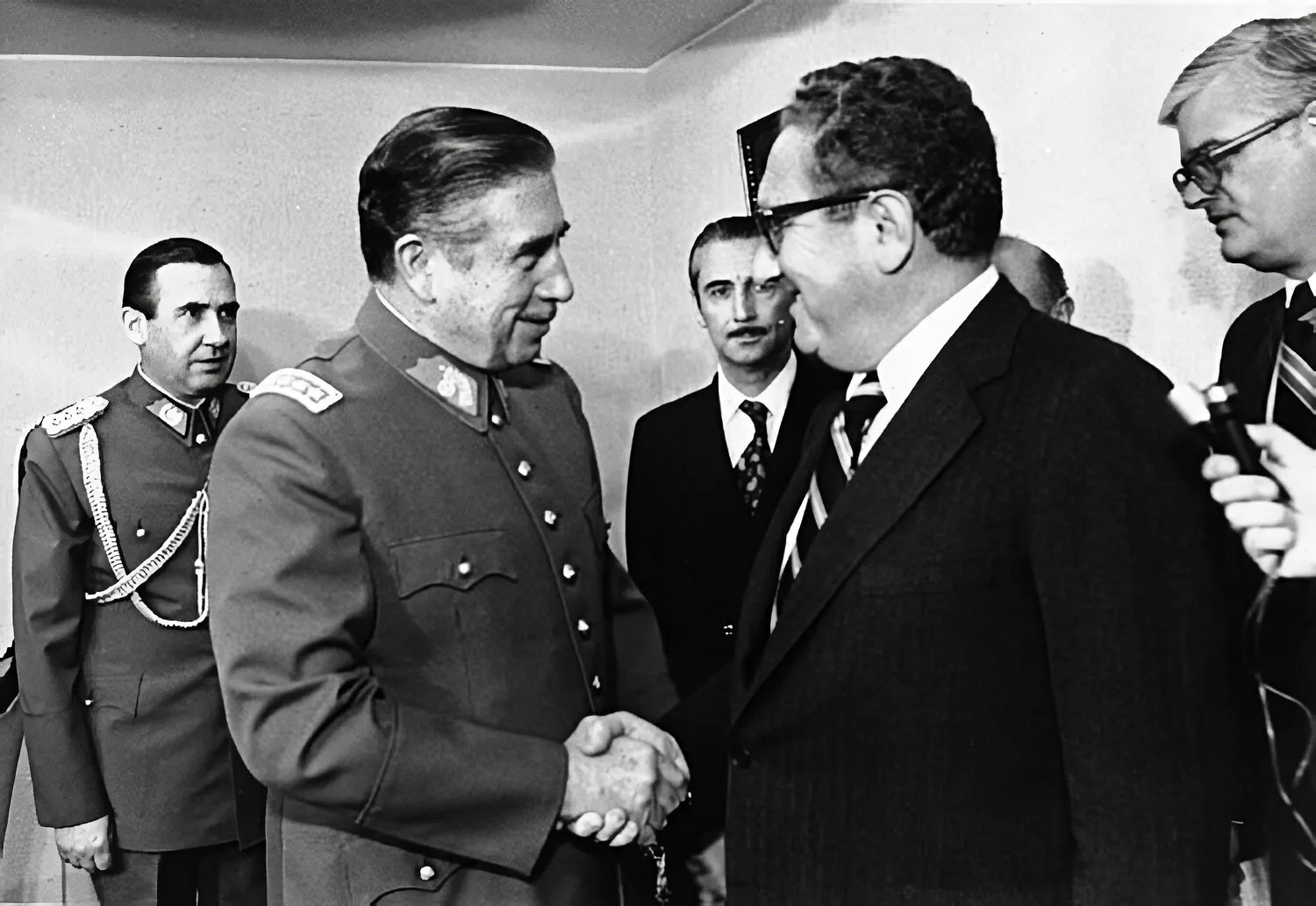
UnTextbooked | A history podcast for the futureHow America’s fear of communism paved the way for a Chilean dictator.During the Cold War, the United States feared the rise of Communism across the world. But in Latin America, the United States took action. In 1970, Salvador Allende won the Chilean presidency with just a third of the vote. He was a socialist who started shaking things up across the country.Within just a couple years, a military coup removed him from power, and Augusto Pinochet, the American-backed strongman, replaced him. The ensuing Pinochet regime left thousands of Chileans dead and missing. The government actively persecuted alleged dissonants both domestically and abroad, leading to the eventual assas...
2020-11-1931 min
UnTextbooked | A history podcast for the futureDamnation to the governor and confusion to the colony.Pop culture misremembers the Golden Age of piracy, and usually portrays pirates as apolitical agents of chaos. But historians now believe that many pirates followed a democratic and egalitarian structure that put them directly at odds with the world’s biggest governments. In the 1700’s, life as a European sailor left a lot to be desired. Wages were low, conditions were dangerous, and captains could be cruel. A lot of sailors wanted out.Pirates, on the other hand, were recruiting disenchanted sailors from captured ships and escaped slaves, offering them better living conditions.Life un...
2020-11-1635 min
UnTextbooked | A history podcast for the futureHow much influence does America still have?In 1987, the historian Paul Kennedy published a massive, nearly 700 page book called The Rise and Fall of the Great Powers. In normal circumstances, the book might have been lumped in with the rest of academic writing that’s seen only by scholars…if it weren’t for the book’s conclusion, which flew in the face of American exceptionalism and certainly upset some people.In that final section of the book, Kennedy suggests that the United States had begun a period of relative decline that began in the 1960’s. Kennedy focussed on two major elements in his claim of t...
2020-11-1223 min
UnTextbooked | A history podcast for the futureThe forgotten mothers of American gynecology.James Marion Sims has a complicated legacy. He was a surgeon in the 19th century who, for decades, was heralded as the ‘Father of American Gynecology’ for his contributions to the field, including inventing the speculum. But those innovations came at the expense of the poor and enslaved women that he performed experimental surgeries on. Not much is known about the Black enslaved women and poor Irish immigrants he experimented on, but without their contributions, gynecology would not be what it is today.On this episode of UnTextbooked, producer Ruba Memon interviews Deirdre Cooper Owens, author of the...
2020-11-0924 min
UnTextbooked | A history podcast for the futureWhen did Americans become so dependent on processed foods?For decades, experts have warned that the average American diet is potentially harmful. Americans tend to eat food that is laden with too much sodium, fat, and added sugars, and it's making people sick.What’s insidious about this is that a lot of Americans don’t even know that the food they’re eating is unhealthy. A lot of foods are deceptively sweeter, saliter, and fattier than one would assume. And those added ingredients make processed foods addictive.UnTextbooked producer and host, Gabe Hostin, wanted to understand how the American food industry got this way. H...
2020-11-0619 min
UnTextbooked | A history podcast for the futureA historical argument against the gender binary.As a kid, UnTextbooked producer Gavin Scott loved listening to his grandfather tell stories about their people. He used to like to imagine what his home was like back before white settlers came. As much as Gavin enjoyed learning about his culture, he sometimes felt out of place as the only gay person he knew of in his small hometown. So when he had the opportunity to work on this podcast, he decided to research LGBT Native Americans to learn more about people who were like him.He learned about “Two Spirit”, a term that was adopted in 1...
2020-11-0217 min
UnTextbooked | A history podcast for the futureDoes America live up to its own ideals?Democracy: a small word and a big concept foundational to the United States. Ideally, we’re a country of pluralism and self determination, but the reality is often different.Many dark chapters exist in our history: Slavery and the extermination of Native Americans, Disenfranchisement and voter suppression. Japanese internment and white supremacy. And yet, many of the ideals that surround the founding of our country do slowly bend us towards justice. So how is it that one nation could be founded on principles of equality while also oppressing so many people throughout its history?UnTextbooked pr...
2020-10-1921 min
UnTextbooked | A history podcast for the futureGermany addressed its racist past. Can America do the same?As the ashes of the Third Reich settled, a divided Germany struggled to come to terms with what just occurred. Generations of German philosophers, politicians, academics, and common citizens slowly and collectively decided to confront the horrific actions of the Nazis. They called this process “Vergangenheitsaufarbeitung”, or “working off the past”, though it has several names. Step by step, through a feeling of collective guilt and moral responsibility, they were able to make amends with the world and build legal and societal safeguards against hatred and extremism.Compared to the Germans, the United States has only barely confront...
2020-10-1921 min
UnTextbooked | A history podcast for the futureIntroducing Untextbooked: a history podast for the future.
UnTextbooked is a history podcast for the future. Brought to you by teen changemakers who are looking for answers to big questions. We interview famous historians who have some of the answers.These intergenerational conversations bring the full power of history to you with the depth and vividness that most textbooks lack. Real history, to help you find answers to your big questions. UnTextbooked makes history unboring forever. Full episodes coming Fall 2020. Subscribe now in your favorite podcast app.
2020-09-2303 min