Shows

YaleCourses1105 | Thank You! Celebrating Our Social Entrepreneurship Journey - Social Entrepreneurship CourseIn this final lesson, Teresa Chahine extends a heartfelt thank you to everyone who made the Social Entrepreneurship Course possible, starting with the learners. The instructor reflects on the profound impact of this journey, acknowledging the invaluable contributions of thought leaders, community entrepreneurs, and the dedicated production team behind the scenes.Uploaded 13-08-25🎯 Learning Objectives• Recognize the collaborative effort and diverse expertise that shaped the course content.• Be encouraged to maintain engagement and continue the social entrepreneurship journey.📚 About the Course Have you ever wondered what it would be like to cr...
2026-11-1905 min
YaleCoursesSurface the Values Your Team Actually Cares About | Connected LeadershipWrap up the discussion of vision and mission with suggested readings and a practical exercise for surfacing the values that matter most to your team. The flip-the-negative technique helps any group articulate the kind of culture they want to build.Uploaded 09-06-26Key topics:- Suggested readings on vision, mission, and the strategy pyramid- Toegel and Barsoux on team conflict and the role of values- Reflecting on the worst teams you've worked on- The flip-the-negative exercise to surface positive values- Drawing from compiled values lists...
2026-11-1904 min
YaleCourses3. Our Solar System and the Pluto ProblemFrontiers/Controversies in Astrophysics (ASTR 160)Uploaded 29-09-08Class begins with a review of the first problem set. Newton's Third Law is applied in explaining how exoplanets are found. An overview of the Solar System is given; each planet is presented individually and its special features are highlighted. Astronomy is discussed as an observational science, and the subject of how to categorize objects in the Solar System is addressed. The Pluto controversy is given special attention and both sides of the argument regarding its status are considered.00:00 - Chapter 1. Review of the Problem...
2026-11-1952 min
YaleCoursesBecome a Better Team Leader, Even If You're Not "The Leader" | Connected LeadershipBringing your purpose-driven self into the teams you work with is the next step on the connected leadership journey. This introduction sets up how the framework applies at the team level and why team leadership is a learnable skill anyone can develop.Uploaded 09-06-26Key topics:- Recap of the self module and the four Ps- Applying the connected leadership framework to teams- Why team skills matter even if you don't see yourself as a leader- Roadmap: purpose, effectiveness tools, and lasting change- Team leadership...
2026-11-1904 min
YaleCoursesManage Your Energy, Not Just Your Time | Connected LeadershipWith your life on one page, learn practical strategies to turn that plan into how you actually spend your day. Covers managing energy alongside time, handling other people's pebbles, switching from inbox to calendar, and reclaiming attention from the sand.Uploaded 09-06-26Key topics:- Choosing productivity tools that already fit you- Loehr and Schwartz on managing energy, not just time- Replacing "in a few weeks" with a real date- Calendar over inbox for deep work- Converting tech from attention hijacker to enabler...
2026-11-1814 min
YaleCourses23. Black Reconstruction in the South: The Freedpeople and the Economics of Land and LaborThe Civil War and Reconstruction (HIST 119)Uploaded 21-11-08Professor Blight begins this lecture in Washington, where the passage of the first Reconstruction Act by Congressional Republicans radically altered the direction of Reconstruction. The Act invalidated the reconstituted Southern legislatures, establishing five military districts in the South and insisting upon black suffrage as a condition to readmission. The eventful year 1868 saw the impeachment of one president (Andrew Johnson) and the election of another (Ulysses S. Grant). Meanwhile, southern African Americans struggle to reap the promises of freedom in the face of economic disempowerment and a...
2026-11-1858 min
YaleCourses20. Democracy and Participation: Rousseau's Social Contract, I-IIIntroduction to Political Philosophy (PLSC 114)Uploaded 21-09-08The concept of "general will" is considered Rousseau's most important contribution to political science. It is presented as the answer to the gravest problems of civilization, namely, the problems of inequality, amour-propre, and general discontent. The social contract is the foundation of the general will and the answer to the problem of natural freedom, because nature itself provides no guidelines for determining who should rule. The lecture ends with Rousseau's legacy and the influence he exercised on later nineteenth-century writers and philosophers.00:00 - Chapter 1. Introduction...
2026-11-1847 min
YaleCoursesIntroduction to Systems and Systems Thinking | Connected Leadership with Peter BoydDiscover how the four Ps of connected leadership scale from self and team to the wider systems that shape our lives. This introduction defines what a system is, why systems thinking matters, and how it equips you to tackle problems too complex for simple linear fixes.Uploaded 09-06-26Key topics:- Applying the four Ps at the system level- Defining a system as interacting elements with a shared purpose- Examples of community, industry, explicit, and implicit systems- Why systems thinking matters for tackling big challenges...
2026-11-1807 min
YaleCoursesTeam Priorities, Potential, and Progress | Connected Leadership with Peter BoydTake the four Ps from the self level and apply them at the team level to build a complete connected strategy. This lesson covers how to identify team rocks, scope your group's potential, and use the strategy pyramid to spot gaps and overlaps in responsibility.Uploaded 09-06-26Key topics:- Translating self rocks into at-work and team priorities- Considering your boss's or organization's rocks- Defining team potential and progress- Filling in the strategy pyramid from the outside in- Using one page to surface dysfunction and...
2026-11-1811 min
YaleCourses08 | Praising the Positive Opposite of Your Child’s Unwanted Behavior – with Dr. Alan KazdinDeveloping positive opposites is a powerful, research-backed technique to reduce unwanted child behaviors by reinforcing the exact opposite behavior instead. Dr. Kazdin explains how our natural negativity bias makes us focus on misbehavior, but intentionally catching and praising your child doing the “positive opposite” can gradually replace bad habits with good ones. Learn why this method works better than punishment alone and how to apply it consistently for lasting change. Uploaded 06-08-25Learn how to identify unwanted behaviors, define their positive opposites, and use specific praise to encourage the behaviors you want. 🎯 Learnin...
2026-11-1812 min
YaleCourses9.3 | Intro to Statistics: Unlocking Data for Medical Software CourseHave you ever wondered how data informs critical decisions in medical software development? In this lesson, we dive into a foundational introduction to statistics, exploring its crucial role in validating software. We'll uncover what statistics are, how to draw meaningful conclusions from samples to understand entire populations, and differentiate between point and interval estimation. We'll also examine the fundamental Central Limit Theorem and the Law of Large Numbers, crucial concepts for robust statistical analysis.Uploaded 22-08-25🎯 Learning Objectives• Define statistics and their core function in software validation• Distinguish between samples and populations in stat...
2026-11-1712 min
YaleCoursesModule 3 | Adrienne Abbate On Engaging the Community for Impact - Social Entrepreneurship InterviewIn this compelling conversation, Adrienne Abbate, Executive Director of the Staten Island Partnership for Community Wellness (SIPCW), shares invaluable insights on the crucial role of communication and diverse partnerships in driving social impact. She discusses SIPCW's approach to engaging a wide range of stakeholders, from community leaders to directly impacted youth, to effectively address complex public health challenges like substance use and mental health.Uploaded 13-08-25🎯 Learning Objectives• Understand the importance of engaging diverse stakeholders, including both “grass tops” and “grassroots” members, in social impact initiatives.• Learn how organizations leverage data and community conve...
2026-11-1718 min
YaleCoursesModule 4 | Ruchit Nagar on Digital Health Innovation in India - Social Entrepreneurship InterviewHow does an idea born in a classroom transform into a large-scale social venture impacting thousands? In this illuminating conversation, Ruchit Nagar, CEO of Khushi Baby, shares the incredible journey of his digital health tech nonprofit. From developing a unique wearable NFC device for offline vaccine records to empowering community health workers with a comprehensive mobile platform across Rajasthan, this lesson highlights the power of human-centered design, relentless iteration, and a commitment to evolving solutions for real-world needs in rural India.Uploaded 13-08-25🎯 Learning Objectives• Understand how a classroom project can evolve into a lar...
2026-11-1719 min
YaleCoursesTracking Progress on System Change | Connected Leadership with Peter BoydHow do you stay accountable to system-level goals as the gap between current state and goal keeps shifting? Use the Waters Institute model to track concern, influence, and control over time and put your system progress on one page.Uploaded 09-06-26Key topics:- The fourth P: progress at the system level- Mapping concern, influence, and control- Iterating strategies as the gap evolves- Building a system progress one-page worksheet- Connecting self, team, and system one-pagers📚 About the Course:This course is des...
2026-11-1704 min
YaleCourses2. The Dark AgesIntroduction to Ancient Greek History (CLCV 205)Uploaded 20-11-08In this lecture, Professor Donald Kagan explores the earliest history of Greek civilization. He demonstrates how small agricultural enclaves eventually turned into great cities of power and wealth in the Bronze Age, taking as his examples first Minoan Crete and then Mycenaean Greece. He also argues that these civilizations were closely related to the great monarchies of the ancient Near East. He points out that the Mycenaean age eventually came to an abrupt end probably through a process of warfare and migration. Reconstructing the Mycenaean age...
2026-11-171h 14
YaleCourses2. Southern Society: Slavery, King Cotton, and Antebellum America's "Peculiar" RegionThe Civil War and Reconstruction (HIST 119)Uploaded 21-11-08Professor Blight offers a number of approaches to the question of southern distinctiveness. The lecture offers a survey of that manner in which commentators--American, foreign, northern, and southern--have sought to make sense of the nature of southern society and southern history. The lecture analyzes the society and culture of the Old South, with special emphasis on the aspects of southern life that made the region distinct from the antebellum North. The most lasting and influential sources of Old South distinctiveness, Blight suggests, were that society's anti-modernism...
2026-11-1758 min
YaleCourses7. Nash equilibrium: shopping, standing and voting on a lineGame Theory (ECON 159)Uploaded 20-11-08We first consider the alternative "Bertrand" model of imperfect competition between two firms in which the firms set prices rather than setting quantities. Then we consider a richer model in which firms still set prices but in which the goods they produce are not identical. We model the firms as stores that are on either end of a long road or line. Customers live along this line. Then we return to models of strategic politics in which it is voters that are spread along a line. This time, however...
2026-11-171h 18
YaleCourses603 | What is a Logic Model? Your Blueprint for Social Impact - Social Entrepreneurship CourseIn this lesson, we explore the logic model as a crucial planning tool for social ventures, focusing on how it helps operationalize your theory of change and set clear success metrics. You'll learn the specifics of the 'logframe' and how it guides you from overarching goals to measurable objectives and activities.Uploaded 13-08-25🎯 Learning Objectives• Understand what a logic model is and its role as a planning tool for social impact.• Differentiate between various types of logic models, including the detailed logframe.• Learn to break down an overarching organizational goal into specific...
2026-11-1710 min
YaleCourses4. Best responses in soccer and business partnershipsGame Theory (ECON 159)Uploaded 20-11-08We continue the idea (from last time) of playing a best response to what we believe others will do. More particularly, we develop the idea that you should not play a strategy that is not a best response for any belief about others' choices. We use this idea to analyze taking a penalty kick in soccer. Then we use it to analyze a profit-sharing partnership. Toward the end, we introduce a new notion: Nash Equilibrium.00:00 - Chapter 1. Best Response: Penalty Kicks in Soccer15:14 - Chapter 2. Best...
2026-11-171h 18
YaleCourses11. The Miltonic SmileMilton (ENGL 220)Uploaded 21-11-08Milton's characteristic use of simile is explored in Books One and Two of Paradise Lost. Particular attention is paid to how Milton's similes work to support, undermine, and complicate both the depiction of Satan and the broader thematic concerns of the poem, such as the ideas of free will and divine providence. The critical perspectives of Geoffrey Hartman and Stanley Fish are incorporated into an analysis of Satan's shield and spear and the simile of the leaves.00:00 - Chapter 1. Introduction: Similes in "Paradise Lost"03:36 - Chapter 2. Similes...
2026-11-1752 min
YaleCourses7.5 | The Rise of Digital Behavioral Health: Impact and Future Analysis | Medical Software CourseAre you ready to explore how technology is revolutionizing mental healthcare? In this lesson, we delve into the burgeoning digital behavioral health industry, examining how the application of digital medicine is addressing the global mental health crisis and improving access to care. We'll explore the shift from traditional therapy models to innovative digital solutions, including smartphone apps, telemedicine, and AI-powered chatbots, and discuss their effectiveness in delivering cognitive behavioral therapy (CBT) and dialectical behavioral therapy (DBT).Uploaded 19-08-25🎯 Learning Objectives• Understand the current landscape of the mental health crisis and challenges in accessing care...
2026-11-1707 min
YaleCourses15. Backward induction: chess, strategies, and credible threatsGame Theory (ECON 159)Uploaded 20-11-08We first discuss Zermelo's theorem: that games like tic-tac-toe or chess have a solution. That is, either there is a way for player 1 to force a win, or there is a way for player 1 to force a tie, or there is a way for player 2 to force a win. The proof is by induction. Then we formally define and informally discuss both perfect information and strategies in such games. This allows us to find Nash equilibria in sequential games. But we find that some Nash equilibria are inconsistent with...
2026-11-171h 19
YaleCourses9. General Boulanger and Captain DreyfusFrance Since 1871 (HIST 276)Uploaded 21-11-08Two of the major crises of nineteenth-century France, the Boulanger Affair and the Dreyfus Affair, can be understood in terms of the rising forces of anti-Semitism and Far Right politics. The German conquest of Alsace and Lorraine, in particular, fueled nationalist and right-wing sentiments, especially in rural France. Political orientations and prejudices were formed by the popular media of the time, such as illustrated periodicals and patriotic songs.00:00 - Chapter 1. The Anti-semitic Context: France and the Jews in the Nineteenth Century07:47 - Chapter 2. The Boulanger Crisis...
2026-11-1754 min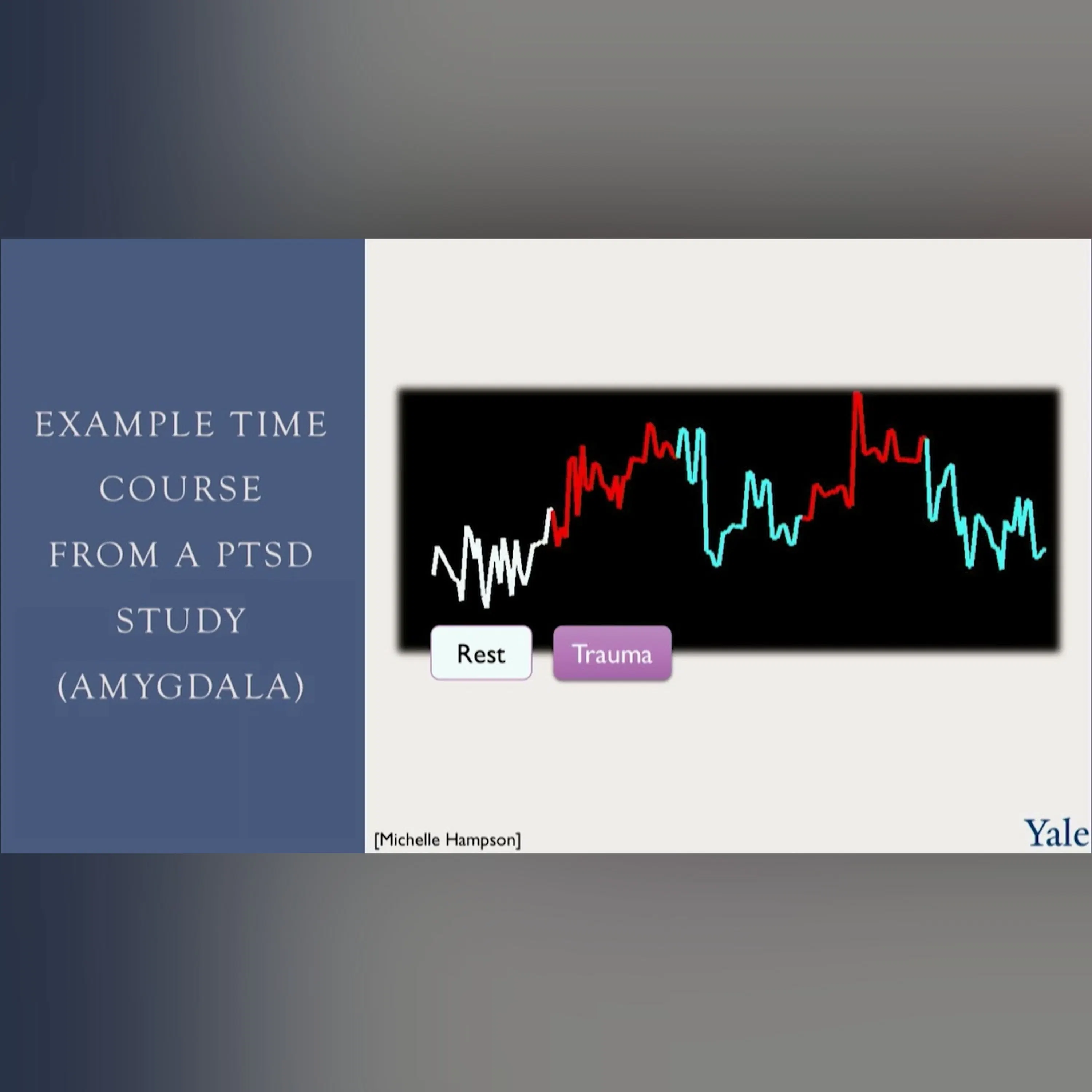
YaleCourses8.4 | Master Real-Time fMRI Integration Testing with Simulators | Medical Software CourseHave you ever wondered how complex medical software is tested when it interacts with expensive, specialized hardware? In this lesson, we delve into the world of integration testing within real-time fMRI systems, highlighting the unique challenges of connecting custom software with existing MRI scanners and feedback computers. You'll discover how innovative simulation strategies overcome these hurdles, enabling efficient development and debugging without constant access to live equipment. Uploaded 22-08-25🎯 Learning Objectives• Understand the core concepts and applications of real-time fMRI.• Identify the software and hardware components within a real-time fMRI setup.• Recognize...
2026-11-1710 min
YaleCourses8. Nash equilibrium: location, segregation and randomizationGame Theory (ECON 159)Uploaded 20-11-08We first complete our discussion of the candidate-voter model showing, in particular, that, in equilibrium, two candidates cannot be too far apart. Then we play and analyze Schelling's location game. We discuss how segregation can occur in society even if no one desires it. We also learn that seemingly irrelevant details of a model can matter. We consider randomizations first by a central authority (such as in a bussing policy), and then decentralized randomization by the individuals themselves, "mixed strategies." Finally, we look at rock, paper, scissors to see...
2026-11-171h 20
YaleCourses807 | DBL Fund: How Double Bottom Line Investing Drives Change - Social Entrepreneurship CourseWhat does it take to truly innovate in social finance? In this lesson, we explore DBL Fund, founded by Nancy Pfund, a pioneer in impact investing with a 'Double Bottom Line' approach. Discover their unique three-pronged investment strategy focused on identifying and supporting innovative, for-profit solutions to pressing environmental and social challenges, from forest conservation to homelessness. This case study also highlights DBL Fund's role in advocating for policy changes and building the broader impact investing field.Uploaded 13-08-25🎯 Learning Objectives• Understand the pioneering role of DBL Fund in establishing the field of impac...
2026-11-1710 min
YaleCourses10. The Rise of AthensIntroduction to Ancient Greek History (CLCV 205)Uploaded 20-11-08In this lecture, Professor Kagan finishes up his description of the Spartan constitution. He argues that Sparta had a mixed constitution and gained great power due to alliances that the Spartans made with their neighbors. After the discussion of Sparta, Professor Kagan examines Athens and the development of the Athenian constitution. In addition, he shows how different these two poleis were. Finally, Professor Kagan discusses the emergence of the hoplite class in Athens and the failure of Cylon to make himself tyrant of Athens.00:00...
2026-11-161h 18
YaleCourses9.8 | Unmasking Bias: Why Randomization is Crucial in Medical Trials - Medical Software CourseIn this lesson, we delve into the critical role of randomization in clinical trials and software validation. Discover how assigning participants by chance eliminates hidden biases and prevents misleading results, as famously illustrated by Simpson's paradox. We'll explore why proper randomization is the gold standard for demonstrating effective interventions in medical and technological studies.Uploaded 22-08-25🎯 Learning Objectives• Understand the fundamental concept of randomization in scientific studies.• Recognize why randomization is crucial for eliminating hidden biases in drug trials and software validation.• Learn about Simpson's paradox and how it demonstrates the dangers o...
2026-11-1607 min
YaleCourses18. "War So Terrible": Why the Union Won and the Confederacy Lost at Home and AbroadThe Civil War and Reconstruction (HIST 119)Uploaded 21-11-08This lecture probes the reasons for confederate defeat and union victory. Professor Blight begins with an elucidation of the loss of will thesis, which suggests that it was a lack of conviction on the home front that assured confederate defeat, before offering another of other popular explanations for northern victory: industrial capacity, political leadership, military leadership, international diplomacy, a pre-existing political culture, and emancipation. Blight warns, however, that we cannot forget the battlefield, and, to this end, concludes his lecture with a discussion of the decisive...
2026-11-1657 min
YaleCourses11.4 | Navigating AI/ML Regulations: Global Guidance for Medical Software CourseIn this lesson, we delve into the evolving landscape of regulatory guidance for artificial intelligence and machine learning in medical software. As AI/ML technologies hold immense promise for healthcare, regulators worldwide are grappling with the challenge of fostering innovation while ensuring patient safety, particularly concerning self-updating algorithms and the critical role of data management. We explore various international frameworks and the complexities of ensuring robust, explainable AI in medical applications.Uploaded 22-08-25🎯 Learning Objectives• Understand the regulatory challenges associated with AI/ML in medical software, balancing innovation with patient safety.• Identify key asp...
2026-11-1520 min
YaleCoursesAmerica at 250, DeVane Lecture, Class 2 – Revolutionary (and Not So Revolutionary) BeginningsAmerica at 250: A History. Class 2Uploaded 11-09-25Professor Joanne Freeman begins her section on The American Experiment. Recorded in Yale’s Battell Chapel. This one-time-only course examines U.S. history from 1776 to the present, in advance of the nation’s semiquincentennial (or 250th birthday) in 2026. Taught jointly by Professors Joanne Freeman, David Blight, and Beverly Gage, the course emphasizes the history of the nation-state and the contested nature of American national identity. All three scholars will deliver the course’s first and final lectures together, as an introduction and a wrap-up. In between...
2026-11-1247 min
YaleCourses19. Brokerage, ECNs, etc.Financial Markets (ECON 252)Uploaded 19-11-08The exchanges in which stocks and other securities are traded serve an important function in finance. They bring together people interested in buying and selling securities in order to create a universal price. Brokers and dealers are also an important part of the system, their methods and standards are ultimately behind the success of the exchanges. Many information innovations have advanced the functioning of exchanges, going all the way back to the ticker machine, which was created to communicate the price of securities at a point in time to...
2026-11-101h 19
YaleCourses8. Dynamite Club: The AnarchistsFrance Since 1871 (HIST 276)Uploaded 21-11-08Anarchists, unlike syndicalists and other leftists, seek to destroy the state rather than to capture state power for themselves. Emile Henry and other late nineteenth-century radicals inaugurated the modern practice of terrorism in their individualism and their indiscriminate choice of civilian targets. Despite the terrifying consequences of individual acts of terrorism, these pale in comparison to the consequences of state terrorism.00:00 - Chapter 1. The Roots of Anarchism: Founders and the French Context12:59 - Chapter 2. The Legacy of Ravachol18:51 - Chapter 3. The Story of Émile Henry: T...
2026-11-1057 min
YaleCourses404 | Evaluate Your Social Enterprise Idea: AAAQ and Theory of Change - Social Entrepreneurship CourseIn this lesson, you'll discover two powerful frameworks for evaluating social entrepreneurship ideas: the AAAQ Checklist and the Theory of Change. These tools help to strengthen your concepts, prevent unintended consequences like poverty traps, and rigorously test assumptions to ensure your solution creates meaningful social impact.Uploaded 13-08-25🎯 Learning Objectives• Understand the purpose and components of the AAAQ Checklist (Availability, Accessibility, Acceptability, Quality).• Learn how to apply the AAAQ Checklist to evaluate social enterprise ideas.• Comprehend the structure and utility of the Theory of Change framework.• Utilize the Theory of Change to l...
2026-11-1013 min
YaleCourses22. SupernovaeFrontiers/Controversies in Astrophysics (ASTR 160)Uploaded 07-10-08Professor Bailyn offers a review of what is known so far about the expansion of the universe from observing galaxies, supernovae, and other celestial phenomena. The rate of the expansion of the universe is discussed along with the Big Rip theory and the balance of dark energy and dark matter in the universe over time. The point at which the universe shifts from accelerating to decelerating is examined. Worries related to the brightness of high redshift supernovae and the effects of gravitational lensing are explained. The lecture...
2026-11-0953 min
YaleCourses1.3 | Where Does Space Begin? | The Karman Line | Rocket Science for Everyone with Yale’s Marla GehaIs space as far away as you imagine? This lesson delves into the fascinating question of where space truly begins, moving beyond common perceptions to uncover the scientific and policy-driven boundaries that define this critical point. You'll learn about the internationally recognized Karman line and discover just how surprisingly close space actually is.Uploaded 28-08-25🎯 Learning Objectives• Define the Karman line and its significance as the international boundary of space.• Compare the international definition of space with NASA's definition.• Explain why there is no "super obvious" end to Earth's atmosphere.• Understand...
2026-11-0906 min
YaleCourses5. Work-Energy Theorem and Law of Conservation of EnergyFor more information about Professor Shankar's book based on the lectures from this course, Fundamentals of Physics: Mechanics, Relativity, and Thermodynamics, visit http://bit.ly/1jFIqNu.Uploaded 22-09-08Fundamentals of Physics (PHYS 200)The lecture begins with a review of the loop-the-loop problem. Professor Shankar then reviews basic terminology in relation to work, kinetic energy and potential energy. He then goes on to define the Work-Energy Theorem. Finally, the Law of Conservation of Energy is discussed and demonstrated with specific examples.00:00 - Chapter 1. More on Loop-the-Loop and Intro to Concept of Ene...
2026-11-081h 17
YaleCourses5. The Waning of Religious AuthorityFrance Since 1871 (HIST 276)Uploaded 21-11-08Religion in France after the Revolution can be understood in terms of two forms of de-Christianization. The first of these is political, and takes place in the de jure separation of church and state. The second is a decline in religious practice among individual citizens. While the history of the former change is well documented, the latter is a more ambiguous phenomenon. Despite the statistical decline in religious participation in the nineteenth and twentieth centuries, Catholicism in particular continues to play a significant role in the cultural imagination, or...
2026-11-0848 min
YaleCourses01 Welcome to The Hunt | Job-Searching and Career-Building With PurposeAre you ready to transform your job search into a purposeful journey? In this foundational lesson, "Welcome to The Hunt," Peter Boyd introduces a course designed to empower you with purpose, strategy, and clarity in your career. We'll explore why your job search is more than just securing a role – it's about finding a better fit for who you are and who you're becoming, emphasizing deep internal work, building genuine human connections, and mastering practical tools and tactics to navigate today's dynamic (VUCA) world confidently.Uploaded 02-10-25🎯 Learning Objectives• Understand the foundational principles of a pu...
2026-11-0808 min
YaleCoursesAmerica at 250, DeVane Lecture, Class 6 – Republican Precedents and Presidents: The Placement of PowerAmerica at 250: A History. Class 6 Republican Precedents and Presidents: The Placement of Power.The 1790s was a pivotal time for the new America and Professor Joanne Freeman takes us on a tour.Uploaded 01-10-25Recorded in Yale’s Battell Chapel. This one-time-only course examines U.S. history from 1776 to the present, in advance of the nation’s semiquincentennial (or 250th birthday) in 2026. Taught jointly by Professors Joanne Freeman, David Blight, and Beverly Gage, the course emphasizes the history of the nation-state and the contested nature of American national identity. All three scholars will delive...
2026-11-0854 min
YaleCourses18. Democracy and Participation: Rousseau's DiscourseIntroduction to Political Philosophy (PLSC 114)Uploaded 21-09-08This lecture is an introduction to the life and works of Rousseau, as well as the historical and political events in France after the death of Louis XIV. Writing in a variety of genres and disciplines, Rousseau helped bring to fruition the political and intellectual movement known as the Enlightenment. Among his most important works is the Second Discourse (Discourse on Inequality), in which Rousseau traces the origins of inequality and addresses the effects of time and history on humans. He goes on to discuss a number...
2026-11-0850 min
YaleCourses09 Unlock Your Ikigai: The Secret to Purposeful Work | Job Searching with PurposeIn this lesson, we delve into Ikigai, an ancient Japanese concept that helps you find your life's purpose and career calling. Discover how intersecting what you love, what you're good at, what the world needs, and what you can be paid for can lead you to meaningful work. We'll also explore the powerful idea of "moral ambition" to align your career with making a positive impact.Uploaded 03-10-25🎯 Learning Objectives• Define Ikigai and its historical context.• Identify the four key components of the Ikigai framework.• Understand how to apply the Ikigai framework...
2026-11-0805 min
YaleCourses12. Thomas Pynchon, The Crying of Lot 49The American Novel Since 1945 (ENGL 291)Uploaded 21-11-08Professor Hungerford introduces this lecture by reviewing the ways that authors on the syllabus up to this point have dealt with the relationship between language and life, that collection of elusive or obvious things that for literary critics fall under the category of "the Real." The Real can shout out from a work of art, as it sometimes does in Black Boy, or haunt it, as in Lolita. It can elude authors like Kerouac and Barth for widely different reasons. Placing Pynchon firmly in the context of...
2026-11-0756 min
YaleCourses24. Retreat from Reconstruction: The Grant Era and Paths to "Southern Redemption"The Civil War and Reconstruction (HIST 119)Uploaded 21-11-08This lecture opens with a discussion of the myriad moments at which historians have declared an "end" to Reconstruction, before shifting to the myth and reality of "Carpetbag rule" in the Reconstruction South. Popularized by Lost Cause apologists and biased historians, this myth suggests that the southern governments of the Reconstruction era were dominated by unscrupulous and criminal Yankees who relied on the ignorant black vote to rob and despoil the innocent South. The reality, of course, diverges widely from this image. Among other accomplishments, the...
2026-11-0756 min
YaleCoursesModule 9 | Kendall Barbery on Growing GreenWave's Staff - Social Entrepreneurship InterviewHave you ever wondered what it takes to scale a non-profit from a small startup to a multi-state organization shaping an entire industry? In this lesson, Kendall Barbery, Director of Partnerships and New Programming at GreenWave, shares her five-year journey with the non-profit, which supports regenerative ocean farmers. She discusses the organization's growth from a three-person team to nineteen staff across six states, the strategic shift from intensive one-on-one training to a broad online learning platform, and how they navigate the unique challenges of building a new, sustainable industry.Uploaded 13-08-25🎯 Learning Objectives• Under...
2026-11-0718 min
YaleCoursesFaculty Spotlight: How Yale's Peter Boyd Helps You Hunt for Career SuccessSubmitting your résumé is just step one. ✍️ But as Yale lecturer Peter Boyd reminds us, “It’s all about the human connections at the end of the day.”Uploaded 01-10-25Peter is no stranger to guiding learners; his 2023 course, Connected Leadership, helped thousands strengthen their leadership toolkit. Now, in his new course, The Hunt: Job-Searching and Career-Building with Purpose, he turns to advancing your career toolkit. 💼This Faculty Spotlight dives into why Peter created the course and how it can help you approach your job search with clarity, confidence, and purpose. Because The Hun...
2026-11-0705 min
YaleCourses704 | Master Your Distribution Model: Scale Your Social Impact - Social Entrepreneurship CourseIn this lesson, discover the diverse array of distribution models critical for scaling your social venture's impact beyond the initial pilot phase. Learn how choosing the right approach, from direct-to-consumer sales to various franchising and partnership strategies, can significantly broaden your reach and ensure financial viability. Uploaded 13-08-25🎯 Learning Objectives• Understand the importance of distribution models for scaling social impact.• Differentiate between direct-to-consumer and intermediary distribution models.• Explore social franchising and micro-franchising as key scaling strategies.• Recognize non-monetized distribution methods, such as Creative Commons, for spreading impact.• Identify the significance...
2026-11-0610 min
YaleCourses1005 | Amplifying Impact: Do's and Don'ts of Pitching and Communication - Social Entrepreneurship CourseHave you ever wondered what truly makes a pitch or communication plan effective? In this lesson, we delve into the essential do's and don'ts of compelling communication and pitching, highlighting strategies to engage your audience, convey your message succinctly, and build genuine connections. From mastering body language to understanding the power of vulnerability, discover how to present your ideas with impact and inspire action.Uploaded 13-08-25🎯 Learning Objectives• Apply the "less is more" principle to make your pitches and communications concise and impactful.• Balance preparation with genuine conversation and audience connection.• Research...
2026-11-0612 min
YaleCourses13 Master Your Job Search Pitch: Get Clear, Get Hired! - Job Searching with PurposeHave you ever struggled to articulate exactly what you're looking for in your next role or what unique value you bring? In this lesson, we dive into the art of practicing your job search pitch, transforming your "want" and "bring" triangles into a concise, compelling message. Learn how to communicate top-down, starting with your key points before delving into the supporting stories, and discover the power of feedback in refining your message for maximum impact across all your job search communications.Uploaded 03-10-25🎯 Learning Objectives• Construct a concise, top-down job search pitch for vario...
2026-11-0608 min
YaleCourses03 Peter Boyd's Unique Path: How His Career Fuels Your Job Search with PurposeIn this lesson, Peter Boyd introduces himself, sharing his extensive and non-linear career journey across consulting, corporate, non-profit, and government sectors. He explains how his diverse experiences, coupled with years of coaching hundreds of job seekers, led to the creation of this course. Peter also draws parallels between the mental and physical challenges of ultra-marathon running and the strategic mindset needed for a successful job hunt, emphasizing personal mission and purpose.Uploaded 03-10-25🎯 Learning Objectives• Understand the diverse professional background and coaching philosophy of instructor Peter Boyd• Identify the key experiences that shaped...
2026-11-0607 min
YaleCourses7. Cell Communication and ImmunologyFrontiers of Biomedical Engineering (BENG 100)Uploaded 18-11-08Professor Saltzman talks about cell communication, specifically ligand-receptor interactions that are important in maintaining homeostasis in the body. Different types of receptors and ligands, the nature of their interactions and ways to apply this into developing drugs are discussed (eg. Aldopa, Taximofen, beta-blockers). Next, Professor Saltzman talks about kinases, phosphatases, cyclic AMP and the mechanism of switching protein states. Three categories of cell communication signals are introduced: autocrine, paracrine, and endocrine. Finally, an example of cell communication using regulation/response to blood sugar level is presented.
2026-11-0653 min
YaleCourses4.1 | Build Safer Medical Software: Mastering Quality Management Systems | Medical Software CourseWhy are Quality Management Systems essential for medical software? In this lesson, we delve into the critical role of Quality Management Systems (QMS) and risk management in medical software development. We explore the definition of a QMS, its importance in ensuring product safety and effectiveness, and how it serves as a rulebook for organizations. Discover the foundational international standards and regulatory guidelines, including ISO series, FDA regulations, and European MDR requirements, that govern best practices in this vital field.Uploaded 19-08-25🎯 Learning Objectives• Define Quality Management Systems (QMS) in the context of medical softw...
2026-11-0612 min
YaleCourses14 What Employers REALLY Prioritize: Yale's Claudia Reuter – Job Searching with PurposeWhat truly makes a candidate stand out in today's competitive job market? In this lesson, we welcome Claudia Reuter, Executive Director of Engineering Innovation and Director of the Roberts Innovation Fund at Yale, who shares invaluable insights on what employers prioritize. She emphasizes the importance of demonstrating genuine excitement to contribute, backing up claims with real-world examples, and showcasing critical soft skills like curiosity and good judgment.Uploaded 03-10-25🎯 Learning Objectives• Recognize key soft skills that employers value, such as curiosity and good judgment.• Understand the impact of demonstrating genuine excitement and a desir...
2026-11-0606 min
YaleCourses406 | How Hippocampus Learning Centers Scaled Their Social Impact - Social Entrepreneurship CourseIn this lesson, explore the case study of Hippocampus Learning Centers, an Indian social enterprise providing high-quality, low-cost early learning. Discover how its founder, Umesh Malhotra, identified a critical education gap and innovated across multiple levels—product, operations, revenue, and distribution—to design a scalable and sustainable solution, continuously adapting to challenges and external cues.Uploaded 13-08-25🎯 Learning Objectives• Analyze the problem identification and solution design process of a social enterprise using the Hippocampus Learning Centers case study.• Identify how the AAAQ checklist was applied to ensure the accessibility, acceptability, and quality of early le...
2026-11-0610 min
YaleCourses12. Evolution, Emotion, and Reason: Emotions, Part IIIntroduction to Psychology (PSYC 110)Uploaded 30-09-08Professor Bloom continues the discussion of emotions as useful evolutionary adaptations for dealing with our social environment. In particular, this lecture describes evolutionary explanations for several important emotional responses, such as the love between parents and their offspring, the gratitude we feel towards cooperative behaviors, the spite we feel for cheaters, and the cultural differences in feelings of revenge.00:00 - Chapter 1. Emotional Responses to Caregivers and Kin15:44 - Chapter 2. Question and Answer on Emotions Towards Kin18:14 - Chapter 3. Evolutionary Explanations for Emotional Responses25:20...
2026-11-031h 02
YaleCoursesAmerica at 250: A History, DeVane Lecture, Class 9, Whose America? Protest and ReformSearching and struggles, opportunities and losses. Professor Joanne Freeman concludes her series of lectures for the course.Uploaded 09-10-25Recorded in Yale’s Battell Chapel. This one-time-only course examines U.S. history from 1776 to the present, in advance of the nation’s semiquincentennial (or 250th birthday) in 2026. Taught jointly by Professors Joanne Freeman, David Blight, and Beverly Gage, the course emphasizes the history of the nation-state and the contested nature of American national identity. All three scholars will deliver the course’s first and final lectures together, as an introduction and a wrap-up. In between...
2026-11-0359 min
YaleCourses12. Personal identity, Part III: Objections to the personality theoryDeath (PHIL 176)Uploaded 30-09-08The lecture focuses on the problems directly related to the personality theory as key to personal identity. The theory states that a person retains his or her individuality so long as he or she has the same ongoing personality. The main objection raised to this claim is the problem of duplication. The lecture explores cases in which the same personality has been transferred or exported to multiple bodies.00:00 - Chapter 1. A Mad Scientist's Experiment to Determine Personal Identity 07:12 - Chapter 2. The Science Experiment Continued: Dilemmas in Mixed...
2026-11-0358 min
YaleCourses17. The badness of death, Part II: The deprivation accountDeath (PHIL 176)Uploaded 30-09-08This lecture continues to explore the issue of why death may be bad. According to the deprivation account, what is bad about death is the fact that because one ceases to exist, one becomes deprived of the good things in life. Being dead is not intrinsically bad; it is comparatively bad and one is worse off only by virtue of not being able to enjoy the things one enjoyed while alive, such as watching the sunset, listening to music, and discussing philosophy.00:00 - Chapter 1. Introduction: The Central Badness...
2026-11-0358 min
YaleCourses24. Suicide, Part I: The rationality of suicideDeath (PHIL 176)Uploaded 30-09-08This is the first of a series of lectures on suicide. Two very distinct contexts are presented in which the subject can be further explored. The first is rationality and the question of under what circumstances it makes sense to end one's own life. The second is morality and the question of whether we can ever ethically justify resorting to suicide. The lecture's focus is on the rational requirements of suicide, and Professor Kagan introduces a number of cases which demonstrate that ending one's life, in certain instances, may be...
2026-11-0352 min
YaleCourses14. Paradise Lost, Book IVMilton (ENGL 220)Uploaded 21-11-08This lecture examines Book Four's depiction of Adam and Eve and the sexual politics of life in Eden. Seventeenth-century political theory, particularly the work of Thomas Hobbes, is considered with a focus on then-contemporary theories of the structure and government of the first human societies. Critical perspectives on what have variously been proposed as sexist and feminist elements of Milton's Eden are surveyed. Milton's struggle with the problem of depicting an unfallen world to a fallen audience is closely detailed. The lecture concludes with a study of Rembrandt's 1638 drawing, "Adam...
2026-11-0358 min
YaleCoursesAmerica at 250: A History, DeVane Lecture, Class 19 - Money, Power, and ProgressivismFrom the bully pulpit of Theodore Roosevelt to Woodrow Wilson and the Great War, Professor Beverly Gage continues the examination of early 20th Century America.Uploaded 18-11-25Recorded in Yale’s Battell Chapel. This one-time-only course examines U.S. history from 1776 to the present, in advance of the nation’s semiquincentennial (or 250th birthday) in 2026. Taught jointly by Professors Joanne Freeman, David Blight, and Beverly Gage, the course emphasizes the history of the nation-state and the contested nature of American national identity. All three scholars will deliver the course’s first and final lectures together...
2026-11-031h 00
YaleCourses1. Course introductionDeath (PHIL 176)Uploaded 30-09-08Professor Kagan introduces the course and the material that will be covered during the semester. He aims to clarify what the class will focus on in particular and which subjects it will steer away from. The emphasis will be placed on philosophical questions that arise when one contemplates the nature of death. The first half of the course will address metaphysical questions while the second half will focus on value theory.00:00 - Chapter 1. What This Class Is NOT, and What This Class Is06:38 - Chapter 2. Common Views...
2026-11-0352 min
YaleCoursesAmerica at 250 Podcast Episode 10: Left and Right in the 60s and 70sProfessor Beverly Gage describes the growing movements on the left and the right in the 1960s and 70s while Professors Blight and Freeman try to resist the urge to stroll down memory lane. Uploaded 06-12-25This podcast is also available on Apple: https://podcasts.apple.com/us/podcast/america-at-250-the-podcast/id1840422776 and Spotify: https://open.spotify.com/show/4C8qfQf21r4eO6mVUFguG2To view all the videos in this course or view and download a copy of the course syllabus with required readings please scroll through the...
2026-11-0358 min
YaleCourses707 | The McDonald's of Healthcare: Aravind Eye Systems Case Study - Social Entrepreneurship CourseHow can a social enterprise provide high-quality medical care to millions, even those who can't pay? In this lesson, we delve into the inspiring case study of Aravind Eye Systems, a pioneering organization in India that revolutionized cataract surgery access through innovative operational models, strategic cost reduction, and a unique differential pricing system.Uploaded 13-08-25🎯 Learning Objectives• Understand how Aravind Eye Systems addressed multiple barriers to access eye care, including awareness, fear, and cost.• Analyze the operational efficiency strategies employed by Aravind, such as task shifting, high-volume surgery, and resource innovation.• Explore A...
2026-11-0314 min
YaleCourses15. Paradise Lost, Books V-VIMilton (ENGL 220)Uploaded 21-11-08The description of human sexual hierarchy in Book Four of Paradise Lost is contrasted with the depiction of angelic hierarchy in Book Five. Both the Archangel Raphael's and Satan's accounts and theories of creation are examined. The poem's complex and vacillating endorsement of arbitrary decree, on the one hand, and egalitarian self-determination, on the other, is probed. The nature of matter and physical being in Heaven and Eden are explored with particular emphasis placed on the poem's monistic elements. Overall, Milton's willingness to question accepted religious, social, and political doctrine...
2026-11-0259 min
YaleCourses801 | What is Social Financing? Funding Your Venture - Social Entrepreneurship CourseIn this lesson, we delve into the world of social financing, exploring how funding serves as a crucial pathway to social change for both those seeking to create impact and those looking to fund it. We'll examine the full spectrum of social financing, from traditional charity to commerce-driven approaches, and see how it overlays with social entrepreneurship.Uploaded 13-08-25🎯 Learning Objectives• Understand what social financing entails and its significance for driving social change.• Recognize the spectrum of social financing, mirroring the social entrepreneurship landscape.• Identify various funding sources and vehicles, including grants, d...
2026-11-0204 min
YaleCoursesAmerica at 250: A History, DeVane Lecture, Class 20 - A New Deal for AmericaThe New Deal, FDR, Labor, and the 1930s are the topics covered by Professor Beverly Gage in this class.Uploaded 21-11-25Recorded in Yale’s Battell Chapel. This one-time-only course examines U.S. history from 1776 to the present, in advance of the nation’s semiquincentennial (or 250th birthday) in 2026. Taught jointly by Professors Joanne Freeman, David Blight, and Beverly Gage, the course emphasizes the history of the nation-state and the contested nature of American national identity. All three scholars will deliver the course’s first and final lectures together, as an introduction and a wrap-up...
2026-11-021h 00
YaleCoursesAmerica at 250: A History, DeVane Lecture, Class 24 - Reagan’s AmericaThe progress of the conservative movement in late 20th Century America is examined by Professor Beverly Gage in this lecture.Uploaded 05-12-25Recorded in Yale’s Battell Chapel. This one-time-only course examines U.S. history from 1776 to the present, in advance of the nation’s semiquincentennial (or 250th birthday) in 2026. Taught jointly by Professors Joanne Freeman, David Blight, and Beverly Gage, the course emphasizes the history of the nation-state and the contested nature of American national identity. All three scholars will deliver the course’s first and final lectures together, as an introduction and a wrap-u...
2026-11-021h 00
YaleCourses14. Introduction to the Four-VectorFor more information about Professor Shankar's book based on the lectures from this course, Fundamentals of Physics: Mechanics, Relativity, and Thermodynamics, visit http://bit.ly/1jFIqNu.Uploaded 23-09-08Fundamentals of Physics (PHYS 200)The four-vector is introduced that unifies space-time coordinates x, y, z and t into a single entity whose components get mixed up under Lorentz transformations. The length of this four-vector, called the space-time interval, is shown to be invariant (the same for all observers). Likewise energy and momentum are unified into the energy-momentum four-vector.00:00 - Chapter 1. Recap—Consequences of th...
2026-11-021h 19
YaleCourses4. Discovering Exoplanets: Hot JupitersFrontiers/Controversies in Astrophysics (ASTR 160)Uploaded 29-09-08The formation of planets is discussed with a special emphasis on the bodies in the Solar System. Planetary differences between the celestial bodies in the Inner and Outer Solar System are observed. Professor Bailyn explains how the outlook of our Solar System can predict what other star systems may look like. It is demonstrated how momentum equations are applied in astronomers' search for exoplanets. Planet velocities are discussed and compared in relation to a planet's mass. Finally, the Doppler shift is introduced and students learn how it...
2026-11-0253 min
YaleCourses17. The Popular FrontFrance Since 1871 (HIST 276)Uploaded 21-11-08A plethora of Far Right and fascist organizations emerged in the wake of World War I. Economic depression, nationalism, anti-Semitism and xenophobia all played a part in this upsurge. On the left, the tension between communist revolutionaries and socialist reformers was reconciled, for a time, in the Popular Front government of Leon Blum. While the Popular Front would eventually fall, it pioneered many of the reforms and progressive measures that French workers enjoy today.00:00 - Chapter 1. Rise of the Right in Interwar France11:54 - Chapter 2. Xenophobia...
2026-11-0254 min
YaleCourses16. Hubble's Law and the Big BangFrontiers/Controversies in Astrophysics (ASTR 160)Uploaded 29-09-08The third and final part of the course begins, consisting of a series of lectures on cosmology. A brief history of how cosmology developed into a scientific subject is offered. The discovery of dark energy, along with dark matter, played a crucial role in the development of cosmology. The lecture then discusses the discovery of spiral nebulae in 1920, as well as the "Great Debate" over what they were. Hubble's famous redshift diagram is presented as the basis for Hubble's Constant and Big Bang cosmology. The difficulty of...
2026-11-0257 min
YaleCourses207 | Health Leads: How Social Innovation Solves Health Disparities - Social Entrepreneurship CourseThis video presents a detailed case study of Health Leads, a US-based social enterprise. It explores how founder Rebecca Onie identified poverty and social determinants as root causes of recurring medical issues, and how she developed an innovative approach to connect patients with essential non-medical resources, demonstrating the journey from initial intrapreneurship to a scalable social venture and extrapreneurial collaboration.Uploaded 13-08-25🎯 Learning Objectives• Learn how to thoroughly characterize a complex social or environmental challenge by asking critical questions.• Understand the iterative process of social entrepreneurship, evolving from an initial project to an inde...
2026-11-0107 min
YaleCourses1.1 | Diving Into Medical Software: Your Course Introduction - Medical Software CourseIn this introductory lesson, we welcome you to the Medical Software Course, where we lay the groundwork for understanding this specialized field. We explore the definition of medical software, delve into crucial regulatory considerations, and highlight the exciting opportunities within digital health. This session sets the stage for the comprehensive journey ahead, outlining the key areas we will cover in the coming weeks, from technical fundamentals to the intricate development lifecycle.Uploaded 19-08-25🎯 Learning Objectives• Understand the regulatory process governing medical software.• Learn about the larger environment in which medical software operates, includi...
2026-11-0115 min
YaleCourses11 | Understanding Punishment and Its Limited Effect on Behavior – with Dr. Alan KazdinPunishment is commonly used by parents and teachers to change children’s behavior, but research shows it often has limited lasting effect and many negative side effects. In this video, Dr. Kazdin explains the three main types of punishment, how punishment temporarily stops behavior but usually does not reduce it long term, and common unintended consequences such as increased aggression, emotional upset, and avoidance. He outlines five key steps for using mild, brief punishment effectively—always paired with reinforcing positive opposite behaviors—to promote enduring behavior change. Uploaded 06-08-25🎯 Learning Objectives • Identify the three main...
2026-11-0116 min
YaleCourses505 | Stand Out! How to Differentiate Your Solution - Social Entrepreneurship CourseIn this lesson, we explore key strategies for differentiating your solution in the market. We cover understanding competition, clarifying your unique positioning, setting effective pricing based on perceived value, building a strong brand identity, and determining optimal promotion channels to reach your target customers. You'll learn how these elements come together to form a cohesive go-to-market plan, often visualized using tools like the Business Canvas.Uploaded 13-08-25🎯 Learning Objectives• Identify and analyze both obvious and non-obvious competitors and customer alternatives.• Clarify your unique selling proposition and strategically position your solution in the market...
2026-11-0112 min
YaleCourses1103 | Play the Long Game: Future-Proofing Your Social Business - Social Entrepreneurship CourseWhat are the big picture principles that will guide your journey in social entrepreneurship? This lesson goes beyond specific steps, offering essential do's and don'ts to ensure you stay grounded, impactful, and adaptable throughout your career.Uploaded 13-08-25🎯 Learning Objectives• Understand the importance of handing off responsibilities and sharing knowledge for long-term impact.• Recognize that your role in social entrepreneurship will evolve over time, from direct service to framework change.• Learn to differentiate between substance and hype, avoiding "bubble" mentalities in the social entrepreneurship field.• Embrace humility by admitting failings, seeking col...
2026-11-0105 min
YaleCoursesThe 4 Ps: Purpose, Priorities, Potential, Progress | Connected Leadership with Peter BoydPeter introduces the 4 Ps framework — Purpose, Priorities, Potential, and Progress — and the rope-of-four-fibers metaphor: your leadership is only as strong as your weakest fiber. He shows how the same framework scales from the self level up to teams and to whole systems.Uploaded 09-06-26Key topics:- The logic flow behind connected leadership- The 4 Ps: Purpose, Priorities, Potential, Progress- Why getting it on one page matters- The rope-and-fibers analogy for leadership strength- Scaling the 4 Ps from self to team to system- Anchor quotes for...
2026-11-0105 min
YaleCoursesClass 4: Capital Chapters 2-4: Exchange, Money, CapitalHow does fetishism of the commodity arise? What is money?Uploaded 25-03-26A chapter by chapter study of Marx’s powerful analysis in Capital: Critique of Political Economy, Volume 1. This book from 1872 is still the best guide to the predatory economic and social system within which we live. The book solves five basic mysteries in our social world. The mysteries are: why social classes struggle against one another, why human beings are in the thrall of things, how a quantity of money turns into more money without seeming to add anything, why some people are...
2026-11-0156 min
YaleCoursesAmerica at 250 Podcast Episode 11: The Politics of the 1980s, 1990s, and So Much MoreProfessors Beverly Gage, David Blight and Joanne Freeman recap their final lectures on the late 20th century and reminisce about the Bicentennial. Uploaded 15-12-25This podcast is also available on Apple: https://podcasts.apple.com/us/podcast/america-at-250-the-podcast/id1840422776 and Spotify: https://open.spotify.com/show/4C8qfQf21r4eO6mVUFguG2 Learn more about your ad choices. Visit megaphone.fm/adchoices Learn more about your ad choices. Visit megaphone.fm/adchoices
2026-11-011h 09
YaleCourses8. Dynamics of Multiple-Body System and Law ofFor more information about Professor Shankar's book based on the lectures from this course, Fundamentals of Physics: Mechanics, Relativity, and Thermodynamics, visit http://bit.ly/1jFIqNu.Uploaded 22-09-08Fundamentals of Physics (PHYS 200)The dynamics of a many-body system is examined. Through a variety of examples, the professor demonstrates how to locate the center of mass and how to evaluate it for a number of objects. Finally, the Law of Conservation of Momentum is introduced and discussed. The lecture ends with problems of collision in one dimension focusing on the totally elastic and tot...
2026-11-011h 18
YaleCourses1.3 | Inside Medical Software Development: Design, Testing and AI | Medical Software CourseIn this lesson, we continue our guided tour of medical software, moving beyond initial requirements to explore the practical stages of development and deployment. We'll delve into software design principles, the critical role of testing, and the complex decision-making processes, including signal detection and validation crucial for clinical utility. This part of the tour also introduces the exciting frontier of machine learning and artificial intelligence in healthcare, along with essential business considerations for bringing medical software to market.Uploaded 19-08-25🎯 Learning Objectives• Understand the components of medical software design and architectural principles.• Learn a...
2026-11-0109 min
YaleCoursesClass 13: Capital Chapters 14-16: Absolute and Relative Surplus-ValueHow do relative and absolute surplus-value condition each other? What are the three types of subsumption?Uploaded 25-03-26A chapter by chapter study of Marx’s powerful analysis in Capital: Critique of Political Economy, Volume 1. This book from 1872 is still the best guide to the predatory economic and social system within which we live. The book solves five basic mysteries in our social world. The mysteries are: why social classes struggle against one another, why human beings are in the thrall of things, how a quantity of money turns into more money without seeming to a...
2026-11-0154 min
YaleCoursesAmerica at 250 Podcast Episode 7: Immigration and Its DiscontentsProfessors Beverly Gage and David Blight discuss Professor Gage's first lecture on the United States' identity crisis in the early 20th century. Uploaded 13-11-25This podcast is also available on Apple: https://podcasts.apple.com/us/podcast/america-at-250-the-podcast/id1840422776 and Spotify: https://open.spotify.com/show/4C8qfQf21r4eO6mVUFguG2To view all the videos in this course or view and download a copy of the course syllabus with required readings please scroll through the page at this link: https://president.yale.edu/committees-programs/devane-lectures...
2026-11-0159 min
YaleCourses6. Arguments for the existence of the soul, Part IV; Plato, Part IDeath (PHIL 176)Uploaded 30-09-08The lecture begins with a continued discussion of the Cartesian argument and its weaknesses. The lecture then turns to Plato's metaphysical views in the context of his work, Phaedo. The key point in the discussion is the idea that in addition to the ordinary empirical world that we are familiar with, we posit the existence of a second realm in which the Platonic forms exist. These forms are the abstract properties that we attribute to physical objects, such as beauty, justice, goodness and so on. Since it is the soul...
2026-11-0142 min
YaleCourses6. How Do We Communicate?: Language in the Brain, MouthIntroduction to Psychology (PSYC 110)Uploaded 30-09-08One of the most uniquely human abilities is the capacity for creating and understanding language. This lecture introduces students to the major topics within the study of language: phonology, morphology, syntax and recursion. This lecture also describes theories of language acquisition, arguments for the specialization of language, and the commonalities observed in different languages across cultures.00:00 - Chapter 1. The Scientific Notion of Language and Structure15:53 - Chapter 2. Phonology: A System of Sounds24:07 - Chapter 3. Morphology: A System of Words27:21 - Chapter 4. Syntax: Communicating...
2026-11-011h 03
YaleCourses1. The Nature of Evolution: Selection, Inheritance, and HistoryPrinciples of Evolution, Ecology and Behavior (EEB 122)Uploaded 27-08-09The lecture presents an overview of evolutionary biology and its two major components, microevolution and macroevolution. The idea of evolution goes back before Darwin, although Darwin thought of natural selection. Evolution is driven by natural selection, the correlation between organism traits and reproductive success, as well as random drift. The history of life goes back approximately 3.7 billion years to a common ancestor, and is marked with key events that affect all life.00:00 - Chapter 1. Introduction03:22 - Chapter 2. History of Evolutionary Studies15:59...
2026-11-0149 min
YaleCoursesClass 9: Capital Chapters 10-13: Relative Surplus-Value, Division of Labor, Machinery, part 1Center of the book, the ABCs of Capital. What is relative surplus value?Uploaded 25-03-26A chapter by chapter study of Marx’s powerful analysis in Capital: Critique of Political Economy, Volume 1. This book from 1872 is still the best guide to the predatory economic and social system within which we live. The book solves five basic mysteries in our social world. The mysteries are: why social classes struggle against one another, why human beings are in the thrall of things, how a quantity of money turns into more money without seeming to add anything, why...
2026-11-0157 min
YaleCourses24. The Multiverse and Theories of EverythingFrontiers/Controversies in Astrophysics (ASTR 160)Uploaded 29-09-08Professor Bailyn begins the class with a discussion of a recent New York Times article about the discovery of a new, earth-like planet. He then discusses concepts such as epicycles, dark energy and dark matter; imaginary ideas invented to explain 96% of the universe. The Anthropic Principle is introduced and the possibility of the multiverse is addressed. Finally, biological arguments are put forth for how complexity occurs on a cosmological scale. The lecture and course conclude with a discussion on the fine differences between science and philosophy.
2026-10-3153 min
YaleCourses25. The "End" of Reconstruction: Disputed Election of 1876, and the "Compromise of 1877"The Civil War and Reconstruction Era, 1845-1877 (HIST 119)Uploaded 21-11-08This lecture focuses on the role of white southern terrorist violence in brining about the end of Reconstruction. Professor Blight begins with an account the Colfax Massacre. Colfax, Louisiana was the sight of the largest mass murder in U.S. history, when a white mob killed dozens of African Americans in the April of 1873. Two Supreme Court decisions would do in the judicial realm what the Colfax Massacre had done in the political. On the same day as the Colfax Massacre, the Supreme Court...
2026-10-3159 min
YaleCourses6. Nash equilibrium: dating and CournotGame Theory (ECON 159)Uploaded 20-11-08We apply the notion of Nash Equilibrium, first, to some more coordination games; in particular, the Battle of the Sexes. Then we analyze the classic Cournot model of imperfect competition between firms. We consider the difficulties in colluding in such settings, and we discuss the welfare consequences of the Cournot equilibrium as compared to monopoly and perfect competition.00:00 - Chapter 1. Coordination Games: Scope for Leadership and Strategic Complements04:59 - Chapter 2. Coordination Games: The Battle of the Sexes 18:37 - Chapter 3. Cournot Duopoly: Math53:28 - Chapter 4...
2026-10-311h 18
YaleCoursesHow do teams keep their priorities from quietly slipping? | Connected LeadershipOnce your team has its four Ps in place, the question becomes how to keep the bigger picture alive and hold each other accountable. This lesson lays out simple shared tools that let any team co-create and continuously refresh their work on one page.Uploaded 09-06-26Key topics:- Holding each other accountable on progress- Shared spreadsheets and slides as living team tools- Connecting individual tabs to team goals- Building the team's work on one page- Walking through the connected strategy pyramid- Revisiting...
2026-10-3104 min